

Bear Conservation: Threats, Recoveries and How to Help
Last updated: November 16, 2026
5 min read
Six of the eight bear species are listed as Vulnerable by the IUCN. Habitat loss affects all of them. Polar bears also lose hunting time as sea ice shrinks, and Asian black bears and sun bears are still taken for the bile and parts trade. Some regional populations have recovered, which shows what works: legal protection, fewer preventable deaths and room to move. This page sets out the threats and the recoveries, with links to our longer articles. For the species themselves, see types of bears.
Bear conservation status at a glance
| Species or population | Status | Population figure | Main pressures |
|---|---|---|---|
| Polar bear | Vulnerable (2015) | About 26,000 (PBSG, 2024) | Sea-ice loss |
| Brown bear | Least Concern (2017) | More than 200,000 (IUCN, 2017) | Fragmentation, conflict |
| American black bear | Least Concern (2016) | 850,000 to 950,000 (IUCN, 2016) | Local conflict |
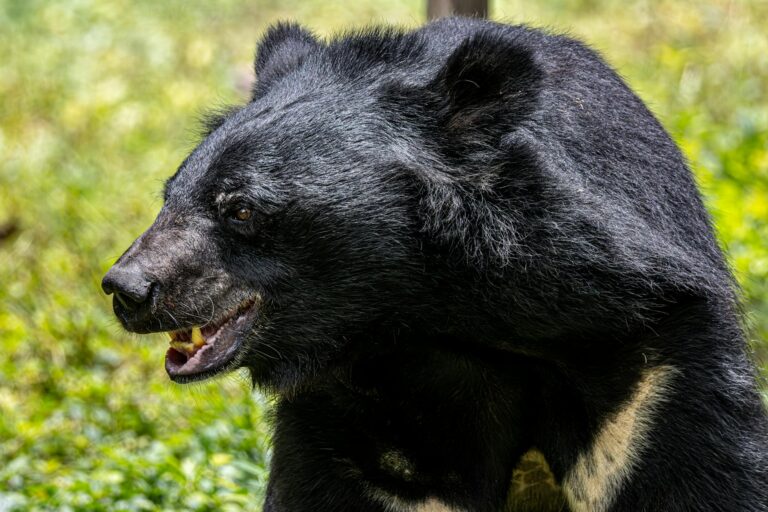
| Asian black bear | Vulnerable (2016) | No reliable global figure | Bile trade, forest loss |
| Sun bear | Vulnerable (2017) | No reliable estimate | Forest loss, poaching |
| Sloth bear | Vulnerable (2020) | Under 10,000 to about 20,000 | Habitat loss |
| Spectacled bear | Vulnerable (2017) | National estimates total 13,000 to 19,000 | Forest loss, retaliation |
| Giant panda | Vulnerable (2016) | 1,864 wild (survey of 2011 to 2014) | Fragmentation, climate |
| Lower-48 grizzly | ESA Threatened | At least 2,314 in 2023 (USFWS, 2025) | Human-caused deaths |
| Marsican brown bear | Critically Endangered (Italian list) | 81 (2025 genetic survey) | Road deaths, poaching |
Habitat loss and conflict
Bears need large areas, and roads, farms and settlements cut those areas into pieces. Sun bears lose lowland rainforest, spectacled bears lose Andean forest, and brown bear populations in Europe are often small and separated. When bears reach crops, beehives, livestock or rubbish, they are often killed. In the Greater Yellowstone Ecosystem, about 85 percent of documented grizzly deaths are caused by people. Electric fences, bear-proof bins and good food storage all reduce that conflict.
Read more: guidelines for reducing human and bear conflict, supplemental feeding, using dogs in bear management, the Cherokee bears of North Carolina, the bear at Dracula’s castle and Romania’s bears.
Sea ice and polar bears
Polar bears hunt from sea ice. NSIDC reports that the September minimum of Arctic sea ice fell by 12.1 percent per decade from 1979 to 2025, relative to the 1981 to 2010 average. Less ice means a shorter hunting season. Western Hudson Bay is the best studied case: about 1,185 bears in 1987, 842 in 2016 and 618 in a 2021 aerial survey. The picture varies, however. The IUCN gives the species-wide trend as unknown, and some subpopulations have too little data to judge.
Read more: human waste and polar bears and Polar Bears International.
Bile farming and the trade in parts
Bile from Asian black bears and some other bears is used in traditional medicine, and bears are kept on farms to supply it. Vietnam has come closest to ending the practice. A nationwide survey part funded by Animals Asia, run from April to July 2025, found 156 bears at 53 private residences, and a 2017 agreement commits Vietnam to ending bear bile farming by 2026. China remains the largest case. Animals Asia reported about 7,000 bears there in 2010, later estimates run up to about 10,000, and we found no current official count.
Read more: inside China’s bear bile industry, Asian markets for bear parts, Animals Asia and Free the Bears.
Cruelty and wildlife crime
Bears also suffer from practices that have little to do with habitat, including dancing bears, baiting and illegal hunting. Campaigns and enforcement have ended some of these, but cases still reach the courts.
Read more: ending bear dancing, bear baiting in Pakistan, the petition against bear fur hats, Albania’s last restaurant bear, the end of grizzly trophy hunting in British Columbia, the Othel Lee Pearson grizzly case, the Mr Adventure case, a black bear killed after the season ended, the cubs taken from a den and selfies with bear cubs.
Populations worth watching
Marsican brown bear, Italy
A genetic survey of the whole range in summer 2025, published in July 2026, found 81 bears, within a range of 73 to 88. With so few bears, each death matters. Amarena, a well-known female, was shot in 2023.
Cantabrian brown bear, Spain
The population fell to about 70 in the early 1990s and reached about 370 in the official census of 2020 to 2021. It remains listed as Endangered in Spain’s national catalogue.
Pyrenean brown bear
A genetic census of 2025 gave about 130 bears, a population built up after bears were brought in from Slovenia.
Grizzlies in the lower 48
Grizzlies are listed as Threatened under the US Endangered Species Act. A US Fish and Wildlife Service assessment in 2025 estimated at least 2,314 as of 2023. A court extended the deadline for the agency’s listing decision to 18 December 2026.
Read more: the shooting of Amarena, saving the Himalayan brown bear, could bears return to Britain, Sweden’s bear Diego and Bear 609’s journey home.
Rescues and care
Rescue does not change the status of a species, but it matters to the bears involved, and wildlife agencies now know a good deal about raising orphaned cubs and returning them to the wild.
Read more: a cub accepted by another mother, a cub rescued after a car crash, three cubs in New Hampshire, three cubs in Virginia, a cub stuck in a plastic container, four cubs in New Jersey, Andean bear cubs at the Smithsonian and polar bear Payton.
Who does the work
We are not partners of any of these groups. Read our profiles of Polar Bears International, Animals Asia, Free the Bears and WWF’s bear work. Check the organisation’s own website before you give.
How to help
- Support a group working on a species you care about, and give regularly if you can.
- In bear country, store food properly and keep your distance. A fed bear often ends up dead.
- Choose certified palm oil and timber where you can, because forest loss drives the decline of sun bears.
- Do not pay for photos with captive bears or buy products made with bear parts.
Frequently asked questions
Are polar bears endangered?
The IUCN lists them as Vulnerable. The 2024 Polar Bear Specialist Group report gives about 26,000 bears, within a range of 22,000 to 31,000.
Which bear is most at risk?
At species level, six are Vulnerable. Among named populations, the Marsican brown bear is one of the smallest, with 81 bears in a 2025 survey.
What is bear bile farming?
Bears are kept on farms so that bile can be taken from them for traditional medicine. A 2025 survey found 156 bears left in Vietnam. Numbers in China are much higher but uncertain.
Are grizzly bears still protected?
Yes. They are listed as Threatened in the lower 48 states. A listing decision is due by 18 December 2026.
How can I help bears?
Support a credible group, store food properly in bear country, and avoid products made with bear parts or forest clearance.
Sources
- IUCN/SSC Polar Bear Specialist Group, status report (2024)
- NSIDC, Sea Ice Today, 2025 minimum analysis
- Al Jazeera, Western Hudson Bay survey (2022)
- Animals Asia, New survey identifies last bears on bile farms in Vietnam (2025)
- Audubon, Bears held captive for their bile
- US Fish and Wildlife Service, Grizzly bear species status assessment (2025)
- KUNC, Final grizzly bear plan delayed until December (2026)
- Salviamo l’Orso, 81 Marsican brown bears (2026)
- Mendez et al., Cantabrian brown bear population, Wildlife Biology (2014)
- Mongabay, Pyrenees brown bear census (2026)
- International Association for Bear Research and Management, The eight bear species
Updated 5 November 2026: rewritten as the conservation hub, corrected the American black bear, Asian black bear and Cantabrian figures, updated sea ice and bile farming, and linked every related article.
Updated 16 November 2026: updated the lower-48 grizzly count to the USFWS 2023 estimate.


Is there a way to tell which adoption schemes send the most money to the field? With the symbolic ones I always wonder how much goes on the certificate and the plush.
I don’t have a clean figure for each one, and I’d be wary of anyone who claims one. Most of these charities publish annual accounts, so that is where I would look first.
Fair enough. I’ll start with Animals Asia’s accounts, since bile farming is the one I care most about.
Didn’t know Vietnam was that close to ending bile farming. Is Laos anywhere near the same point, or is it still going strong there?