
A Look Inside China’s Bear Bile Farming Industry
Last updated: November 5, 2026
3 min read
China’s bear bile farming industry is winding down, slowly, but the practice spread to neighbouring countries on its way out.
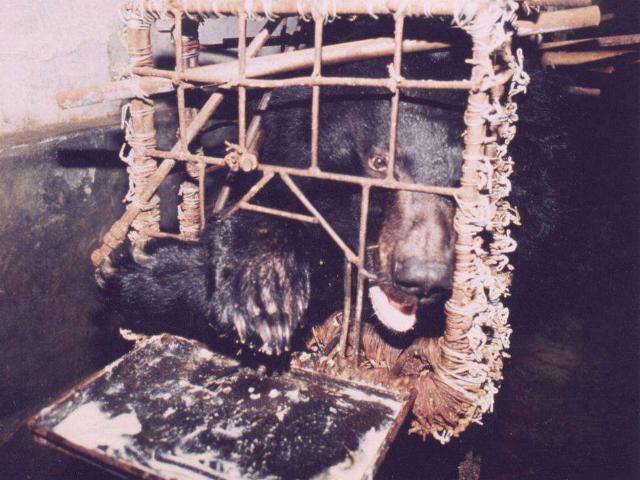
This is Elizabeth, a bile bear later rescued from a farm in Vietnam. (Courtesy: The Asian Animal Protection Network / SlimVirgin cc 3.0)
When most of us picture a bear, we picture a free animal moving through mountains. That is not the life of roughly 10,000 Asiatic black bears still held on bile farms in China, and of the small number remaining in Vietnam and Laos.
These bears are captive because of demand for bear bile. Farming was originally sold as a way to satisfy that demand without hunting, and so to protect China’s wild bears from poaching. It did the opposite. Commercialising bile broadened the market, pushed prices down, and gave illegal wild-bear products a legitimate-looking industry to hide inside.
How bear bile farming started
Bear bile appears in Chinese medical texts from the Tang dynasty onward, so the practice of using it goes back around 1,300 years. Farming it is far more recent.
Wild bear numbers in China fell sharply through the twentieth century under hunting pressure. The proposed fix, developed in North Korea and adopted in China in the 1980s, was to extract bile from living bears rather than killing them for their gall bladders. Governments encouraged it as a rural industry. By the 1990s there were several hundred registered bear farms in China.
What is bear bile
Bile is the yellow fluid produced by the gall bladder to help digest fat. Bear bile is unusually rich in ursodeoxycholic acid, or UDCA, which is a genuinely useful compound: it is a licensed pharmaceutical treatment for certain liver and gallstone conditions.
That is the whole medical case, and it is much narrower than the market. Bear bile is sold for hangovers, fevers, heart conditions and cancer, none of which it treats. UDCA has been produced synthetically since the 1950s, and there are dozens of herbal alternatives. There is no medical reason for a single bear to be on a farm.
The Asiatic black bear is the main target, with sun bears also taken.
How the bile is extracted
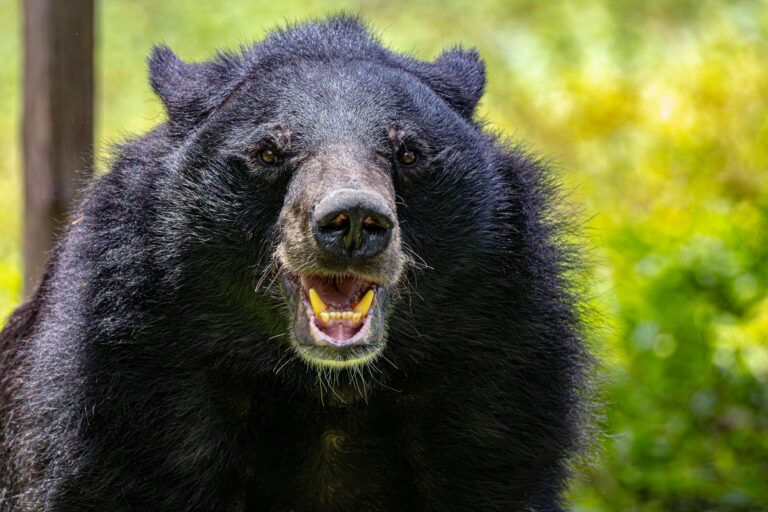
The Asiatic black bear is the main target of China’s bear bile farming industry (Guérin Nicolas cc by-sa 3.0)
The image most people have is of something like milking a cow. It is not that.
Bears are held in cages so small that the animal cannot turn around or stand up straight. They are called crush cages for a reason. The bear lies on its back while bile is drained from its gall bladder. Some bears live like this for twenty years or more before they die or are rescued.
Efforts to end the trade
China moved away from the crudest catheter and metal-jacket methods in the 1990s in favour of what the industry calls free-drip extraction. This was presented as a humane improvement. It is not one. Free-drip involves cutting a permanent open channel from the gall bladder through the abdominal wall so bile drips out continuously. Combined with poor sanitation, it leaves bears with chronic infections, peritonitis, hernias and liver tumours.
Rescued bears typically arrive malnourished, with their teeth and claws cut out.
Bring bears home
Love what you read? Browse the We Love Bears store for gear and gifts inspired by these incredible animals:
- Shop bear plush toys
- Shop bear books
- Shop bear mugs
Every purchase supports more bear content on this site.
Is there hope for Asia’s caged bears?
Yes, and the direction of travel is genuinely good, if slow.
Jill Robinson visited a Chinese bile farm in 1993 and founded Animals Asia in 1998 to end the practice. In 2000 the organisation signed an agreement with the Chinese authorities to rescue 500 bears. Animals Asia now runs sanctuaries at Chengdu in China and Tam Dao and Bach Ma in Vietnam.
Vietnam outlawed bile extraction in 2005 and, in 2017, its forestry ministry signed an agreement with Animals Asia to move every remaining captive bear in the country into sanctuary. That work has taken longer than planned, but the numbers tell the story: a nationwide survey in 2025 found 156 bears still held in 53 private homes in Vietnam, down from more than 4,000 at the peak.
China is the harder problem. Around 10,000 bears remain on farms there, the industry is legal, and demand is sustained partly by illegal international trade in bile products.
Awareness is the lever most people can actually pull. Very few people outside the region know bile farming exists, and the market for the products depends on customers who do not know there is a synthetic alternative that works better. Sharing the story, supporting Animals Asia and Free the Bears, and refusing bile products where they are sold are all things that reduce demand.
For the wider picture, see our guide to bear conservation and our profile of the Asiatic black bear in types of bears.
This article is part of our bear conservation guide, which links all our conservation, rescue and wildlife crime reporting.
Updated 28 September 2026: corrected the 2025 Vietnam bile farm count to 156 bears and removed unsourced details.

Could not sleep after reading this. I am going to write to my MP and ask whether anything stops bile products being sold here in the UK.
What can people in the US actually do about the bile trade in China beyond donating? Refusing the products does not mean much when you never see them in the shops here.
Showed this to my mum, who takes ursodiol for gallstones. She had no idea the same compound once came from bears and was relieved hers is made in a lab.