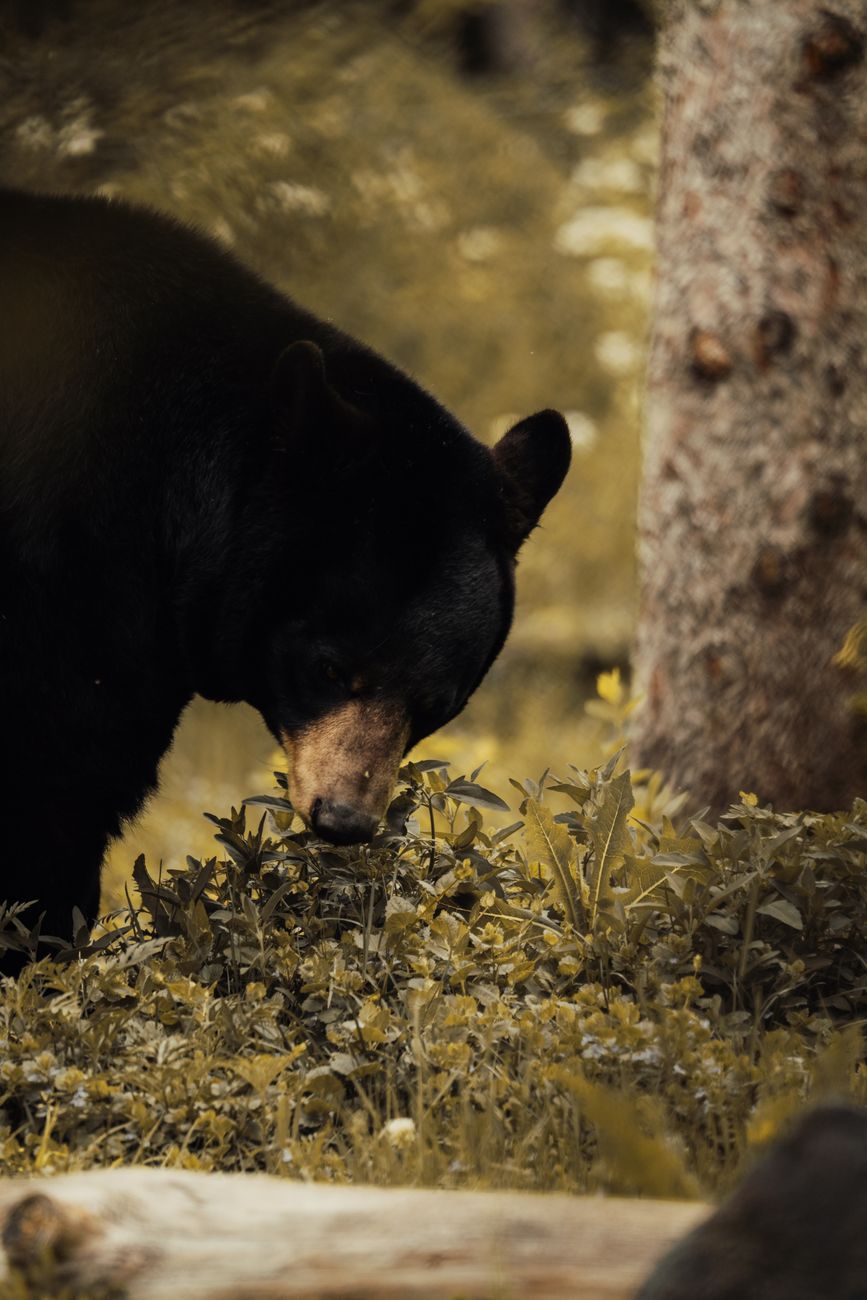
How Good Is a Bear’s Sense of Smell?
Last updated: November 5, 2026
4 min read
If you want to understand a bear, start with its nose. Smell is how a bear finds food and learns what other bears have passed through. I am an editor and a careful reader of the science, not a biologist, so this post sticks to what park services, wildlife agencies and published studies actually say. Where the numbers are shaky, I will say so.
How good is a bear’s nose?
The short answer is very good. The Alaska Department of Fish and Game says brown bears have an exceptionally acute sense of smell, exceeding that of dogs. The same page makes a point many people get wrong: bears are not nearsighted, and their eyesight and hearing are comparable to humans.
Yellowstone National Park describes black bears the same way, with fair eyesight and an exceptional sense of smell. So the picture is a bear with ordinary eyes and ears and an extraordinary nose.
Some of the more vivid figures come from a National Park Service ranger post from Yosemite. It says the nasal mucosa inside a black bear’s nose is 100 times greater in area than ours, and that a black bear’s sense of smell is about seven times greater than a bloodhound’s. Treat those as ranger-level estimates rather than lab measurements. The post gives no study for them, so I would not quote the exact multiples as settled science.
That mix matters for how a bear reads the world. Sight tells it what is in front of it. Smell can tell it about things it cannot see at all.
How far can a bear smell food?
This is where the claims get wide. The same Yosemite post gives a conservative estimate that a black bear can smell a food source from over a mile away. Other sources it mentions say over two miles. It also quotes a more generous range of 18 to 20 miles, and an account of a bear that walked upwind three miles in a straight line to reach a dead deer.
The honest reading is that a mile or more is widely accepted, and the larger numbers are anecdote and estimate. Wind, terrain and how strong the smell is all change the answer. A bear downwind of a carcass will find it far sooner than one upwind of it.
What the skull says about polar bears
There is real anatomy behind the reputation. A 2012 study in the Journal of Anatomy used CT scans to measure the bony scrolls inside the nose, called turbinals, across dogs and their relatives and across bears, wolverines and other carnivores. The authors singled out large carnivorous species such as the polar bear as having enlarged olfactory turbinals, and they suggest that a bigger olfactory surface may help a carnivore detect prey.
A conference abstract from the same group states that polar bears are similar to canids in having enlarged olfactory turbinates, and links this to a diet of meat rather than a mixed diet. Of the three bears they sampled, the paper describes the polar bear as the most carnivorous. That fits a hunter that has to find seals across sea ice. Our polar bear profile covers how it lives.
You will often read that a polar bear can smell a seal from 20 miles or more away. I found no controlled measurement behind that figure in the sources above, so treat it as folklore until someone publishes one.
What bears use their nose for
- Finding food, from carcasses to berries to buried caches.
- Reading the scent other bears leave behind.
- Checking whether a place is safe before walking into it.
Scent also works as messaging. Bears rub on trees and leave scent in their tracks, which I cover in how bears communicate. Smell also ties into memory, since a bear that has found food once will remember the place, a theme in how smart bears are.
What this means for people
A nose this good makes food storage the most important rule in bear country. A sealed cooler, a snack in a tent or a bag of garbage all send a scent trail that a bear can follow. Our guide to bear-proofing your campsite turns that into practical rules, and what bears eat shows how wide the menu is.
The Alaska agency page warns that bears can be drawn to camps and homes by poorly stored food and garbage. The cure is to give the nose nothing to find.
What we still do not know
I could not find a controlled study that measures the exact distance at which a wild bear detects a given scent. The turbinal work shows the equipment is there. The mile and mile-plus figures are field estimates. If you know of a measurement, I would like to see it.
Have you seen a bear follow its nose? Tell us what you saw in the comments.
Sources
- National Park Service, Yosemite: Bear Series, Part One: A Bear’s Sense of Smell
- Alaska Department of Fish and Game: Brown Bear
- Green et al., Journal of Anatomy 2012: Respiratory and olfactory turbinal size in canid and arctoid carnivorans
- SICB meeting abstract P1.93: Green, Pang and Van Valkenburgh
- National Park Service, Yellowstone: Bear Ecology
Photo: Caleb Falkenhagen, Pexels Licence, via www.pexels.com.
This article is part of our bear facts guide, which links every article on bear behaviour, safety and culture.