
Ending the Harmful Practice of Bear Dancing
Last updated: November 5, 2026
3 min read
Alongside bear bile farming and bear baiting, bear dancing is one of the cruellest things people have done to bears in Asia. It is also, in India at least, a practice that conservationists managed to end.
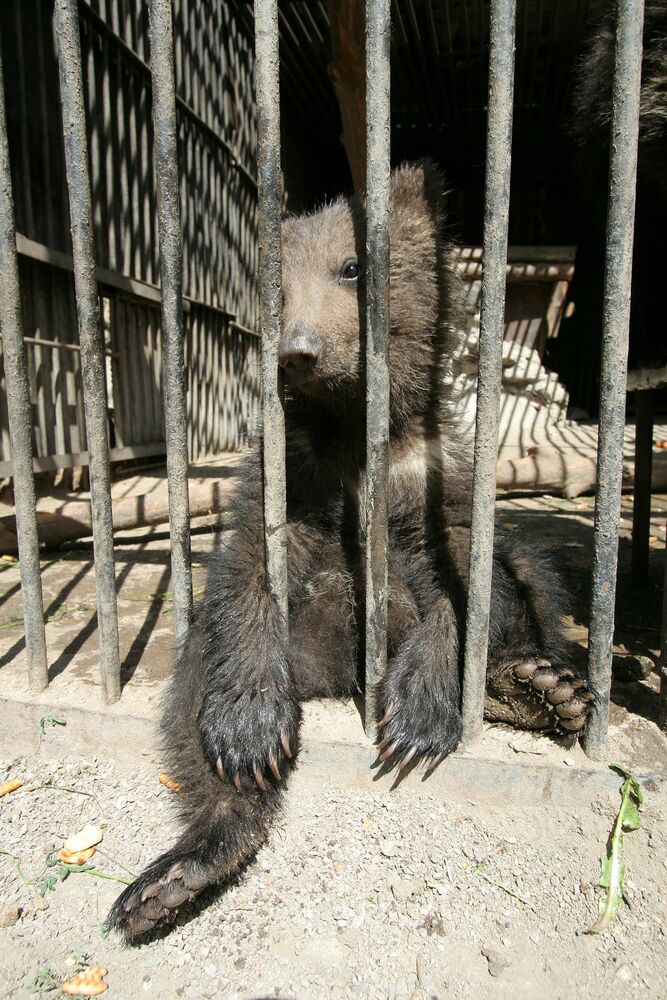
A bear cub in a cage.
Bear dancing means capturing wild bears, disabling them, and forcing them to perform for crowds. What looks to a passing tourist like a harmless street show is the end product of a brutal training process.
It was once practised across India, Greece, Turkey, Pakistan and Nepal. India’s trade was dismantled by 2009 and Nepal’s last two dancing bears were rescued in December 2017.
Poaching the victims
The bears involved were usually sloth bears in South Asia, with brown bears and Asiatic black bears used elsewhere.
It starts with a cub taken from the wild. Because mother bears defend their young, she is often shot first, and the cub watches it happen. Then comes capture, transport, and captivity, in that order, at an age when the animal has no capacity to cope with any of it. By the time it reaches a trainer it is frightened enough to be handled.
Poachers sold the cubs on, and the bear then spent the rest of its life on the street.
Pain under the guise of training
Before training begins, the animal is modified so it cannot hurt anyone.
The teeth go first: filed down, knocked out with a hammer, or pulled with little or no anaesthetic, which frequently leaves infected wounds behind. The claws are removed. Then a restraint is fixed to the muzzle, either a chain link or a rope threaded through a hole bored through the muzzle or jaw, often with a heated poker.
Only once the bear is completely defenceless does the dance training start.
One method is to heat a metal sheet and push the bear onto it. Unable to stand still or sit without burning, the animal lifts one foot after another. Repeated enough times, that becomes automatic, and what an audience sees is a bear apparently dancing. Other trainers used beatings, or yanked on the muzzle rope to choreograph the routine, or withheld food until the bear complied.
Bears kept this way were also used in bear baiting, in which the animal is set against fighting dogs.
Bring bears home
Love what you read? Browse the We Love Bears store for gear and gifts inspired by these incredible animals:
- Shop bear plush toys
- Shop bear books
- Shop bear mugs
Every purchase supports more bear content on this site.
How the practice was ended in India
Bear dancing has been illegal in India since the Wildlife Protection Act of 1972, and for decades the law made almost no difference. Wildlife SOS put the number of dancing bears in India at around 1,200 in the mid-1990s.
What changed it was not enforcement alone. Wildlife SOS and International Animal Rescue built a programme that took the bears in, gave them sanctuary care, and gave the Kalandar families who owned them an alternative income and schooling for their children. Between them they took in 628 dancing bears. The last one in India was surrendered in December 2009.
Nepal followed. In December 2017 the last two known dancing bears there, both sloth bears, were seized and moved into protected care.
That is a genuinely finished piece of conservation work, and it is worth saying so plainly. It does not mean bears in the region are safe. Bear baiting, bile farming, and the poaching that fed the dancing trade in the first place have not gone away, and a rescued sloth bear cannot be released back into the wild after what was done to its mouth and feet. The 600-plus bears taken off the streets have lived out their lives in sanctuaries.
What you can do
- Never pay to watch a roadside bear or any other performing wild animal.
- Discourage other travellers from watching or paying.
- Report what you see to the local forest department or police.
- Support the sanctuaries that took the bears in, since the care bill runs for the rest of each animal’s life.
For more, see our guides to bear behavior, bear conservation and bear gifts.
Read next
- Bear Facts: 50+ Things to Know About the World's Bears
- Animals Asia: Ending Bear Bile Farming
- Fat Bear Week 2025: The Winner, the Bears, the Story
This article is part of our bear conservation guide, which links all our conservation, rescue and wildlife crime reporting.



Please
Is there anything people in the US can do about this beyond not paying for shows when we travel? It sounds like what worked in India was giving the families another income, which is hard to help with from here.
Read the part about the heated metal sheet and had to put my phone down. My eight-year-old asked what was wrong and I just told her people used to be cruel to bears and mostly stopped.