
Ice Globe Bubbles with a Bear
Last updated: November 5, 2026
4 min read
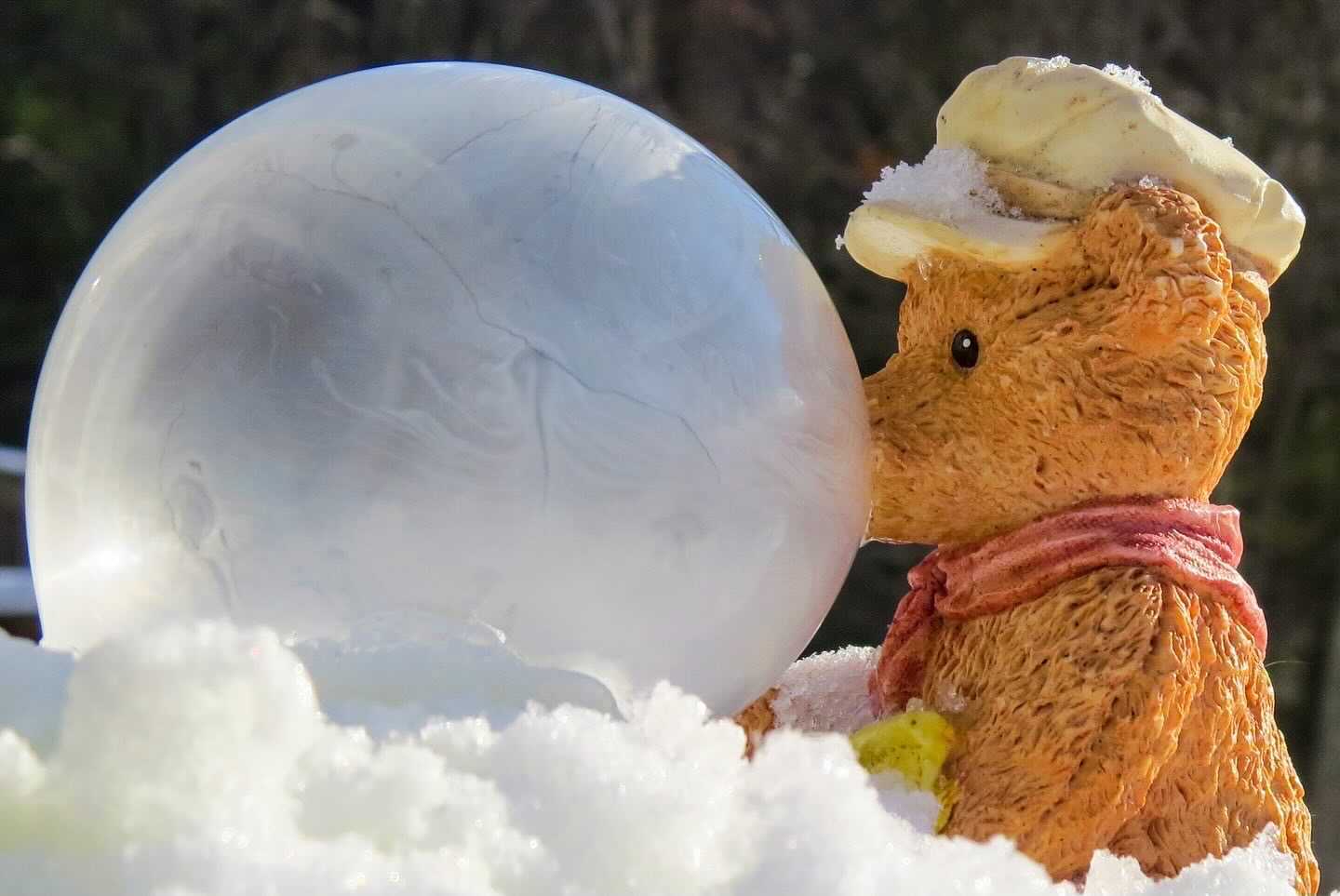
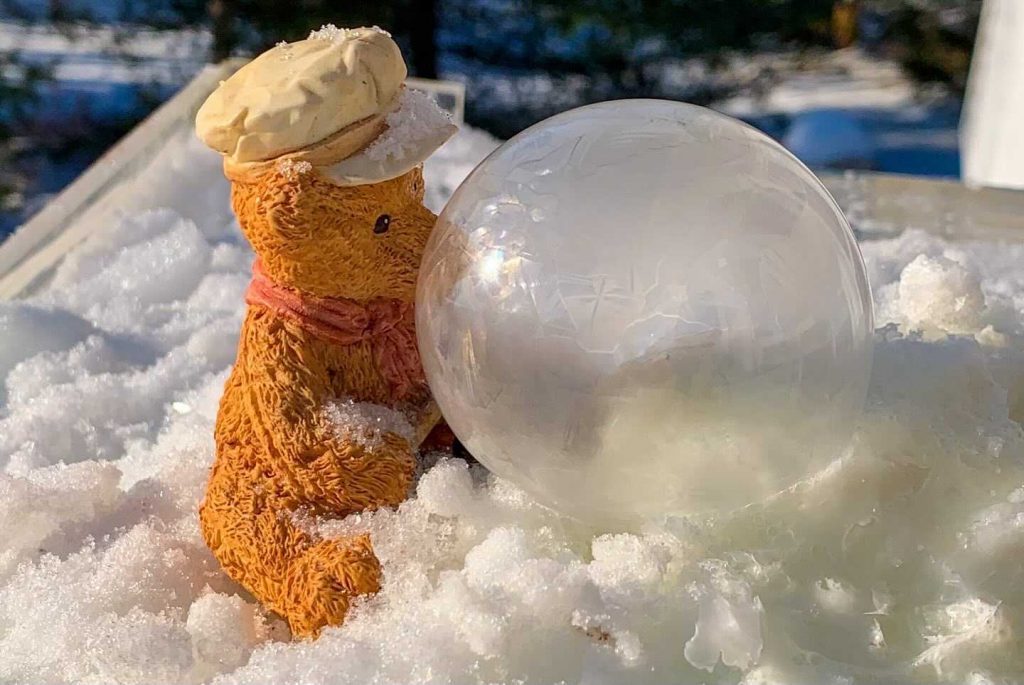
It is winter, it is cold, and there is frozen snow on the ground, which makes it perfect for creating ice globe bubbles. If you have only a few minutes, here is the short answer: a sugar and corn syrup bubble mix, blown directly onto cold snow when the air temperature sits below freezing, will hold its shape long enough for ice crystals to spread across the surface in a slow, feathery bloom. Today’s model is Locomotive Luke, a small vintage Take Me Home Teddies figurine of a teddy bear holding a train. He enjoyed the bubble experiment, and with the added bubbles that froze over his nose, the bear looks even cuter. Don’t you think?
Frozen Bubbles and Bears
For your ice globe bubbles you will need water, dish soap, sugar, a straw, and corn syrup. The original recipe that we found included just water, dish soap and corn syrup. The recipe that we used includes:
- 3/4 cups of warm water
- 35 ml of corn syrup
- 35 ml of dishwashing liquid
- 2 tablespoons of sugar
Using warm water allows the sugar and corn syrup to dissolve properly. Once you combine the mixture, place it in the fridge to cool off. After getting the mixture right and perfecting the ice globe bubbles, the next part was to see how far we could take them. Bubble after bubble, ice crystal after ice crystal, the formations were magical.
When we first started to play with the mixture, the bubbles would pop before hitting the ground. With a lot of patience and practice, I learned two tricks. You need to wet the snow a bit with your bubble mixture. The next step is to start creating the bubble from the ground up. In other words, make the bubble on the snow, not in the air.
Why Corn Syrup and Sugar Matter
The corn syrup and sugar are not optional extras. They do real chemical work. A plain water and dish soap bubble is fragile because the soap film is only a few hundred nanometres thick and the water inside it drains downward under gravity until the top of the film thins out and ruptures. Corn syrup and dissolved sugar both raise the viscosity of the liquid, which slows that drainage dramatically. A thicker, slower film survives long enough for the cold air to do its part. This is the same principle behind the long lasting bubble solutions sold in toy shops, which usually rely on glycerin or guar gum for the same thickening effect.
Sugar also gives the freezing process something to grab onto. Ice does not form instantly the moment water reaches zero degrees Celsius. It needs a nucleation point, a tiny irregularity where the first crystal can start. Dust, a fingerprint, or an undissolved sugar grain all serve as seeds. Once the first crystal forms on the chilled bubble wall, it spreads outward in branching arms, and you can watch the whole globe ice over in real time, often in well under a minute.
The Best Conditions for Frozen Bubbles
Temperature is the single biggest factor. Frozen bubbles work best when the air sits between roughly minus 9 and minus 15 degrees Celsius (about 16 to 5 degrees Fahrenheit). Warmer than that and the film freezes too slowly, so it drains and pops before the crystals can take hold. Much colder and the film can freeze so fast it becomes brittle and shatters. A still, calm morning is far better than a windy afternoon, because even a light breeze will tear the delicate film apart.
- Chill everything first. A warm bubble wand or warm hands will melt the film on contact. Let your straw and solution sit outside for ten minutes before you start.
- Blow gently. A slow, soft breath gives you a larger, more stable globe than a hard puff.
- Rest the bubble on snow. Snow is colder and far less likely to pop the film than a fingertip or a hard surface.
- Work in shade. Direct winter sun warms the film just enough to ruin it.
A Simple Backyard Science Lesson
This little experiment quietly covers a surprising amount of science. Children watching a bubble freeze are seeing surface tension hold a thin film together, viscosity slowing the drainage of liquid, nucleation starting the first crystal, and crystal growth spreading in fractal patterns. The branching shapes that race across the bubble are dendrites, the same six sided geometry that builds every snowflake. If you photograph the globe up close, you can see those dendrites in detail, which makes it a lovely way to talk about why no two snowflakes are alike.
It is also a reminder that bears, the animals this site is built around, spend the harshest part of this season tucked away from it entirely. While we are outside chasing frozen bubbles, a hibernating black bear has dropped its heart rate and is living off stored fat in a den, waiting out exactly the cold we are playing in.
Have Fun With It
If you want to see something cool and scientific, head outside and make some ice globe bubbles. The magic that happens inside the bubble is mesmerizing. This experiment is great for the young and old alike and will keep you entertained for a bit. Try setting your phone camera to its macro or slow motion mode to catch the crystals spreading.


This article is part of our bear facts guide, which links every article on bear behaviour, safety and culture.


saving this for january. we only get two or three properly cold still mornings a winter here, so the plan is to have the mix sitting in the fridge before the next one
Tried this at about minus 12 with my son last winter. The first ten popped in the air, then we started them on the snow like you say and they held. We used glycerin since we had no corn syrup.