
Bearing the Facts: An Exciting Trivia Game About the Asian Black Bear
Last updated: November 5, 2026
4 min read
The Asian black bear (Ursus thibetanus), better known as the moon bear, is a medium-sized bear of forested Asia and one of the most heavily exploited bears alive. It takes its nickname from the pale crescent of fur on its chest. This page is a 10 question trivia game plus a real moon bear briefing, including the bile-farming crisis that makes this species’ story so urgent. Play first, or read the facts below and then test a friend.
Moon bear facts before the quiz
How to recognise a moon bear
The Asian black bear has glossy black fur, large rounded ears that sit prominent on the sides of the head, and the famous cream or yellow V-shaped or crescent patch across the chest. Adult males typically weigh 220 to 440 pounds, while females are smaller at roughly 110 to 275 pounds. Compared with the American black bear, the moon bear has a slighter build, those noticeably bigger ears, and a thick ruff of fur around the neck and shoulders.
Range, habitat, and diet
Moon bears live across a broad band of Asia: the Russian Far East, the Himalayan region, the Korean Peninsula, Japan, and large parts of China, with populations also reaching into Southeast Asia. They favour forested hills and mountains and shift altitude with the seasons, moving up in summer and down in winter. Their diet is omnivorous and strongly seasonal, built around fruits, nuts, acorns, berries, insects, and honey, with small mammals and carrion eaten when available. They are also famously skilled climbers and spend a great deal of time in trees, where they will even build crude feeding “nests” by bending branches together to reach fruit and nuts.
The shadow over the species: bile farming
The hardest fact about the moon bear is why it is in trouble. The IUCN lists the Asian black bear as Vulnerable, and alongside habitat loss the species faces a specific and brutal threat: bile farming. Bear bile contains a compound (ursodeoxycholic acid) used in traditional medicine, and across parts of Asia thousands of moon bears have been kept in small cages so bile can be extracted from their gall bladders, often for years on end. The practice causes severe suffering and has driven illegal poaching of wild bears to stock the farms. Organisations such as Animals Asia have campaigned for decades to end bile farming and to rescue caged bears into sanctuaries, but the trade has not been fully stamped out. It is the reason “moon bear” so often appears in conservation news. For a closely related challenge, the rescue of caged bears, see our piece on Albania’s last restaurant bear.
Asian Black Bear Trivia Questions & Answers Game
Question 1: What is another common name for the Asian black bear?

Answer 1: Moon bear or white-chested bear.
Question 2: Where are Asian black bears primarily found?

Answer 2: In various parts of Asia, including the Russian Far East, the Himalayan region, Korea, Japan, and parts of China.
Question 3: What distinguishes the Asian black bear’s appearance?

Answer 3: A distinctive white V-shaped patch on the chest.
Question 4: What is the typical weight of an adult male Asian black bear?


Answer 4: Between 220 to 440 pounds.
Question 5: What kind of diet do Asian black bears have?

Answer 5: They are omnivorous, eating fruits, berries, insects, small mammals, and honey.
Question 6: Are Asian black bears solitary or social animals?

Answer 6: They are generally solitary creatures, except during mating season.
Question 7: When do Asian black bears usually hibernate?

Answer 7: During the winter months. Bears in the colder north den fully, while some in warm southern parts of the range may not hibernate at all.
Question 8: What is the conservation status of the Asian black bear?

Answer 8: Vulnerable, according to the IUCN Red List.
Question 9: What are some of the main threats to the Asian black bear’s survival?

Answer 9: Habitat loss, poaching, the bile-farming trade, and human-wildlife conflict.
Question 10: How are Asian black bears skilled in obtaining food?

Answer 10: They are skilled climbers and often scale trees to reach food sources.
How to read your score
Eight or more out of ten is an excellent result for a species most people never get to see. The question that catches people out is usually number eight: many assume a bear from such a large range must be of Least Concern, when the moon bear is in fact classed as Vulnerable. The reason ties straight back to question nine. Habitat loss is steady, but poaching for the bile and body-parts trade is what makes this bear’s outlook so much worse than its wide distribution suggests.
How moon bears differ from their relatives
If you want to win a follow-up bet, here is the comparison that trips people up. The Asian black bear and the American black bear are different species on different continents. The moon bear is the one with the bold chest crescent, the larger ears, and the neck ruff, and it is the climber that builds tree nests. The sun bear, found further south in Southeast Asia, is smaller still and has a U-shaped chest mark rather than a V. Sorting the three apart by chest patch and ear size is the quickest field test there is.
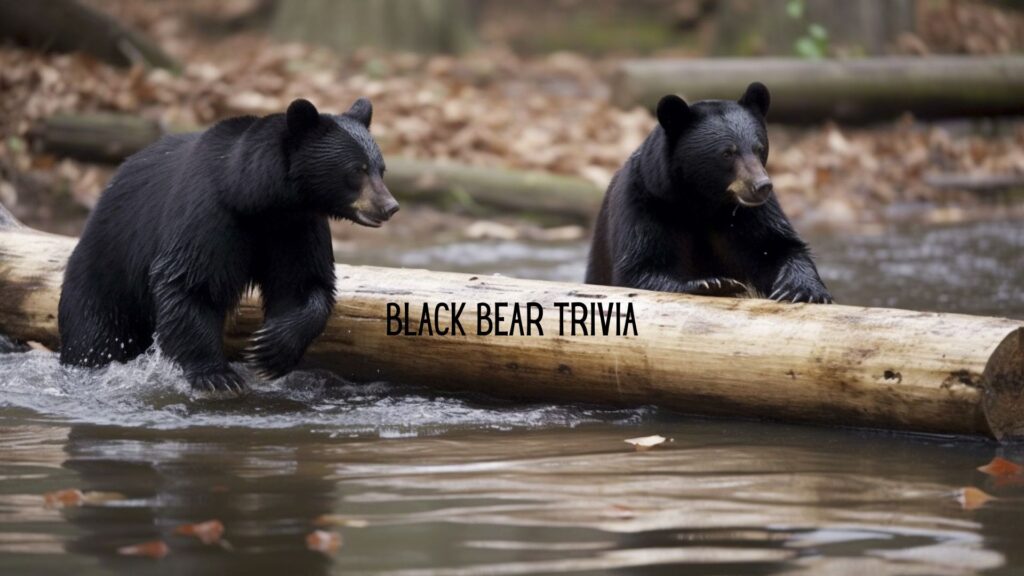
Pick Your Bear Trivia Game Below



This article is part of our bear facts guide, which links every article on bear behaviour, safety and culture.




we argued about question seven in the car. my niece said all bears hibernate, full stop, so the bit about some southern ones not denning at all was a win for me.