
Brown Bear Attacks a Sow and Dies
Last updated: October 14, 2026
4 min read
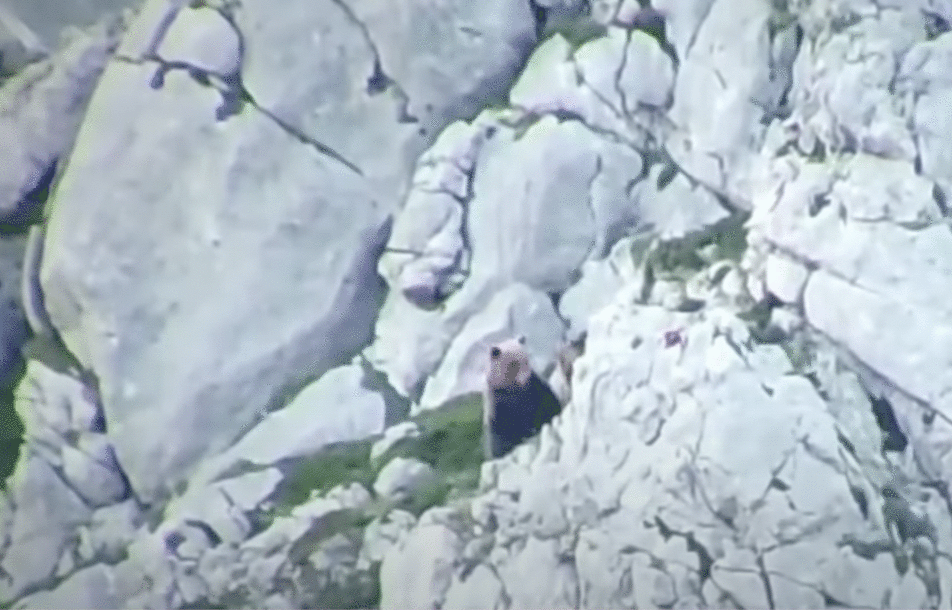
In video footage filmed in northern Spain, a male brown bear attacked a mother bear and her cub on a cliff, lost the fight, fell, and later died of his injuries. Two onlookers recorded it. The sow was working her way up the cliff with her cub when a large male came from the other side and blocked the route. He went straight for her in an attempt to get at the cub. Seeing what was happening above it, the cub turned back and hid.
The two bears grappled for about two minutes before both tumbled down the cliff. In the footage the heavier male falls further, then struggles back to his feet near the end of the clip. The mother also gets up and returns to her cub. It was later reported that the male died of his injuries while the sow and cub were reunited, with local rangers putting out fruit and water to help her recover condition and keep feeding her young.
Why a male bear would attack a mother and cub
This was not a fight over food or territory. It was an attempt at sexually selected infanticide. Guillermo Palomero, president of Spain’s Fundacion Oso Pardo, described the behaviour as a known pattern in brown bears. A female with dependent cubs does not come into oestrus, because she is nursing and raising young, which can take more than a year. Killing her cubs ends that investment early, and the female typically returns to oestrus within days, giving the male his chance.
It is brutal and it is not unique to bears. The same strategy shows up in lions, in some primates, and in certain birds. What this footage shows is the other half of the story: a mother fighting back hard enough to win, and hard enough for the male to pay for it.
The defence of a mother bear
A sow defending cubs is one of the most dangerous animals in the European wild. She is smaller than an adult male, often by a wide margin, and she commits fully because the alternative is losing the entire litter. Here the cliff itself became the deciding factor: a defending mother does not have to overpower a male, only to unbalance him. Both bears fell. The lighter, more committed animal got up. This is exactly why every field guide in bear country says the same thing about a female with cubs: do not approach, and never get between them.
Bears in Spain: a population on the edge
This matters because of where it happened. The bears of the Cantabrian Mountains are Cantabrian brown bears, an isolated population in northwest Spain that was pushed close to extinction in the twentieth century, down to roughly 70 animals in the 1990s. Decades of protection turned that around, and recent estimates put the population at around 370, spread across Asturias, Castilla y Leon, Cantabria and Galicia.
The population splits into a larger western nucleus and a smaller eastern one. Conservationists have spent years working to create corridors so the two can reconnect, because genetic exchange is what keeps a population this small viable. In that context every cub counts, and losing a litter to infanticide is a real setback. That is why the survival of this particular mother and cub was treated as news worth reporting.
The work of the Fundacion Oso Pardo
The Fundacion Oso Pardo, founded in 1992 and based in Santander under Guillermo Palomero, sits behind much of this recovery. The foundation runs patrols across the key bear zones of the Cantabrian Mountains and the Pyrenees. Their work covers:
- Monitoring bear numbers, including annual counts of females with cubs of the year.
- Supporting scientific research on the population.
- Environmental education so local communities can live alongside returning bears.
- Habitat work, including planting and protecting the corridors that link the subpopulations.
Rangers putting out food and water for an exhausted mother is a small example of that hands-on approach. It also explains why an incident like this ends up on film and in the news at all: in this region the bears are watched, counted and cared about.
How mothers reduce the risk
Infanticide is a strong selective pressure, and female brown bears have ways to push back beyond simply fighting. Sows with cubs often shift toward steeper, more broken terrain and closer to human activity, ground that large dominant males tend to avoid. The cliff in this video fits that pattern exactly: awkward vertical terrain is a place to keep a cub away from roaming males. Research also points to female brown bears mating with several males in a season, which blurs paternity and makes a male less certain a given litter is not his own.
None of it is foolproof, as the footage makes clear. Together, though, it is why most cubs do survive their first year even in a landscape that contains aggressive males.
The footage is hard to watch and it is honest natural history. Infanticide is a real driver of brown bear behaviour, a mother’s defence can be lethal in return, and in a recovering population every surviving cub counts.
Bring bears home
Love what you read? Browse the We Love Bears store for gear and gifts inspired by these incredible animals:
- Shop bear books
- Shop bear outdoor gear
Every purchase supports more bear content on this site.





Hard to watch. Didn’t know the female comes back into oestrus within days of losing her cubs. Makes the male’s behaviour grimly logical.
Hiking in Asturias a couple of summers ago, a local told us mothers with cubs stay near villages on purpose to avoid the big males. I thought he was pulling our leg until I read the bit here about steep ground and human activity.