

Orphaned Cub Rescued After Car Crash
Last updated: November 5, 2026
3 min read
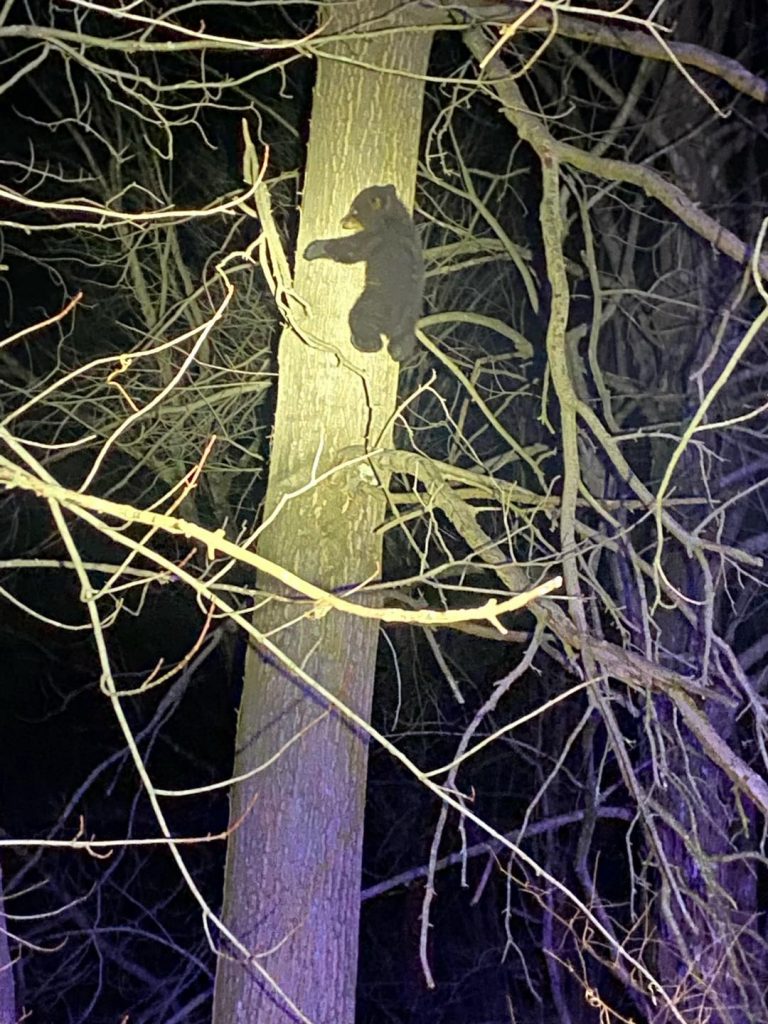
On a Friday night in Greenfield, Massachusetts, a car struck a mother black bear and two of her cubs on Route 2, leaving a third cub orphaned and alone. Greenfield Police officers responded to the call at 8:43 PM and found the surviving cub squealing and clinging high in a tree. They got it down safely, and it is now in professional care. The event is a hard one to read, but it is also a clear, useful case study in how vehicle strikes affect bears and what a driver can do to prevent the next one.
What Happened on Route 2
Two Greenfield officers, named in reports as Officer Lagoy and Officer Purinton, reached the scene and heard the third cub crying out. The cub had done exactly what a frightened young black bear does instinctively when threatened: it climbed. Tree climbing is one of the black bear’s strongest survival skills, and a cub will scramble up a trunk to escape danger long before it would try to run.
The officers chose not to leave the cub. They coaxed it down from the tree and took it back to the station, where it was kept in a kennel provided by the local ambulance service, AMR, overnight. The following day, Saturday, the Tufts Wildlife Clinic collected the cub for evaluation. Tufts Wildlife Clinic, part of the Cummings School of Veterinary Medicine at Tufts University in Grafton, Massachusetts, is one of New England’s main centres for treating injured and orphaned wild animals. The cub, a female later named Alma, moved to the Kilham Bear Center in New Hampshire, with release planned for spring 2023.
Why an Orphaned Cub Needs Help
A black bear cub can technically feed itself by around five months of age, but that is not the same as being able to survive. Cubs normally stay with their mother through their first winter and do not strike out on their own until they are around a year and a half old, denning with her for that first winter. During that time the sow teaches them what to eat, where to find it through the seasons, how to climb away from danger, and where to den. A cub that loses its mother in spring has none of that knowledge yet.
That is why a wildlife clinic, not a release straight back to the woods, is the right answer. Rehabilitators raise orphaned cubs with as little human contact as possible, often alongside other orphans so they stay wild rather than tame, and release them once they are large enough and old enough to face a winter alone. Done properly, a rehabilitated cub can go on to live a normal wild life.
Bears and Cars: A Predictable Danger
Vehicle collisions are one of the leading causes of death for black bears in many populated states. The risk is not random. It spikes in spring and early summer, when bears are on the move after the winter, when yearlings disperse to find their own territory, and when sows lead cubs across the landscape in search of food. Dawn and dusk are the most dangerous hours, because bears are most active then and drivers can see least well.
Roads that cut through forest, like Route 2 in this case, are exactly where bear families are forced to cross. A sow with cubs is also slow. She will not bolt clear the way a deer might, because she is keeping pace with small cubs that cannot move fast, which leaves the whole family exposed in the road for longer.
How Drivers Can Prevent This
If you live in or drive through black bear country, a few simple habits genuinely lower the odds of a tragedy like the one on Route 2:
- Slow down at dawn and dusk on wooded roads, especially in spring and summer.
- Treat wildlife crossing signs as real warnings, not scenery. They mark known crossing points.
- If you see one bear cross, expect more. Cubs follow their mother, often single file, and stragglers come last.
- Brake early and stay in your lane. Swerving hard can cause a worse crash than braking does.
- Use your horn or flash your lights to encourage a bear to clear the road, rather than driving up close to it.
- If you do hit a bear, do not approach it. Call the police or your state wildlife agency so trained staff can respond.
The Greenfield cub was lucky. Two officers heard it, refused to leave it, and got it to a clinic that could give it a future. Most roadside orphans are never found. The cub’s best protection was never the rescue at all. It was a driver, somewhere up the road, paying attention. To learn more about the species behind this story, see our species profile of the American black bear.
This article is part of our bear conservation guide, which links all our conservation, rescue and wildlife crime reporting.
Updated 28 September 2026: added what happened to the cub after Tufts.



I drive Route 2 through there for work, often after dark. Plenty of deer over the years but never a bear. I will be watching the verges more closely now, especially for the ones following behind.