
Polar Bear Population is Threatened by Human Waste
Last updated: November 5, 2026
3 min read
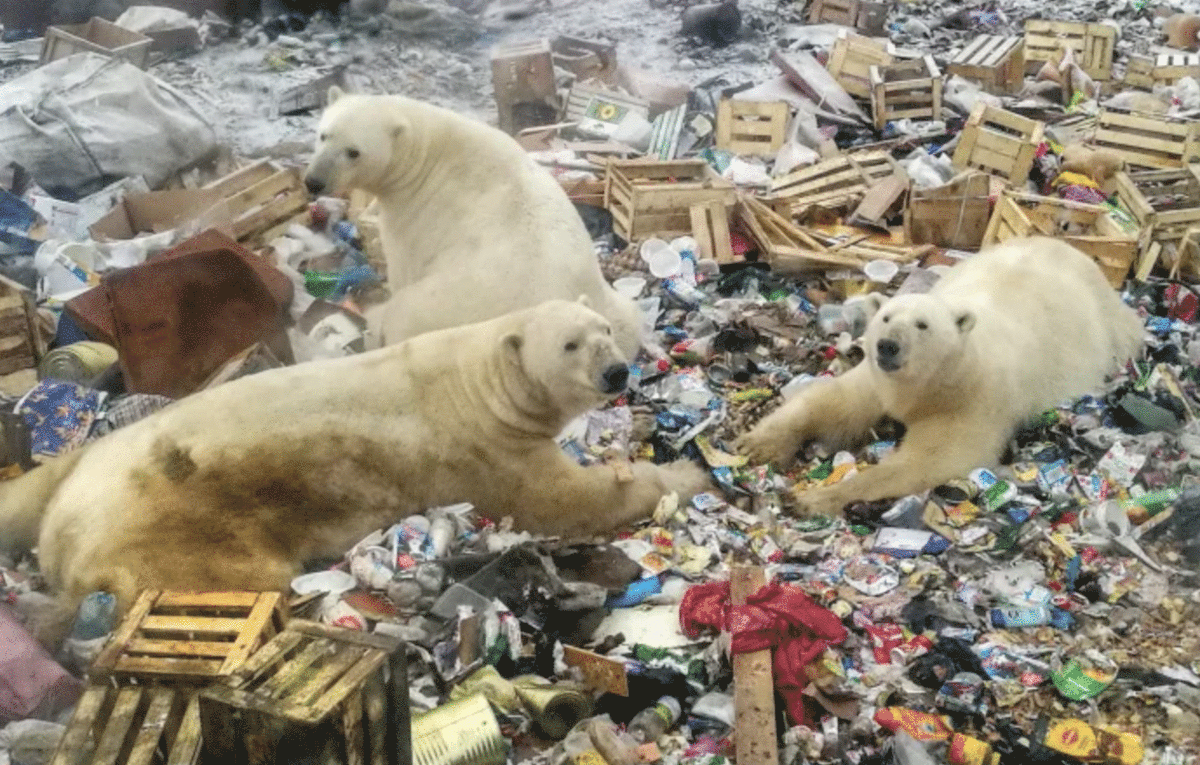
In the Arctic, polar bears are increasingly running into a threat that has nothing to do with hunting or hunting quotas: human rubbish. As sea ice shrinks, bears struggle to find and hunt seals, and to make up for the lost calories they follow their noses into towns and dump sites instead. Like brown and black bears further south, polar bears now come into settlements looking for food, and the results are usually bad for the bear.
The pattern is well documented by wildlife managers across the Arctic. A food-motivated bear steps into a populated area, finds a reward, and comes back. Once it associates people with an easy meal, the cycle runs through property damage and injury to the animal being shot. Death usually comes to the bear, not to the people.
Bears feeding on open dumps also ingest plastic, metal and chemicals. Some die outright, others weaken. Antifreeze is the notorious example: it smells and tastes sweet, which draws bears in, but the ethylene glycol in it is lethal once swallowed.
The Polar Bear Food Struggle
To understand the problem you have to understand how a polar bear normally eats. The polar bear (Ursus maritimus) is the most carnivorous of all bear species, and it depends almost entirely on the fat of ringed and bearded seals. Its hunting method is patient and ice based: the bear waits beside a breathing hole, or stalks seals resting on the ice, and strikes when the seal surfaces. This only works from a solid sea ice platform. A polar bear is a strong swimmer, but it cannot catch a fleeing seal in open water the way it can on the ice.
The polar bear is the most specialised member of the bear family. See how it compares in our guide to the different types of bears.
That platform is disappearing. Arctic sea ice has been retreating for decades, with summer minimum extent falling sharply since satellite records began in 1979. Each year the ice forms later in autumn and breaks up earlier in spring, which shortens the hunting season. The polar bear is listed as Vulnerable on the IUCN Red List, and the loss of sea ice is named as its single greatest long term threat. As the ice gives bears fewer days to hunt, more bears arrive on shore underweight and hungry, and a hungry bear that smells a landfill will go to the landfill.
Why Human Waste Is Spreading Across the Arctic
Russia, Alaska, Canada and Greenland surround the Arctic Ocean, and the communities there include indigenous hunters and gatherers as well as modern town dwellers. The human population of the broader Arctic region is roughly four million people, and every settlement produces waste. Open dumps, poorly secured bins, and hunting carcasses left near homes all send a strong scent signal across miles of open tundra. A polar bear’s sense of smell is among the keenest of any land mammal, capable of detecting prey from great distances, so an unsecured dump is effectively a beacon.
The fixes are known but not cheap. They include electric fencing around landfills, bear resistant communal storage, incineration of food waste, and rapid removal of carcasses. Most of these measures need federal or regional funding that small Arctic communities simply do not have on their own.
What a Solution Could Look Like
The first step is documentation. By recording where and when bear encounters happen, each community can build a bear management plan suited to its own geography. Practical priorities include:
- Securing landfills and dumps with electric fencing so bears cannot reach the waste.
- Providing bear resistant containers for household and communal rubbish.
- Storing food, fuel and chemicals such as antifreeze where bears cannot smell or reach them.
- Removing hunting carcasses and fish remains promptly rather than leaving them near homes.
- Running patrols and deterrence programs so bears are turned away before they learn the habit.
The Yellowstone Lesson
There is real precedent that this can work. Yellowstone National Park once had a serious human and bear conflict problem driven by open garbage dumps and roadside feeding by tourists. Bears that had learned to raid bins became dangerous and were often killed. After the park closed its dumps in the early 1970s and enforced strict food storage and bear proof container rules, the picture changed. Over the following decades, bear caused injuries and property incidents fell from very high annual numbers to only a handful each year. The lesson is simple: when you take away the easy human food, bears go back to being wild bears.
The Arctic now faces the same choice on a far larger and colder stage. As human settlements grow into polar bear country, communities will need funded, coordinated waste management to live alongside their neighbours. For more on the animal at the centre of this, read our full polar bear species profile.
Bring bears home
Love what you read? Browse the We Love Bears store for gear and gifts inspired by these incredible animals. Every purchase supports more bear content on this site.
This article is part of our bear conservation guide, which links all our conservation, rescue and wildlife crime reporting.



antifreeze tasting sweet is something every dog owner learns the hard way. never thought about it reaching polar bears.
Electric fencing round a landfill sounds simple, but who pays for it in a settlement of a few hundred people? I’d guess that is where it stalls.