
Polar Bear Profile: Facts, Diet & Habitat Guide
Last updated: November 5, 2026
7 min read
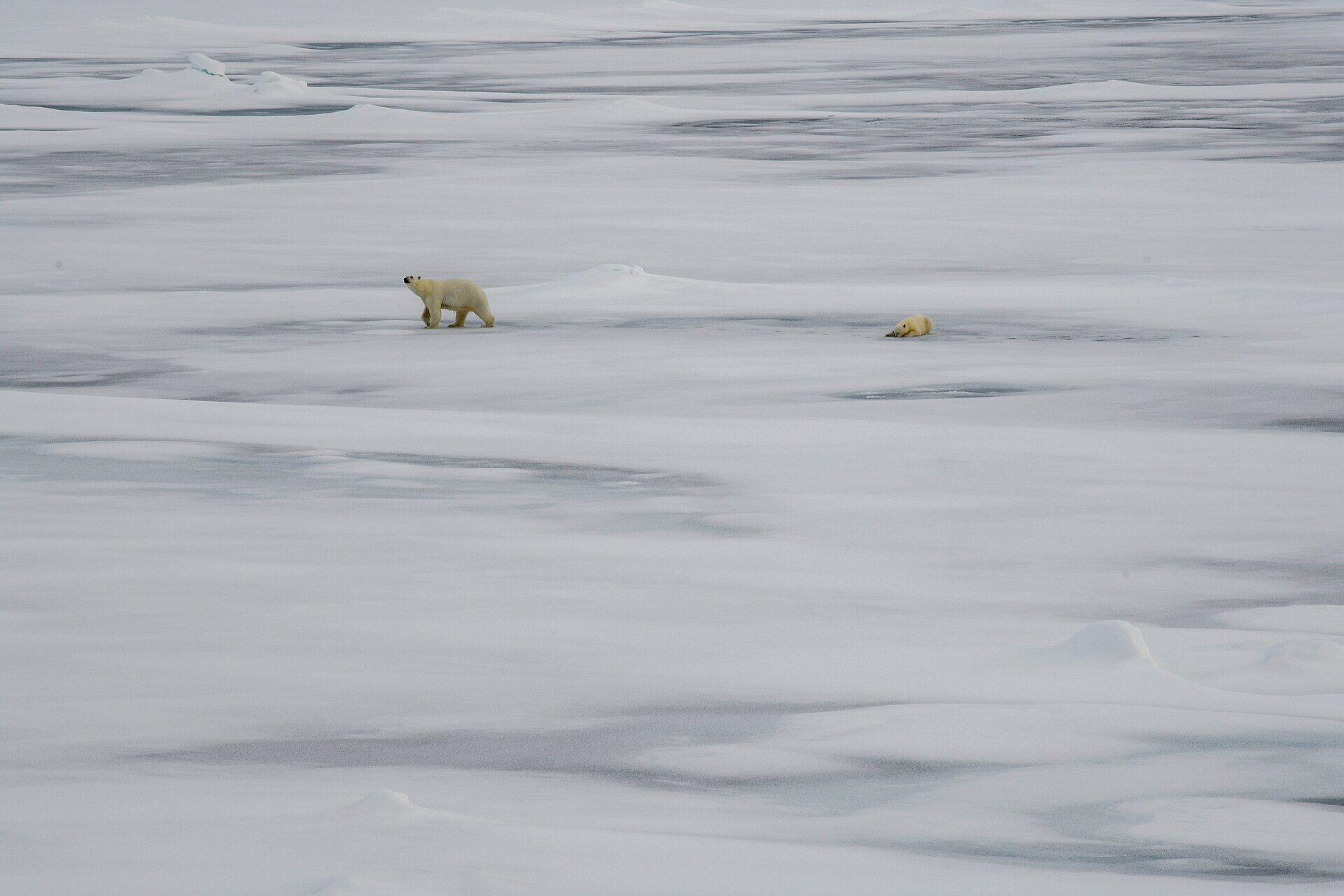
The polar bear (Ursus maritimus) is the largest land carnivore alive today and the only bear classified by science as a marine mammal. Adult males normally weigh 350 to 590 kg, the species hunts seals across drifting sea ice, and it lives nowhere on Earth except the Arctic Circle and the lands and seas that ring it.
Key facts at a glance
If you only have a minute, this table covers the headline numbers and taxonomy that define the polar bear.
| Attribute | Polar bear |
|---|---|
| Scientific name | Ursus maritimus |
| Family | Ursidae (genus Ursus) |
| Length (adult male) | 2.4 to 3.0 m (7 ft 10 in to 9 ft 10 in) |
| Weight (adult male) | 350 to 590 kg (772 to 1,300 lb), largest recorded 1,002 kg |
| IUCN Red List status | Vulnerable (2015 assessment, still current) |
| Lifespan | Around 25 years in the wild, up to 42 years in captivity |
| Range | Arctic Ocean and surrounding land masses across Canada, Alaska, Russia, Norway and Greenland |
Polar bears share a recent common ancestor with the brown bear, but evolved into something genuinely different: an apex predator built around sea ice rather than forest or tundra.
What makes a polar bear a polar bear
Even by bear standards, Ursus maritimus is unmistakable. The body is long and narrow compared with a brown bear’s, the skull is more streamlined and the neck noticeably elongated, all of which helps when swimming and when threading a head into a seal’s breathing hole.
The coat looks white but is in fact made of hollow, translucent guard hairs growing over jet-black skin. The black skin absorbs sunlight; the air-filled hairs insulate, scatter light to appear white, and shed water quickly. Beneath the fur sits a layer of fat up to 11 cm (4.3 in) thick that provides insulation in air down to minus 40 Celsius and buoyancy in icy water.
The feet are huge, flat and partially webbed, with rough pads that grip ice. Adult males stand to roughly 1.6 m (5 ft 3 in) at the shoulder and can reach 3 m (10 ft) standing on their hind legs. Compared with the closely related grizzly bear, polar bears have proportionally longer necks, smaller ears (less heat loss) and far larger paws.
Range and habitat
Polar bears are circumpolar. The IUCN Polar Bear Specialist Group divides the global population into 19 subpopulations spanning the Arctic Ocean, Hudson Bay, the Beaufort, Chukchi, Barents and Kara seas, and the islands of the Canadian Arctic Archipelago, Svalbard and Franz Josef Land.
Their preferred habitat is the seasonal ice edge, the boundary where sea ice meets open water and where ringed and bearded seals haul out. In summer, when sea ice retreats, southern populations like those of Hudson Bay come ashore and fast for months on stored fat. Northern populations can stay on multi-year ice almost year-round.
Pregnant females dig snow dens on land or stable shore-fast ice from late autumn, then give birth and raise newborn cubs through the dark Arctic winter before emerging in March or April.
Diet and hunting
Polar bears are hypercarnivores. Their diet is dominated by ringed seals (Pusa hispida), with bearded, harp and hooded seals also taken when available. The classic hunting method is the still-hunt: a bear waits motionless at a breathing hole for hours, then explodes upwards when a seal surfaces.
When sea ice is firm, polar bears also stalk seals basking on the ice and ambush them at the edges of cracks and leads. Cubs and weaker bears scavenge whale carcasses, walrus remains and the leftovers of larger males. In ice-free months, some bears eat bird eggs, kelp and even berries on land, but those calories barely register against the energy demands of a 400 kg predator.
A typical adult needs the fat from one ringed seal every five to seven days. In good ice years a successful bear can put on 100 kg of blubber in spring; in poor ice years bears go hungry and reproductive rates drop.
Reproduction and lifecycle
Mating happens on the sea ice between April and May. Polar bears use delayed implantation: the fertilised eggs float free in the female’s uterus until autumn, and only implant if she has gained enough fat to support pregnancy. If she has not, the embryos are reabsorbed.
Pregnant females dig maternity dens in deep snow, typically on south-facing slopes near the coast. Cubs are born in late December or early January, weighing only about 600 grams. They emerge from the den in March or April at around 10 to 12 kg and stay with their mother for roughly 2.5 years, learning to hunt seals on the ice.
Females generally produce a litter every three years, which is one of the slowest reproductive rates of any large mammal. Polar bears reach sexual maturity at four to six years.
Behavior and intelligence
Polar bears are largely solitary outside of mating and mother-and-cub groups. They are excellent long-distance swimmers: one tracked female in 2008 swam 687 km (427 mi) without stopping over nine days in the Beaufort Sea, then continued for another 1,800 km with intermittent rests, losing her yearling cub along the way.
On land they walk at around 5.6 km/h (3.5 mph) but can sprint to 40 km/h (25 mph) over short distances. In water they cruise at 10 km/h (6 mph) using the front paws as paddles, with the hind legs trailing as rudders.
Polar bears communicate with chuffs, growls and a wide range of body postures. Cubs play-fight for hours to build the muscle and reflexes they will need to hunt seals as adults. For more on how bears think and learn, see the pillar guide on bear behavior.
Are polar bears dangerous to humans?
Yes. Unlike most other bear species, polar bears can and do view humans as prey. They are obligate carnivores with very few opportunities to evaluate a novel food source, so a curious or hungry polar bear may stalk a person.
Fatal attacks are still rare in absolute numbers, because few people share polar bear range, but the risk profile is higher than for any other ursid. In bear country (Svalbard, Churchill, parts of Nunavut and the North Slope of Alaska), residents and visitors typically carry firearms, flare guns and bear spray, and communities maintain bear patrols. For practical advice on bear encounters, see Bear Safety.
Conservation status and threats
The IUCN Red List classifies the polar bear as Vulnerable, with the Polar Bear Specialist Group’s 2024 status report estimating around 26,000 bears (range 22,000 to 31,000) across the 19 subpopulations. Several subpopulations, including those in the southern Beaufort Sea and western Hudson Bay, are in documented decline.
The primary threat is sea-ice loss driven by climate change. As Arctic ice forms later in autumn and breaks up earlier in spring, bears have less time on the ice to hunt seals and more time on land fasting. Other threats include pollution (Arctic bears carry some of the highest concentrations of persistent organic pollutants of any mammal), oil and gas development, and conflict with humans as hungry bears come into settlements. Indigenous communities across the Arctic continue to hunt polar bears under quota systems, an important cultural and material practice that is generally considered sustainable at current take levels.
For the wider picture of what is threatening bears worldwide, see Bear Conservation.
Fun and surprising polar bear facts
- Polar bears have black skin, not white. The fur scatters light to appear white as camouflage on sea ice.
- The largest polar bear ever recorded was a 1,002 kg (2,209 lb) male shot at Kotzebue Sound in 1960. That is roughly the weight of a small car.
- Newborn cubs are about the size of a guinea pig. They are blind, nearly hairless and weigh only 600 g at birth.
- A polar bear’s sense of smell can detect a seal beneath a metre of compacted snow from up to 1.6 km (1 mi) away.
- The species name maritimus means “of the sea”. Polar bears spend most of their life on or near sea ice, not on land.
- Polar bears can reach 40 km/h (25 mph) on land for short bursts, faster than any human sprinter.
- Polar bears and brown bears diverged genetically only about 500,000 years ago and can still produce fertile hybrids, sometimes nicknamed “pizzly” or “grolar” bears.
Polar bear FAQ
How many polar bears are left in the wild?
Are polar bears the largest bears in the world?
Do polar bears hibernate?
Will polar bears go extinct?
What is the difference between a polar bear and a grizzly bear?
Related reading
If you found this profile useful, the following guides go deeper on bears, conservation and safety: If this species captures your imagination, our roundup of bear gifts for bear lovers has thoughtful picks that celebrate them.
- Brown Bear
- Grizzly Bear
- Kodiak Bear
- American Black Bear
- Types of Bears: A Complete Guide to All 8 Species
- Bear Conservation
- Bear Safety
- Bear Behavior
Updated 28 September 2026: updated the population to the 2024 Polar Bear Specialist Group estimate and corrected the captive lifespan record.


Black skin under white fur still surprises me every time. Is a single hair actually see-through if you hold it up to the light?
my niece is convinced polar bears could just switch to berries if the ice goes. told her berries won’t cut it for a 400 kg animal but she’s not buying it.
So if the female hasn’t put on enough fat by autumn, the pregnancy simply never starts? Delayed implantation seems a very sensible system.