
Grizzly Bear Profile: Facts, Diet & Habitat Guide
Last updated: November 16, 2026
6 min read
The grizzly bear (Ursus arctos horribilis) is the inland North American subspecies of the brown bear. Famous for its size, shoulder hump and reputation for ferocity, the grizzly remains one of the iconic large mammals of the American West, and one of the most carefully managed.
Key facts at a glance
| Attribute | Grizzly bear |
| Scientific name | Ursus arctos horribilis |
| Parent species | Ursus arctos (brown bear) |
| Length (head and body) | 1.5 to 2.5 m (5 to 8 ft); up to 3 m (10 ft) coastal |
| Weight | Males 180 to 360 kg (400 to 790 lb); females 130 to 180 kg (290 to 400 lb); coastal males to 680 kg |
| IUCN Red List status | Listed under brown bear (Least Concern globally); ESA Threatened in the lower 48 US states |
| Lifespan | Roughly 20 to 25 years in the wild, with exceptional individuals reaching their thirties |
| Range | Alaska, western Canada and small populations in Montana, Wyoming, Idaho and Washington |
“Grizzly” comes from the grizzled, silver-tipped guard hairs across the shoulders and back, or, in some accounts, from “grisly” referring to the bear’s reputed temperament. The taxonomy can be confusing: all grizzlies are brown bears, but not all brown bears are grizzlies. Coastal brown bears in Alaska, including the giant Kodiak bear, are sometimes called grizzlies and sometimes treated separately.
What makes a grizzly bear a grizzly bear
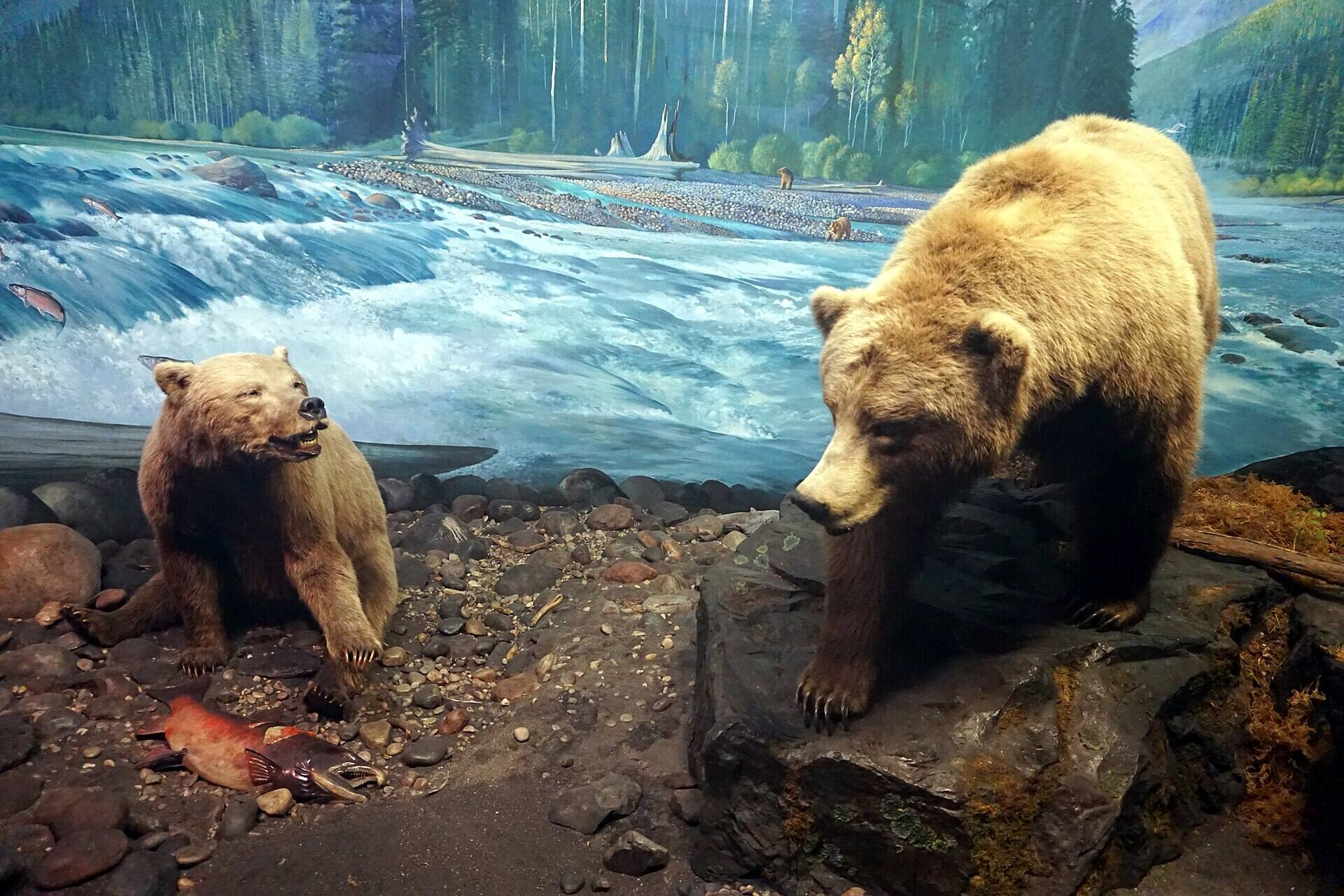
The standard field marks for a grizzly are a pronounced muscular shoulder hump, a dished facial profile, small rounded ears set well back on the head, and very long, slightly curved claws (up to 10 cm, sometimes called “rake claws”). Coat colour varies from blonde and cinnamon through chocolate to nearly black, often with silver-tipped guard hairs on the back and shoulders.
Compared with the American black bear, a grizzly is larger, has the shoulder hump, longer claws, a dished face and smaller ears. Compared with the polar bear, a grizzly is darker, more compact, more terrestrial, and has a heavier head and shorter neck.
Range and habitat
Historically grizzlies ranged from central Alaska through western Canada and across most of the western United States as far south as central Mexico and east into the Great Plains. Today the species has been extirpated from California, Texas, Mexico and most of the lower 48, surviving south of Canada in around six recovery zones across Montana, Wyoming, Idaho and small parts of Washington.
Grizzlies use a wide variety of habitats: arctic tundra, alpine meadows, riverine forest, sagebrush steppe and dense coniferous forest. Strongholds in Alaska (around 30,000 brown bears, grizzlies and coastal bears combined) and western Canada (over 20,000) hold most of North America’s brown bears.
Diet and foraging
Grizzlies are omnivores with a strongly opportunistic feeding strategy. Plant matter still dominates by volume: grasses and sedges in spring, herbaceous shoots in early summer, then berries (huckleberry, soapberry, buffaloberry) and tree mast through autumn.
Animal protein varies hugely by population. Coastal Alaskan grizzlies fatten on spawning salmon at sites like Brooks Falls in Katmai National Park. Interior grizzlies dig out ground squirrels and marmots, scavenge winterkill, hunt elk and moose calves, and steal kills from wolves. Spring grizzlies will dig up army cutworm moths from talus slopes and put on weight at a startling rate. Occasionally they prey on injured or weak black bears.
Like all northern bears, grizzlies enter hyperphagia in late summer, eating the bulk of their annual food intake in the run-up to denning.
Reproduction and lifecycle
Mating runs from late May through July. Pairs stay together for up to two weeks, then both move on; both sexes mate with multiple partners. Females reach sexual maturity at four to seven years and typically produce a litter every three years.
With delayed implantation, fertilised eggs only implant in autumn if the female is fat enough. Cubs are born in the den in January or February, weighing roughly 450 g. Litters are one to four, with two the most common. Cubs emerge in spring at 5 to 8 kg and stay with their mother for two to three years.
Adult male grizzlies regularly kill cubs sired by other males. Mothers go to extraordinary lengths to keep cubs away from large males, and infanticide is a major source of cub mortality before independence.
Behavior and intelligence
Grizzlies are largely solitary outside of mating and family groups. They aggregate at concentrated food sources (salmon runs, whale carcasses, garbage dumps), where a flexible social hierarchy lets dozens of bears tolerate each other within metres.
Over short distances an adult grizzly can comfortably outrun a person, which is the only number that matters when you are deciding what to do. They swim several kilometres and dig deep dens into hillsides. Their bite is among the most powerful of any land carnivore, although the precise figures you see quoted online mostly trace back to estimates rather than measurements. They have excellent spatial memory and well-documented problem-solving in food retrieval.
Are grizzly bears dangerous to humans?
Grizzlies are larger, more confident and more likely to stand their ground than black bears. They tend to respond to perceived threats by holding position, bluff-charging or, occasionally, attacking. Most serious incidents fall into a few categories: a female defending cubs, a bear defending a carcass, a bear surprised at close range, or a bear already conditioned to human food.
The standard advice in grizzly country is the opposite of the black bear protocol: carry bear spray, travel in groups, store all food in approved containers, and if a grizzly makes contact, play dead face down with your hands clasped behind your neck until the bear leaves. Fight back only if the attack persists or the bear is behaving predatorily. For practical detail, see Bear Safety.
Conservation status and threats
Globally the brown bear species is listed as Least Concern, but the grizzly’s status varies by jurisdiction. In the lower 48 US states the population dropped from an estimated 50,000 to roughly 800 in the early 1970s, prompting Endangered Species Act listing. In its January 2025 findings, USFWS estimated at least 2,314 grizzlies in the lower 48 as of 2023, concentrated in the Greater Yellowstone Ecosystem, the Northern Continental Divide, the Cabinet-Yaak and the Selkirks.
Threats include habitat fragmentation by roads and development, vehicle and train strikes, attractant-related killings (garbage, livestock, hunter game), retaliatory poaching, and ongoing debate over delisting in the United States. Alaska holds around 30,000 brown bears, grizzlies and coastal bears combined, and has the healthiest population in North America. For the global picture, see Bear Conservation.
Fun and surprising grizzly bear facts
- “Grizzly” comes from “grizzled”, referring to the silver-tipped guard hairs across the shoulders. The species name horribilis was given by 19th-century naturalists who had clearly heard the stories.
- The grizzly bear is the state mammal of Montana, adopted in 1983. Wyoming’s state mammal, despite the state holding most of the Greater Yellowstone grizzlies, is the American bison.
- California made the California grizzly its state animal in 1953, roughly thirty years after the last one in the state was gone. It is still on the flag.
- Grizzlies routinely move rocks and logs a person could not shift, working slopes for marmots and ground squirrels.
- Coastal grizzlies fattening on salmon at Brooks Falls in Katmai National Park can put on weight fast enough to be visible on the live cams across a few weeks.
- All grizzlies are brown bears, but only North American inland brown bears are usually called grizzlies; the coastal Kodiak is treated separately.
Grizzly bear FAQ
Is a grizzly bear the same as a brown bear?
How many grizzly bears are left?
What is the difference between a grizzly and a black bear?
What should I do if a grizzly attacks me?
Do grizzly bears hibernate?
Related reading
If you found this profile useful, the following guides go deeper on bears, conservation and safety. For more, see our guide to Fat Bear Week.
- Brown Bear
- Kodiak Bear
- Polar Bear
- American Black Bear
- Cantabrian Brown Bear
- Types of Bears: A Complete Guide to All 8 Species
- Bear Conservation
- Bear Safety
- Bear Behavior
Updated 28 September 2026: updated the lower-48 grizzly count to the USFWS 2025 figure, removed the North Cascades from the occupied areas and clarified that the Alaska figure covers all brown bears.
Updated 16 November 2026: updated the lower-48 grizzly count to the USFWS 2023 estimate and clarified the Alaska figure.

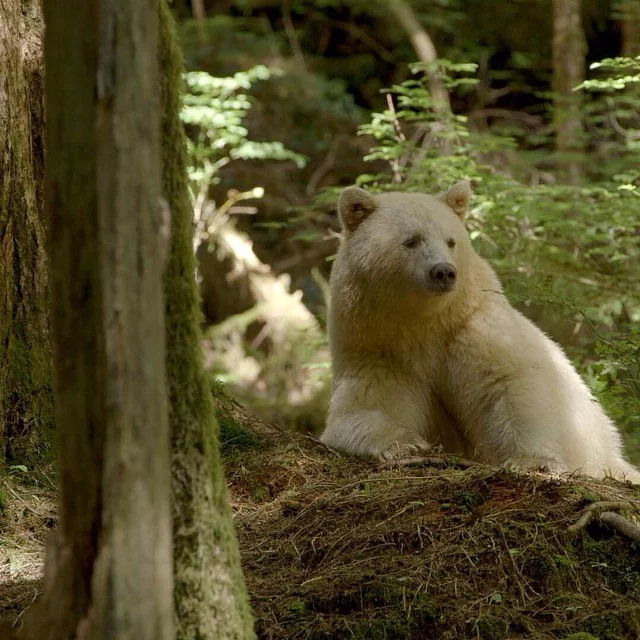


My nephew asked me how to tell a grizzly from a black bear and I said colour, which turns out to be the least useful answer. Hump and ears next time.
Wyoming picking the bison as its state mammal while holding most of the Yellowstone grizzlies made me laugh. Has anyone ever tried to change it?