
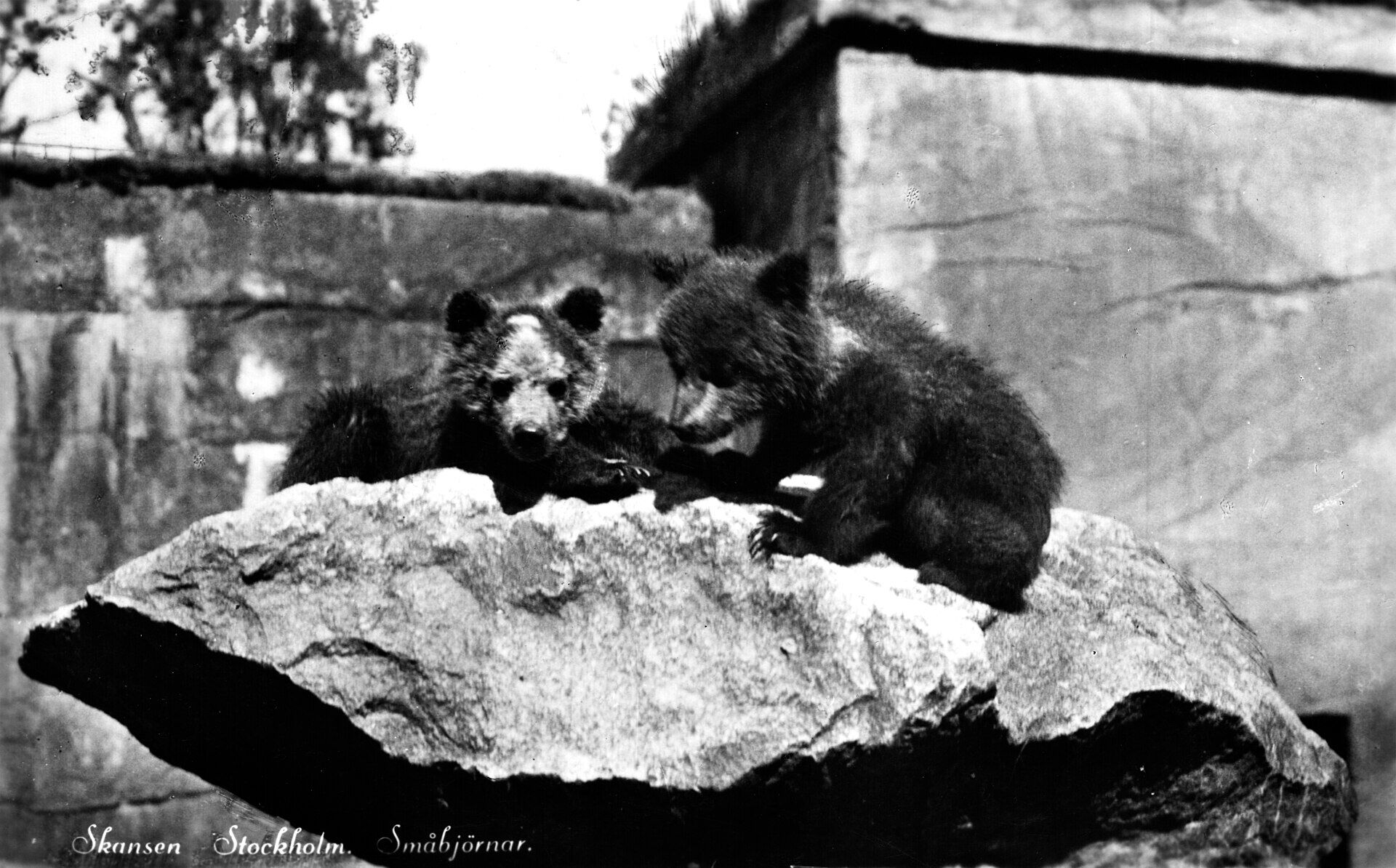
Brown Bear Profile: Facts, Diet & Habitat Guide
Last updated: November 16, 2026
6 min read
The brown bear (Ursus arctos) is the most widely distributed bear species on Earth. It ranges across Eurasia and North America, comes in more than a dozen recognised subspecies, and includes giants like the Kodiak bear and the inland grizzly. Only the polar bear can rival a large coastal brown bear in body mass.
Key facts at a glance
Brown bears vary so much across their range that any single set of numbers is an average. The figures below describe the species globally.
| Attribute | Brown bear |
| Scientific name | Ursus arctos |
| Family | Ursidae (genus Ursus) |
| Length (head and body) | 1.4 to 2.8 m (4.7 to 9.2 ft) |
| Weight | Males around 200 kg, females around 135 kg; coastal males regularly exceed 500 kg |
| IUCN Red List status | Least Concern (globally), with several subpopulations Endangered or Critically Endangered |
| Lifespan | Commonly 20 to 25 years in the wild; Alaska’s oldest recorded wild bears reached 38 (male) and 39 (female) |
| Range | Europe, northern Asia and North America: roughly 200,000 bears globally |
The brown bear is split into more named subspecies than you can comfortably fit on one map, including the Eurasian brown bear, the Kamchatka brown bear, the Syrian brown bear, the extinct Atlas bear, the Cantabrian brown bear in Spain and the Marsican brown bear in central Italy.
What makes a brown bear a brown bear
The single most reliable identification feature is the muscular shoulder hump, formed by powerful muscles attached to long spinal processes. The hump powers the forelimbs for digging up roots, tearing apart logs and delivering enormous swatting blows.
Despite the name, “brown” covers a wide palette. Coats range from cream and blonde through cinnamon, rust, deep chocolate and almost black. Many individuals have lighter guard hairs over a darker undercoat, giving the grizzled effect that names the North American grizzly. The face is dished, the ears are rounded and small relative to head size, and the claws are long (often 8 to 10 cm) and only slightly curved, suited to digging rather than climbing.
Compared with the American black bear, brown bears are stockier, have a shoulder hump, longer claws, a more dished facial profile, and rounder, smaller ears.
Range and habitat
Historically the brown bear ranged from Western Europe across Eurasia into North Africa and Japan, and across most of North America. Today its strongholds are Russia (around 100,000 bears), Alaska, western Canada, the Carpathians, Scandinavia and parts of Central Asia. Smaller relict populations cling on in the Pyrenees, the Cantabrian Mountains and the Italian Apennines.
Brown bears tolerate a wide range of habitats: coniferous and mixed forest, alpine meadows, tundra, river valleys and coastal salmon streams. They are most abundant where salmon runs or rich berry crops let them put on enough fat for winter denning.
Diet and foraging
Brown bears are classic omnivores. Plant matter typically makes up 80 percent or more of the diet by volume: grasses and sedges in spring, herbaceous shoots and tubers in early summer, then a heavy switch to berries, nuts and fallen fruit in late summer and autumn.
Animal protein varies hugely by population. Coastal Alaskan and Kamchatka brown bears fatten on spawning salmon. Interior bears catch ground squirrels, marmots and the calves of moose, elk and caribou. Many populations rely heavily on insects, especially ants and bee larvae, and on carrion taken from wolves or scavenged from winterkill.
Before hibernation, brown bears enter hyperphagia: a phase of round-the-clock feeding in which a large male can pack on 1 to 2 kg of fat a day. That stored fat fuels three to seven months of denning.
Reproduction and lifecycle
Mating runs from mid-May to early July, later further north. Females come into oestrus every three or four years, with an outside range of roughly 2.4 to 5.7 years. Males and females form short-term consort pairs lasting from two days to two weeks, then both move on; both sexes mate with multiple partners across the season.
Brown bears use delayed implantation. The fertilised eggs float in the uterus for around six months, then implant in autumn if the female is fat enough to support pregnancy. Cubs are born blind, naked and roughly 450 grams in the maternity den between January and March.
Litter size is typically one to three cubs, occasionally four. Cubs emerge from the den in spring weighing several kilograms and stay with their mother for one to four years, learning everything from fishing technique to which berries are worth the climb. Adult males play no role in raising cubs and routinely kill cubs sired by other males to bring females back into oestrus.
Behavior and intelligence
Brown bears are largely solitary, but aggregate at high-quality food sources: salmon runs, garbage dumps, whale carcasses. At places like Brooks Falls in Katmai National Park, dozens of bears tolerate each other within metres while fishing, maintained by a fluid social hierarchy of size and temperament.
They are among the most intelligent of the carnivores. Brown bears use tools (rubbing rocks for grooming), remember productive food sites for decades, and can learn to open locks, screw lids and break into vehicles. They are also much faster than they look. The quickest speed reliably recorded for a grizzly in Yellowstone is 48 km/h (30 mph), and the Alaska Department of Fish and Game puts brown bears at up to 64 km/h (40 mph) in a short burst. Either figure beats any human, and they can swim several kilometres.
Are brown bears dangerous to humans?
Brown bears can be dangerous, but most encounters end without injury. Bombieri and colleagues counted 664 brown bear attacks on people worldwide between 2000 and 2015, which is a small number set against a species population of roughly 200,000. The most common scenarios are a surprised female defending cubs, a bear defending a kill or carcass, and food-conditioned individuals that have lost their wariness.
Eurasian populations vary: bears in parts of Eastern Europe and Russia are bolder and more likely to clash with people than bears in Western Europe, where centuries of persecution have selected for shy individuals. For practical bear-country advice (bear spray, food storage, group hiking), see Bear Safety.
Conservation status and threats
Globally the brown bear is listed as Least Concern, with around 200,000 individuals worldwide and stable or increasing trends in major strongholds like Alaska, western Russia and Scandinavia. The picture is very different at the subspecies and population level.
The Cantabrian brown bear in Spain fell to about 70 animals in the early 1990s and has recovered to about 370 (2020 to 2021 census). The Marsican brown bear in central Italy numbered about 81 bears in 2025 and is treated as Critically Endangered. The Atlas bear of North Africa, the California grizzly and the Mexican grizzly are all extinct. The Pyrenean population was reduced to a handful before reintroductions from Slovenia.
Key threats are habitat fragmentation by roads and infrastructure, illegal killing (often via poisoned baits intended for wolves), vehicle collisions, and conflict over livestock and beehives. For the global picture, see Bear Conservation.
Fun and surprising brown bear facts
- The polar bear evolved from a brown bear ancestor, and the two species can still hybridise where their ranges overlap.
- The Kodiak bear, the largest brown bear subspecies, has been isolated on Alaska’s Kodiak Archipelago for around 12,000 years.
- Climbing a tree to escape a brown bear is a myth: large adults can pull themselves up smaller trees, and most attacks happen at ground level anyway.
- Hibernating bears can go more than five months without eating, drinking, urinating or defecating, and lose around 30 percent of their body weight in the process.
- The California grizzly is still on the state flag of California. The last known individual was killed in 1922, and the subspecies is now extinct.
Brown bear FAQ
What is the difference between a brown bear and a grizzly bear?
How many brown bears are there in the world?
Do brown bears hibernate?
What do brown bears eat?
Are brown bears dangerous to humans?
Related reading
- Grizzly Bear
- Kodiak Bear
- Polar Bear
- Types of Bears: A Complete Guide to All 8 Species
- Bear Conservation
- Bear Safety
- Bear Behavior
- Fat Bear Week
Updated 28 September 2026: updated the Cantabrian, Marsican and global brown bear figures and corrected the list of relict populations.
Updated 16 November 2026: corrected the average adult weights.


I had no idea there were still brown bears in central Italy. Are the Marsican bears noticeably smaller than the Scandinavian ones, or is that just how they look in photos?
For years I assumed any bear with a brown coat was a brown bear. The hump and the claw length are what I’ll be looking for from now on, since the colour clearly tells you nothing.