
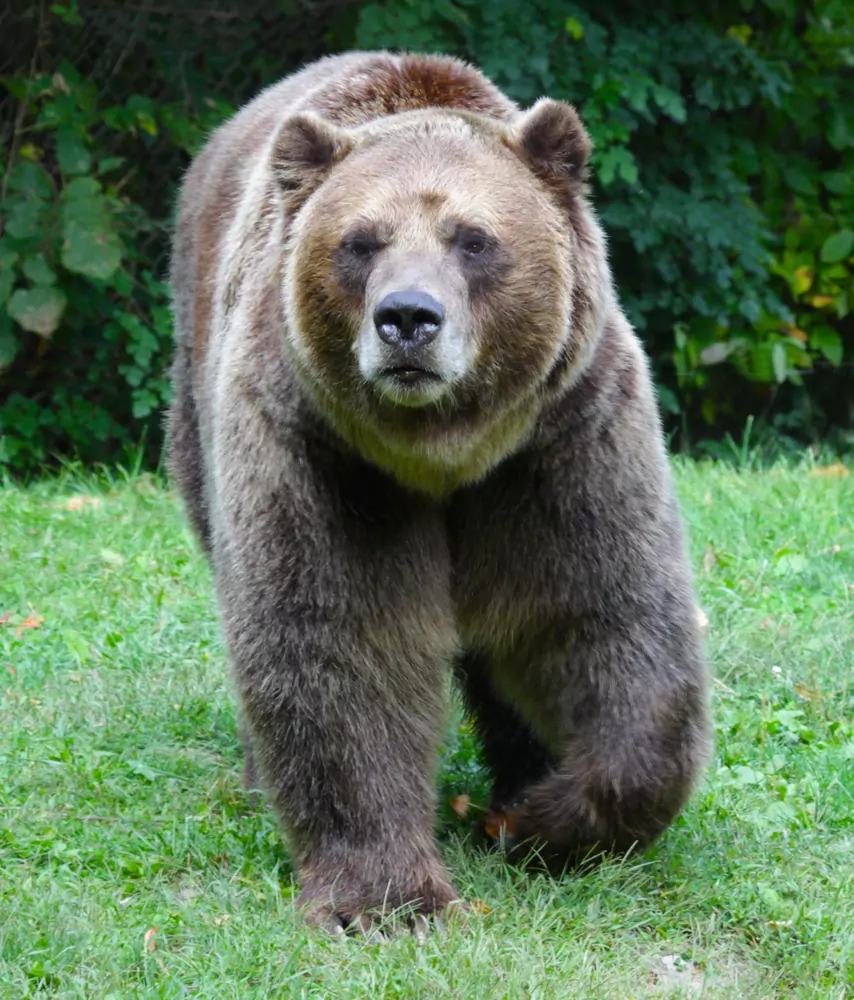
What Happened to the California Grizzly Bear?
Last updated: November 5, 2026
4 min read
The California grizzly is on the state flag, on the state seal, on street signs and shop fronts across California, and nowhere in the state itself. It is a state animal that no longer lives in the state that adopted it. Here is what actually happened, and where the argument about bringing grizzlies back has got to.
How many there were
Before Spanish settlement in the late 1700s, roughly 10,000 grizzly bears lived in what is now California. They were not mountain animals by preference. They worked the oak woodlands, the Central Valley wetlands, the salmon rivers and the coastal plains, which is exactly the ground that European settlement wanted.
The naturalist George Ord gave the grizzly its scientific name in 1815, calling it Ursus horribilis on the strength of accounts brought back by Lewis and Clark. The California population was later treated as its own subspecies, Ursus arctos californicus.
How they were killed
Settlers arrived with cattle, and cattle ranching in early California was a bear problem from the start. Vaqueros were sent out to deal with grizzlies and did the job thoroughly: shot on sight, or roped alive and hauled into town. Live bears were pitted against bulls in public squares as a paying spectacle, a practice recorded across Spanish and Mexican-era California.
Then the Gold Rush from 1848 put hundreds of thousands of armed newcomers into bear country in a few years, and agriculture took the rest. The Central Valley wetlands were drained, the foothill oak woodlands were cleared, and bounties on grizzlies ran through the late nineteenth century. The population went from thousands to nothing in under a century.
One animal from that era became famous for its size. A grizzly killed near Valley Center in San Diego County in 1866 was described by a witness, Catherine E. Lovett Smith, as weighing as much as 2,200 pounds (1,000 kg). If that figure is right it would be among the largest bears ever recorded anywhere, and plenty of sources treat it as an exaggeration. There is no surviving specimen to settle it.
The last one
The last California grizzly known to have been shot was taken in Tulare County in August 1922. The last confirmed sighting came two years later, in 1924, in Sequoia National Park. Nothing credible has been recorded since, and 1924 is the date usually given for the subspecies going extinct.
California made the grizzly its official state animal in 1953, twenty-nine years after the last one was seen. That gap is the whole story in a single pair of dates.
Could grizzlies come back?
Two things are worth separating here, because they get muddled constantly.
The California grizzly as a distinct subspecies is gone and cannot be recovered. There is no cloning route, no back-breeding programme, and no serious proposal to attempt one. What is occasionally discussed is something different: moving grizzlies from surviving North American populations into suitable California habitat, the same way wolves have been returned to other western states.
That conversation is live but early. In 2024 a resolution was introduced in the California Legislature declaring it the Year of the Grizzly, marking a century since the last confirmed sighting, and conservation groups including the Center for Biological Diversity have used the centenary to push the reintroduction question into public debate. Nothing has been authorised, funded or scheduled.
The ecological case is not silly. The Sierra Nevada and parts of southern California retain large blocks of habitat that could hold bears. The obstacles are social and political rather than biological: nearly 40 million people, a great deal of the old grizzly range now under ranching, and a public acceptance job that would take a generation of work before a single bear moved.
Why this case still matters
The California grizzly is the textbook example of how fast a healthy, widespread bear population can disappear once firearms, livestock and bounties arrive together. It is also a study in symbolic survival. The bear is on the flag and the seal and the state animal list, and none of that kept a single animal alive. For the wider picture, see our bear conservation pillar and our overview of all eight bear species.
Read next
- Bear Facts: 50+ Things to Know About the World's Bears
- Canadian Province Agrees To End Grizzly Bear Trophy Hunting
- What Do You Get From Crossing A Grizzly Bear And A Polar Bear?
Frequently asked questions
When did the California grizzly go extinct?
The last one known to be shot was killed in Tulare County in August 1922. The last confirmed sighting was in Sequoia National Park in 1924, which is the date usually given for extinction.
How many California grizzlies were there?
Around 10,000 before Spanish settlement in the late 1700s.
Could the grizzly be reintroduced to California?
Only by moving bears from existing populations elsewhere. The California subspecies itself is gone for good. The idea is being discussed publicly, particularly since the 2024 centenary, but no reintroduction programme has been approved.
Why is the grizzly on the California flag?
The flag descends from the Bear Flag raised in 1846 during a short-lived revolt by American settlers against Mexican rule. The bear on that flag became the basis for the modern state flag.
This article is part of our guide to the eight bear species, which links every species profile and viewing guide on the site.
Updated 28 September 2026: removed two unsourced claims.


I would favor the reintroduction of the grizzly bear to California.
Grew up in California and saw that flag every day at school without once asking where the actual bears went. Are there any California grizzly specimens left in museums, or was everything lost?
A handful of skulls and hides do survive in museum collections, as far as I know. Nothing survives from the giant Valley Center bear, though, which is why its weight is still argued over.
The bull and bear fights were the part I did not know about. Hard to read. I would back moving a few bears into the Sierra if ranchers got proper compensation, but I doubt I see it happen.
If they ever did it, where would the bears come from? Montana, British Columbia? I keep wondering whether an inland grizzly would know what to do with California oak woodland and no salmon to speak of.