
Supplemental Bear Feeding: Does It Solve Or Cause More Problems?
Last updated: November 5, 2026
3 min read
In parts of the western United States, foresters feed bears on purpose. It sounds like exactly the thing every wildlife agency tells you never to do, and the reasoning behind it is more interesting than it first appears.
Why spring is the problem
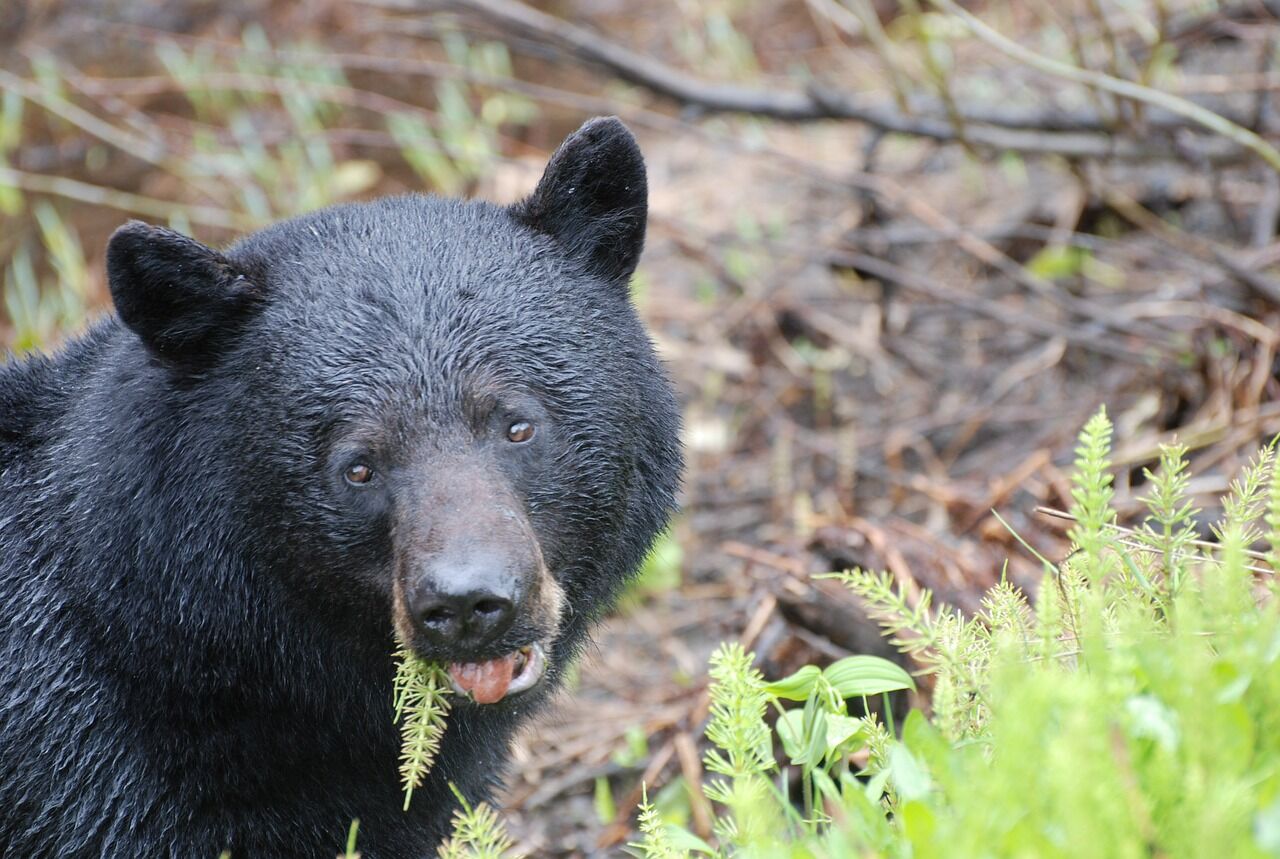
Black bears come out of hibernation hungry, at exactly the point in the year when there is least to eat. The vegetation has not recovered, last autumn’s mast is gone, and the bears need calories now.
One food source is available: young conifers. As the trees start into growth, sugar-rich sapwood runs just under the bark. Bears strip the bark off to get at it, and a girdled tree usually dies. A single bear can peel 60 to 70 conifers in a day during the spring months, which is why timber companies rather than conservation groups drove the search for a fix.
Feeding habits are only one part of how bears live. Our guide to bear behavior covers hibernation, communication, and intelligence too.
What the supplemental feeding program is
In 1985 the Washington Forest Protection Association, working with the Washington Department of Fish and Wildlife, set up the Black Bear Supplemental Feeding Program, also called diversionary feeding. The premise is blunt: give the bears something easier to eat than bark.
Pellets are put out at designated stations for about two and a half months each spring. By 2006 the program was distributing 465,700 lb (211,000 kg) of pellets across 860 stations in western Washington. It has since grown to over half a million pounds a year across more than 900 stations in Washington and Oregon.
It does not stop all damage, and in some areas it is backed up by other deterrents including hound hunters. By late June or early July natural forage has recovered and the bears leave the young stands alone, which is why the program does not need to run longer than it does.
Does it work?
On the face of it, feeding bears looks like the opposite of what agencies spend the rest of the year telling the public. The counter-argument from the people running it is narrow but real: a diversionary station in the right place pulls a persistent bear away from the thing you want to protect, and it does that without shooting the animal.
The same logic gets raised in residential contexts, where black bears break into homes, cars and campsites, and where the alternative to diverting a bear is usually killing it. The pattern is the same everywhere it comes up: humans keep moving into bear habitat, the encounters follow, and someone has to decide what to do about the bear.
Bring bears home
Love what you read? Browse the We Love Bears store for gear and gifts inspired by these incredible animals:
- Shop bear plush toys
- Shop bear mugs
Every purchase supports more bear content on this site.
The risks
Plenty of biologists want the practice kept on a very short leash.
Dave Garshelis, bear project leader at the Minnesota Department of Natural Resources, accepts the benefits but warns that diversionary feeding can go badly wrong if it is not run by professionals and reserved for extreme situations. His concern is permanent behavioural change: fed bears become less wary of people and more inclined to approach them, which stores up a worse problem than the one being solved.
The bear biologist Rachel Mazur makes the broader point that feeding is a temporary measure that “doesn’t address the real problem.” The problem being that these are hungry animals whose habitat keeps shrinking, and no amount of pellets changes that.
Which is the honest conclusion here. Diversionary feeding buys time for a plantation and buys a life for a bear that would otherwise be shot. It does not fix anything underneath.
Read next
- Bear Facts: 50+ Things to Know About the World's Bears
- Bear Behavior Explained: Hibernation, Communication, Intelligence, and More
- Why Does The Horrible Asian Market For Bear Parts Still Exist?
This article is part of our bear conservation guide, which links all our conservation, rescue and wildlife crime reporting.




Do the pellet stations end up teaching cubs to look for them every spring? If a mother brings her cubs to the same station year after year, that seems like a habit that gets passed on.
I live in western Washington and had never heard of this program. Sixty or seventy trees in a day sounded like a lot until I remembered all the stripped trunks along the logging roads near us.