
Bear Baiting: An Ancient Blood Sport in Pakistan
Last updated: November 5, 2026
3 min read
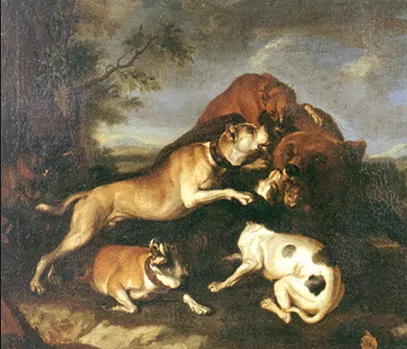
Bear baiting is a blood sport in which dogs are set on a tethered bear. It has been illegal in Pakistan for well over a century. World Animal Protection reported no bear-baiting events there in 2019.
Above: a bear-baiting scene by the Dutch painter Abraham Hondius (1631 to 1691). Public domain.
Events are staged in rural areas by landowners and local strongmen, and draw crowds of thousands. The animals at the centre of them are Asian black bears and brown bears, taken illegally from the wild.
What actually happens
A bear is tied by the neck or the legs to a post in the middle of a ring, on a rope of a few metres. Trained fighting dogs are released to attack it. The bear cannot leave, cannot get behind anything, and cannot use most of its natural defences.
A round lasts a matter of minutes. Rolling on the ground is a sign of submission. If the bear survives, it may be put back in for further rounds the same day, and the cycle repeats until the animal dies. Dogs are injured and killed too. When one goes down, another is brought in.
When a bear dies, another wild bear is taken to replace it. That is the part with consequences beyond the individual animal: the practice is a steady, illegal drain on wild bear populations.
How the bears are prepared
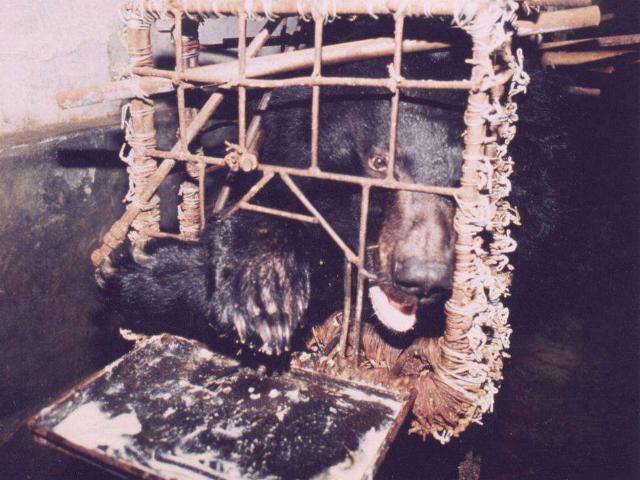
Handlers pierce the bear’s muzzle to fit a nose ring, file its claws down, and remove its canine teeth. The point is to leave it with as little capacity to defend itself as possible, which is what makes the fight watchable to the crowd and survivable for the dogs.
The bears are also kept on poor diets and in poor condition between events, so what strength they have left is already compromised.
How it reached Pakistan
Bear baiting is not indigenous to the subcontinent. It arrived with the British in the nineteenth century, carried over from a European tradition that had been popular for centuries.
In England the bear was tethered to a post in a pit and the audience sat on raised seating. Elizabeth I was a keen spectator, and when Parliament moved to ban baiting on Sundays she overruled it. The English version died out. The version the British exported did not.
In Pakistan, baiting was outlawed under the Prevention of Cruelty to Animals Act of 1890, and capturing bear cubs is separately prohibited under provincial wildlife legislation. It was documented in Punjab and Sindh through the 2000s, and events fell sharply after that.
Why it persists, and what is being done
The sport survives on a network of wildlife dealers, hunters, landowners and itinerant bear owners. Enforcement is difficult in part because the owners move constantly, which makes them hard to find, hard to prosecute and hard to reach with any alternative.
The main lines of work, led by what is now World Animal Protection alongside local partners, have been:
- Sharing intelligence with local authorities about where events are being staged.
- Offering alternative livelihoods, since the driver is largely economic.
- Strengthening enforcement of the laws that already exist.
- Community work aimed at making the practice socially unacceptable rather than merely illegal.
- Running sanctuaries for rescued and surrendered bears, which cannot go back to the wild after what has been done to them.
Kund Park and Balkasar
Kund Park sanctuary opened in 2000 to give rescued bears somewhere to live out their lives. In 2010 the Pakistan floods destroyed it, and of the 23 bears there, only three survived.
Those three were moved to a newly built replacement, the Balkasar Bear Sanctuary, which has since taken in many more rescued animals. It is the endpoint for most bears pulled out of the baiting circuit.
A wild bear left alone can live twenty years or more. A bear in the baiting trade does not get near that.
Bring bears home
Browse the We Love Bears store for gear and gifts inspired by these animals:
- Shop bear plush toys
- Shop bear books
- Shop bear mugs
This article is part of our bear conservation guide, which links all our conservation, rescue and wildlife crime reporting.
Updated 28 September 2026: updated the bear-baiting status with the 2019 World Animal Protection report.



Please stop this horrific thing.
Had to stop halfway and come back to this the next day. Pulling the teeth and filing the claws first is the detail I cannot shake.
I had no idea the British brought this to the subcontinent. Was the 1890 law ever used against organisers, or did it mostly sit unused until the sanctuary work started?