
How Bears Communicate: Sounds, Scent, and Body Language
Last updated: November 1, 2026
6 min read
Bears are often described as solitary, and biologically that is mostly true. Adults of every species avoid each other for much of the year. But “solitary” is misleading. Even a solitary animal has to negotiate space, signal sexual readiness, warn off rivals, settle disputes at carcasses and salmon streams, and raise dependent cubs. Bears do all of that with a rich toolkit: low-frequency vocalisations, persistent scent-marking on landscape features, and a body-language vocabulary that field biologists can read at 50 metres.
Learning to read bears does two things. It corrects the cartoon idea that any bear behaviour other than placid grazing is aggression. It also keeps people alive. The vast majority of charges, including most grizzly charges, are bluffs, and a bear that intends to attack signals very differently from one that is loudly bluffing you into leaving.
Vocalisations: a quiet animal, mostly
Bears are not chatty. A wild bear can go days without making a sound a human would notice. When they do vocalise, the calls fall into a small set of categories, each with a clear function.
Chuffing. A soft, breathy puff. Mothers chuff to keep cubs close, and cubs chuff to keep track of their mother. It is a contact sound. Huffing or blowing is louder and more forceful. A bear huffs or blows when it is nervous or startled, and it means the bear wants you to leave.
Jaw popping. A sharp, percussive clack from the jaw, often repeated. This is stress. A jaw-popping bear is uncomfortable, conflicted, and asking for distance. Hikers who hear it in dense cover should stop talking, identify themselves as human, and back away slowly. A jaw-popping bear is rarely about to attack, but it is very clearly telling you to leave.
Moaning and bawling. A long, drawn-out, almost cow-like moan comes from a frustrated or distressed bear, often a young animal separated from its mother or cornered by another bear. Cubs bawl when alarmed.
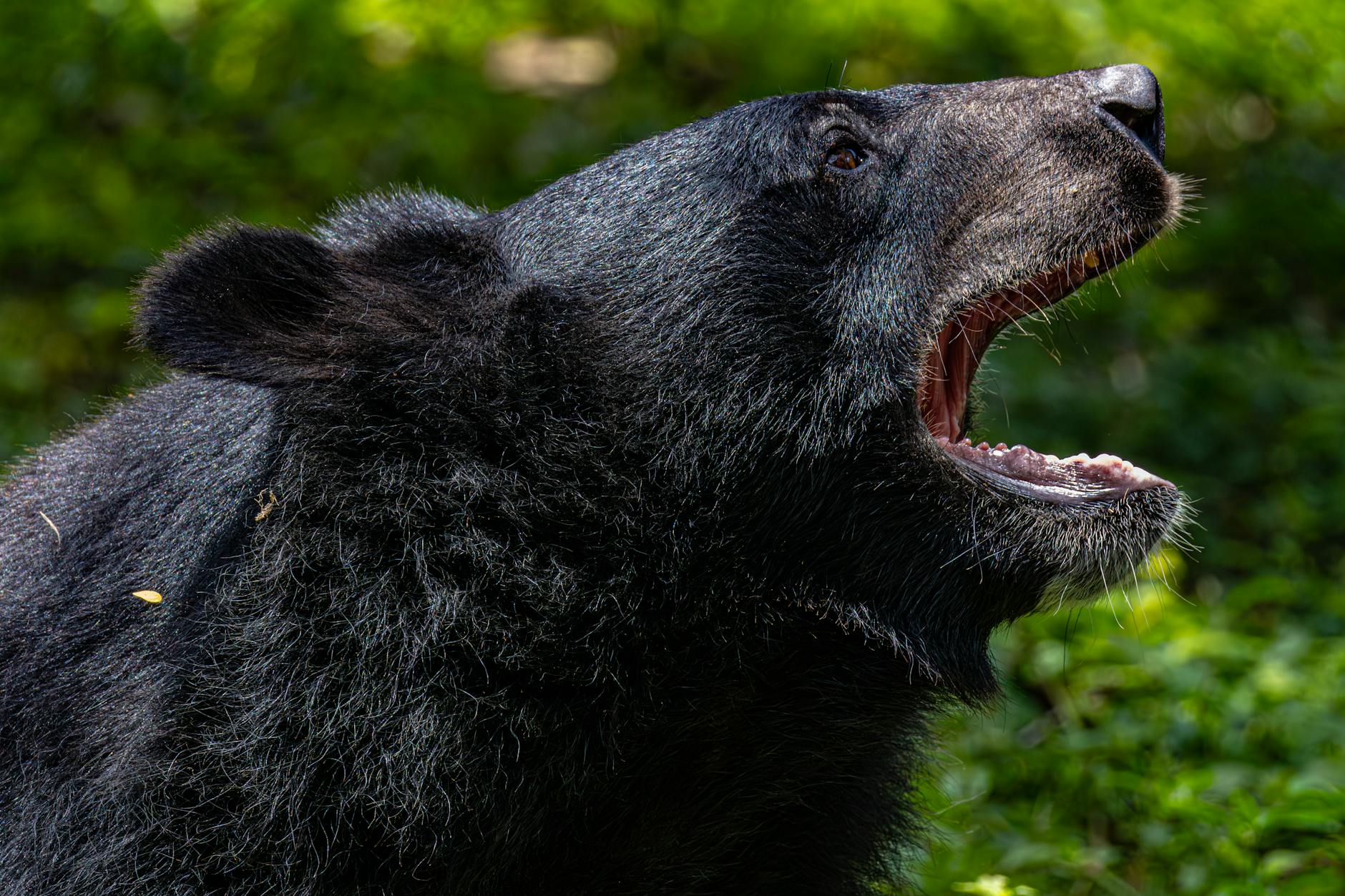
Roaring. Genuine roars are rare and go with serious aggression or extreme distress. They come from deep in the chest, last several seconds, and carry a long way. A roaring bear is committed. A roaring bear is not bluffing.
Cub coos and trills. Cubs of the year make a soft trilling or humming sound while nursing or in close contact with their mother. It carries only a few metres and is one of the most charming sounds a bear watcher can catch.
Sloth bears are the loud exception. Their noisy lip-vacuum feeding on termites, plus a habit of snorting and huffing through dense Indian scrub forest, is a real factor in the number of surprise encounters they have with people.
Scent: the slow, persistent message board
Bears live in a world dominated by smell. A polar bear can detect a seal lair through a metre of snow. A grizzly can pick up a winter-killed carcass from miles downwind. Their olfactory anatomy is far larger and more elaborate than ours in both bulb volume and the surface area of the nasal lining.
So when bears want to say something persistent, they leave smells. The result is a landscape of bear billboards.
Rub trees. A mature brown bear, especially a dominant male, will return to the same handful of trees year after year, rubbing shoulders, back and chest against the bark. The bark shreds, the cambium is exposed, and the surface becomes saturated with hair and the secretions of pedal and apocrine glands. Individual rub trees can stay in use across many bear generations, which is why researchers use them as long-term monitoring points and camera-trap sites.
Bite marks. Some brown bears and grizzlies bite trees, leaving deep tooth marks high on the trunk. This is a size signal: a bear cannot bite higher than it can reach standing up, so other bears can read the height and draw a conclusion about the animal that left it.
Pedal scent and stomp walking. Bears have well-developed scent glands on their feet, and males in the breeding season sometimes use an exaggerated stomping gait that twists each footfall into the ground and works scent into the soil. Patches of forest floor in an active breeding area can end up looking divoted.
Urination. Bears urinate on rub trees, in beds and along trails. Males in the breeding season advertise condition and presence. Females in oestrus advertise availability.
Body language: the part that matters when you meet one
Walk into a yard with two dogs and you can read their mood in seconds: ears, tail, hackles, head height, eye contact, weight distribution. Bears use the same vocabulary. The signals are subtler and the stakes are higher, but the grammar is consistent.
Ear position. Forward, alert ears mean interest or curiosity. Flattened ears, pinned back, mean stress or aggression. A bear that flattens its ears while looking at you is escalating, not retreating.
Head and shoulder position. Head low, eyes locked on you, weight forward over the front shoulders is a threat posture. Head high, soft gaze, weight balanced is curious or unconcerned. Standing on the hind legs is almost never aggressive: bears stand to see, hear and smell better. A standing bear is gathering information.
Hackles up. Raised hair along the neck and shoulders, especially in American black bears, is an arousal signal. It is not aggression in itself, but it tells you the bear is keyed up.
Yawning, lip licking and salivation. Counter to expectation, these are stress signals rather than signs of a relaxed animal. A bear under pressure yawns, licks its lips and may drool. It is the same displacement behaviour you see in a stressed dog.
Bluff charge. A bluff charge looks devastating and ends without contact. The bear covers 10 to 30 metres, often at full gallop, and pulls up short with a stiff-legged stop and a final jaw pop. Most grizzly charges are bluffs. Standing your ground, terrifying as that is, is the correct response. Running triggers pursuit. Backing away slowly while talking is acceptable. Bear spray deployed into the face at close range is the intervention with the best field record.
Predatory stalk. Rare, and very different from a bluff. A bear that is hunting you moves slowly and deliberately, ears forward, eyes locked, often circling. No huffing, no jaw popping, no roaring. Silence and intent. That is the situation that requires fighting back hard, and it is one of the reasons every bear-country expert insists on carrying spray. For more on telling defensive from predatory encounters, see our bear safety guide.
Curious, stressed or aggressive: the diagnostic table
| Signal | Curious | Stressed | Aggressive |
|---|---|---|---|
| Ears | Forward | Sideways or flicking | Flattened |
| Head | High, level | Low, swinging | Low, locked forward |
| Vocalisation | Quiet, chuffs | Jaw pops, moans | Roars, growls (rare) |
| Body posture | Relaxed, may stand | Tense, weight shifting | Stiff, weight forward |
| Movement | Steady walk or pause | Pacing, swatting ground | Bluff charge or stalk |
| Salivation | Normal | Excessive, lip-licking | Variable |
| Your response | Identify yourself, move away calmly | Back away, give space | Stand ground, deploy spray |
Cubs: the first communication classroom
Mother bears teach cubs everything from den location to salmon catching to which roots are worth digging. Cubs pick up body language by watching how she reacts to other bears: when she pulls them in with a chuff, when she shoulders them up a tree, when she stands and stares. By 18 months a yearling reads other bears with something close to adult competence. Family separation, when it comes in the second or third spring, is often delivered as a single decisive chase and a refusal to let the offspring back. It looks cruel. It is how a bear becomes a bear.
FAQ
What does it mean when a bear stands on its hind legs?
Is a huffing or chuffing bear angry?
What is the difference between a bluff charge and a real attack?
Why do bears mark trees?
For more on bear cognition and how bears remember sites across vast territories, see our companion piece on bear intelligence. For the full picture across the eight species, the bear behaviour pillar is the home base, and our overview of the eight bear species maps the family tree.
Updated 28 September 2026: separated chuffing, a contact sound, from huffing, a warning from a nervous bear.


Never knew huffing and jaw popping meant different things. My dog goes stiff at both, so I guess he figured it out before I did.
Did some volunteer camera-trap work after college and the rub trees gave us almost all our bear footage. You could see the bark worn smooth at shoulder height.