
What Do Bears Eat? Diet by Species and Season
Last updated: November 5, 2026
6 min read
The first thing to understand about bear diet is that the word “carnivore” in “Carnivora” is a taxonomic label, not a description of how bears actually eat. With one major exception (the polar bear) and one near exception (the sloth bear’s specialisation on social insects), every bear species on Earth is an opportunistic omnivore. They eat what is in front of them, what their nose can find, and what their gut can process. That gut, despite its short carnivore-style tract, handles grasses, sedges, roots, nuts, fruit, fish, mammals, insects and carrion in proportions that shift week by week.
A grizzly in late May is essentially a roving lawnmower. The same grizzly in late September is a fish-eating, fat-storing machine. The same grizzly in October is again largely vegetarian, this time on pine nuts. Same animal, three completely different diets, all within five months.
The eight species, in summary
| Species | Diet emphasis | Plant matter | Animal matter | Notable food |
|---|---|---|---|---|
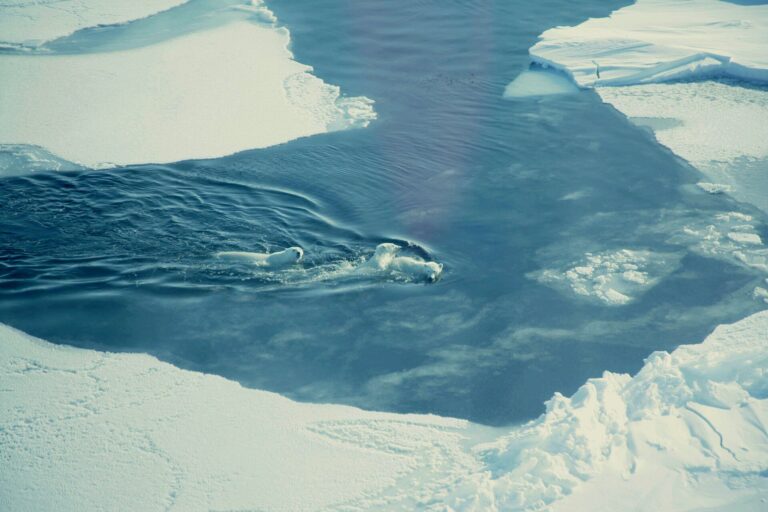
| Polar bear | Hypercarnivore | Negligible | Over 95% | Ringed seal pups |
| Brown bear / grizzly | Omnivore | 70 to 90% | 10 to 30% | Salmon, ungulate calves, berries |
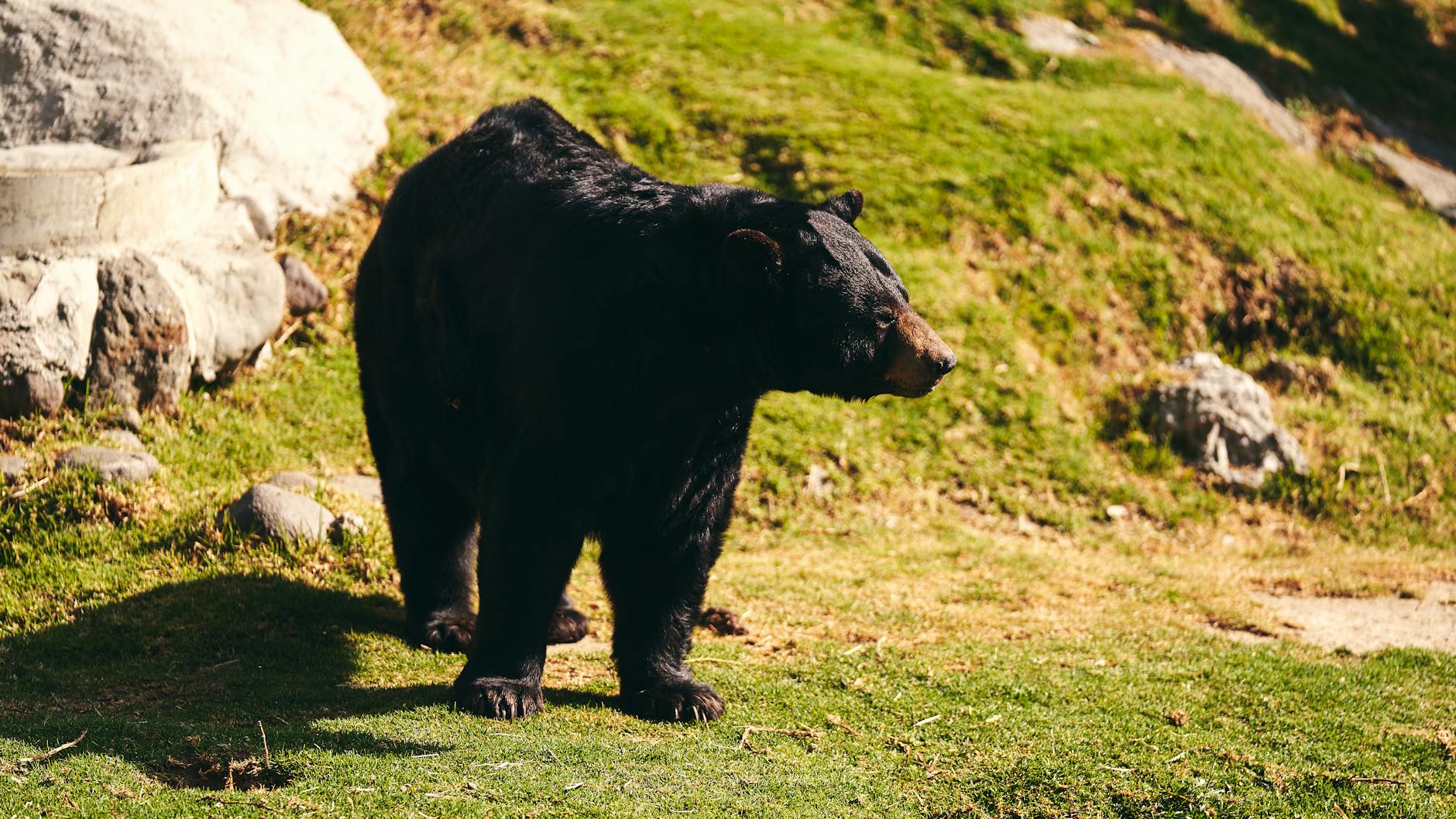
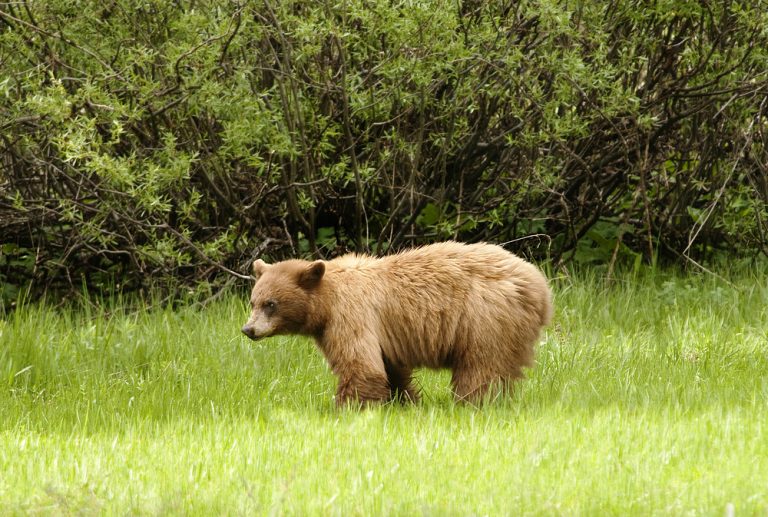
| American black bear | Omnivore | 75 to 95% | 5 to 25% | Acorns, berries, insects, carrion |
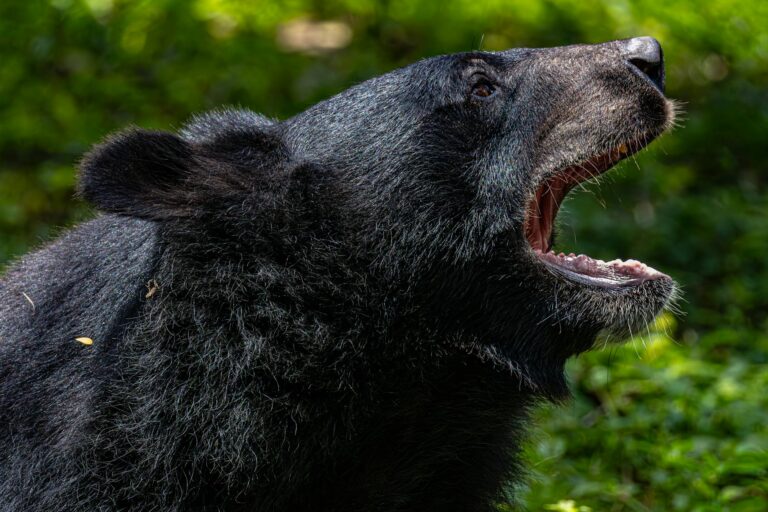
| Asian black bear | Omnivore | 80 to 95% | 5 to 20% | Acorns, beech mast, insects |
| Sun bear | Omnivore, insectivore lean | 50 to 70% | 30 to 50% | Termites, beetle larvae, figs, honey |
| Sloth bear | Myrmecophage | 30 to 50% | 50 to 70% | Termites, ants, fruit |
| Spectacled bear | Near-vegetarian | 90 to 95% | 5 to 10% | Bromeliads, fruit, occasional rodent |
| Giant panda | Folivore | About 99% | Negligible | Bamboo, by season |
These are central tendencies, not rules. Coastal brown bears in Alaska can be over half salmon by mass during a good run. Interior grizzlies in the Greater Yellowstone Ecosystem take a large share of their late-summer calories from army cutworm moths in some years and from whitebark pine nuts in others. The pine nuts have been unreliable since white pine blister rust took hold. Spectacled bears in northern Peru occasionally scavenge cattle carcasses. The family is plastic.
Pre-hibernation hyperphagia
In late summer and autumn, brown bears, grizzlies, Kodiak bears, American black bears and northern Asian black bears enter hyperphagia. They eat up to 20 hours a day. Katmai National Park puts the intake of a fattening Brooks River bear at 20,000 calories or more per day, several times the non-hyperphagic baseline, and a coastal brown bear in late August can put on a couple of kilos a day for weeks running.
This is where Katmai’s Fat Bear Week tournament comes from. Bear 480 Otis, a four-time champion in 2014, 2016, 2017 and 2021, entered autumn in his prime looking like a large but normally built bear and left it looking like he had swallowed a barrel. His face went nearly square and his shoulders broadened. He was laying down the stockpile that carried him through five to seven months without food. He has not been seen at Brooks River since 2023.
Hyperphagic bears are working to calories per minute. Salmon and berries are pure fuel. When fish are abundant, bears preferentially strip the brain, skin and eggs, the fattiest parts, and leave the rest of the carcass to gulls and foxes. That is arithmetic, not waste: finishing each fish costs more time than catching the next one.
Salmon: the foundation of coastal bear size
Coastal Kodiak bears and Alaskan brown bears are the largest non-polar bears in the world specifically because of salmon. The five Pacific salmon species (chinook, sockeye, coho, pink, chum) provide a concentrated, predictable, seasonally pulsed source of protein and fat that lets coastal browns reach 450 to 600 kg in good years. Inland grizzlies on much the same genetics rarely exceed 250 kg, because they have no equivalent pulse.
The annual cycle of runs, lower river through upper river, gives coastal bears months of high-protein eating. The Brooks Falls platform, where Otis fished for years, sits on the late-July sockeye run. Different stretches of the same river feed different bears in different weeks, which is why bear watchers who return to one spot see a rotating cast.
Berry years and lean years
Wild berry production swings hard from year to year. A good year in the Greater Yellowstone Ecosystem can see whortleberry and serviceberry shrubs fruiting heavily; a failure year, usually driven by late frost or summer drought, produces a fraction of that. Bears respond. In good years they fatten on the shrubs and stay out of town. In bad years they push into orchards, dumpsters, beehives, livestock pastures and outbuildings. Spikes in human-bear conflict across the American West tend to track berry, pine nut and acorn failures.
The same pattern shows up in Europe. In the Cantabrian range a poor beech mast year drives brown bears into orchards and apiaries. In the central Apennines, the Marsican brown bear Amarena, shot dead in August 2023, was well known for working village apple trees and beehives.
Insects matter more than they look
Bears eat enormous quantities of insects. In the Rockies, grizzlies dig army cutworm moths out of high-elevation talus slopes, and researchers have recorded individual bears taking tens of thousands of moths in a day, a haul worth roughly 20,000 calories of almost pure fat. In the southeastern US, American black bears tear rotted logs apart for carpenter ants and beetle larvae. In the Cantabrian Mountains, brown bears strip wild beehives out of rock crevices for honey and brood.
The sloth bear takes this to a specialist extreme. Its lower lip is mobile and protrusible, its nostrils close at will, and the gap left by a missing pair of upper incisors turns the mouth into a vacuum. A foraging sloth bear pushes its muzzle into a termite mound, blows out the loose soil, then sucks termites and queens through the dental gap. The noise carries for a hundred metres, and being that loud in dense scrub is one reason sloth bears injure more people in India than tigers do.
The sun bear is similarly insect-focused. Its tongue extends 20 to 25 cm to reach into bee nests and termite galleries.
The gradient: carnivore to near-vegetarian
At one end sits the polar bear, a true hypercarnivore. Nearly all of its diet is animal matter, and most of that is ringed and bearded seal blubber. A polar bear stuck ashore in summer will scavenge whale carcasses, raid ground-nesting bird colonies and take the odd small mammal or fish, but those are stopgaps. The species is built around seal fat.
At the other end sits the spectacled bear of the Andes, living almost entirely on bromeliad hearts, fruit, palm pith, bamboo and roots. Animal protein is opportunistic: small mammals, ground-nesting birds, carrion, occasionally a calf.
The giant panda goes further still. Over 99 percent of its food is bamboo, eaten in enormous quantities (10 to 18 kg a day for an adult) because its carnivore-style gut extracts only a small fraction of the available nutrients. The panda has not lost the ability to digest meat, and captive pandas eat it without trouble. In the wild, bamboo is simply what it eats.
In the middle sit the omnivores: American black, Asian black, brown and Kodiak bears, mostly plant matter through the growing season and skewing hard toward animal protein in autumn.
Cub diet
Bear cubs are born mid-hibernation, blind, nearly hairless and tiny. Brown bear cubs weigh around 450 g at birth and polar bear cubs a little over half a kilogram. For four to six months they nurse exclusively. Bear milk is among the richest of any land mammal, with polar bear milk running around a third fat, which is why a cub can multiply its birth weight several times over before it ever sees daylight.
After emergence, cubs keep nursing for many months while sampling whatever their mother is eating. They learn the year’s calorie schedule by copying her: which slope greens up first, when the fish arrive, which logs hold ants. Orphaned cubs survive at much lower rates, because they have to work all of that out from scratch.
FAQ
How big can a fattening bear get?
Bear 747, the Fat Bear Week champion in 2020 and 2022, is the heaviest bear Katmai staff have put a figure on, estimated at roughly 635 kg at peak autumn weight. The estimate comes from lidar scans of the bear’s body volume, not from a scale, so treat it as a careful approximation.
Are pandas really bears?
Yes. Molecular and morphological evidence places the giant panda inside Ursidae as the most basal living lineage, splitting from the rest of the family roughly 19 million years ago. Bamboo specialisation aside, it keeps bear bone structure, claw anatomy and reproductive biology.
Why don’t polar bears hunt fish more often?
They can, and occasionally do in summer when seals are out of reach, but the energy maths favours seals. One ringed seal pup is several kilos of blubber. A bear would have to catch a lot of fish to match it, and sea ice is better seal habitat than fish habitat.
Do bears eat meat?
Almost all of them do. Polar bears are nearly all meat. Brown bears and grizzlies take ungulate calves and, in some seasons, adult elk and moose. American black bears scavenge winter-killed deer. Sun and sloth bears eat huge volumes of insects, which is animal matter by any honest accounting. The giant panda is the only species where meat is close to zero in the wild.
For more on how diet drives the physiology of bear hibernation, and on the cognitive demands of finding food across a huge seasonal range, see our piece on how smart bears are. For the wider behaviour pillar, start with our overview of the eight bear species.
Updated 28 September 2026: corrected how bear 747’s weight was estimated and what blister rust affects, and updated the Otis section.



Our oak ridge had almost no acorns last fall and the black bears were in every bird feeder on the road by September. The bit about conflict tracking mast failures matches what we saw.
Does the 20,000 calories a day figure hold for European brown bears, or is that mostly a salmon thing? Our bears in Poland get nothing like a salmon run.