
The Cherokee Bears Of North Carolina: What We Know
Last updated: September 28, 2026
2 min read
For decades, the tourist strip at Cherokee, North Carolina held bears in concrete pits. This is what is on the record about those bears, and what we still cannot confirm.
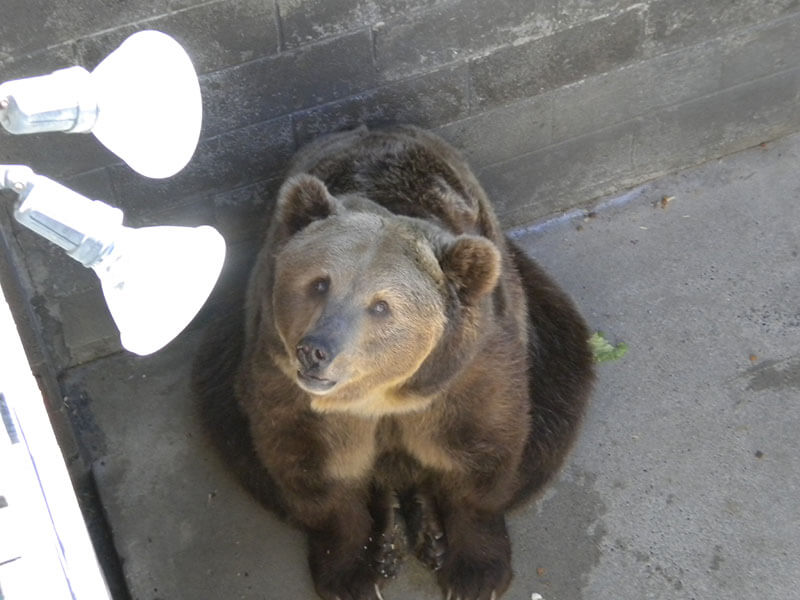
One of the Cherokee bears in its concrete pit (Photo: PETA)
What the Cherokee bears were
Three roadside attractions in the town of Cherokee, on the edge of the Great Smoky Mountains, kept captive bears as a draw for passing tourists: the Cherokee Bear Zoo, Chief Saunooke Bear Park, and Santa’s Land. Between them they held American black bears, Asiatic black bears and grizzlies. The enclosures were barren concrete pits ringed by metal bars and walls high enough that the animals could not see out.
The facilities were controversial for years. Bob Barker, the retired game show host and animal rights campaigner, publicly called for the black bear zoos at these attractions to be closed.
Why the pits were the problem
A wild bear ranges over tens of square kilometres, digs, climbs, swims and dens. A bear in a concrete pit does none of those things. The behaviours reported at Cherokee are the classic signature of that deprivation:
- Pacing and turning in tight circles for hours.
- Broken teeth and nails from biting the bars and trying to dig at concrete.
- Joint disease from a lifetime on an unyielding floor.
- Begging visitors for food, which visitors were often sold so they could throw it in.
Cubs at these facilities were also used for paid photo opportunities. In the wild, a black bear cub stays with its mother through its first year and well into its second, learning everything it will need from her.
What actually happened
In January 2013, following complaints and an undercover investigation by PETA, the US Department of Agriculture suspended Chief Saunooke Bear Park’s licence and fined it $20,000 for inhumane conditions. The park closed and its bears were moved out.
Legal pressure continued against the Cherokee Bear Zoo afterwards, including litigation brought on behalf of tribal elders.
Bring bears home
Love what you read? Browse the We Love Bears store for gear and gifts inspired by these animals:
Every purchase supports more bear content on this site.
Where things stand now
This post was originally written in 2017 as a call to action, and it asked readers to petition the USDA and the zoo owners. The 11 bears from Chief Saunooke Bear Park (two Asiatic black bears, three grizzlies and six American black bears) went to the International Exotic Animal Sanctuary in Boyd, Texas, in 2013.
In August 2026 the Eastern Band of Cherokee Indians Tribal Council passed an ordinance to phase out caged bears on tribal land by September 2028. It takes effect only once the Principal Chief signs it.
The wider point
Bears that have spent their lives in a pit usually cannot be returned to the wild. They have never learned to forage, den or avoid people. The realistic destination is an accredited sanctuary with space, substrate, water and enrichment, where an animal can at least behave like a bear for whatever time it has left. That is the outcome campaigners were pushing for at Cherokee, and it remains the outcome worth pushing for anywhere bears are still kept this way.
For more, see our guides to types of bears, bear conservation, and bear behavior.
Updated 28 September 2026: added where the Chief Saunooke bears went in 2013 and the 2026 tribal ordinance.

We drove through Cherokee on the way into the Smokies once and saw the signs for the bear park. We did not stop. I remember the kids asking why there would be bears in a town.
Is the Cherokee Bear Zoo still open? I can find plenty about Saunooke closing but nothing clear on what happened to the others.