
The Return of British Bears: Can Bear Reintroduction Work in the UK?
Last updated: November 5, 2026
5 min read
British bears went extinct over a thousand years ago. In 2026, the question of bringing them back sits somewhere between fringe rewilding and a real policy conversation.
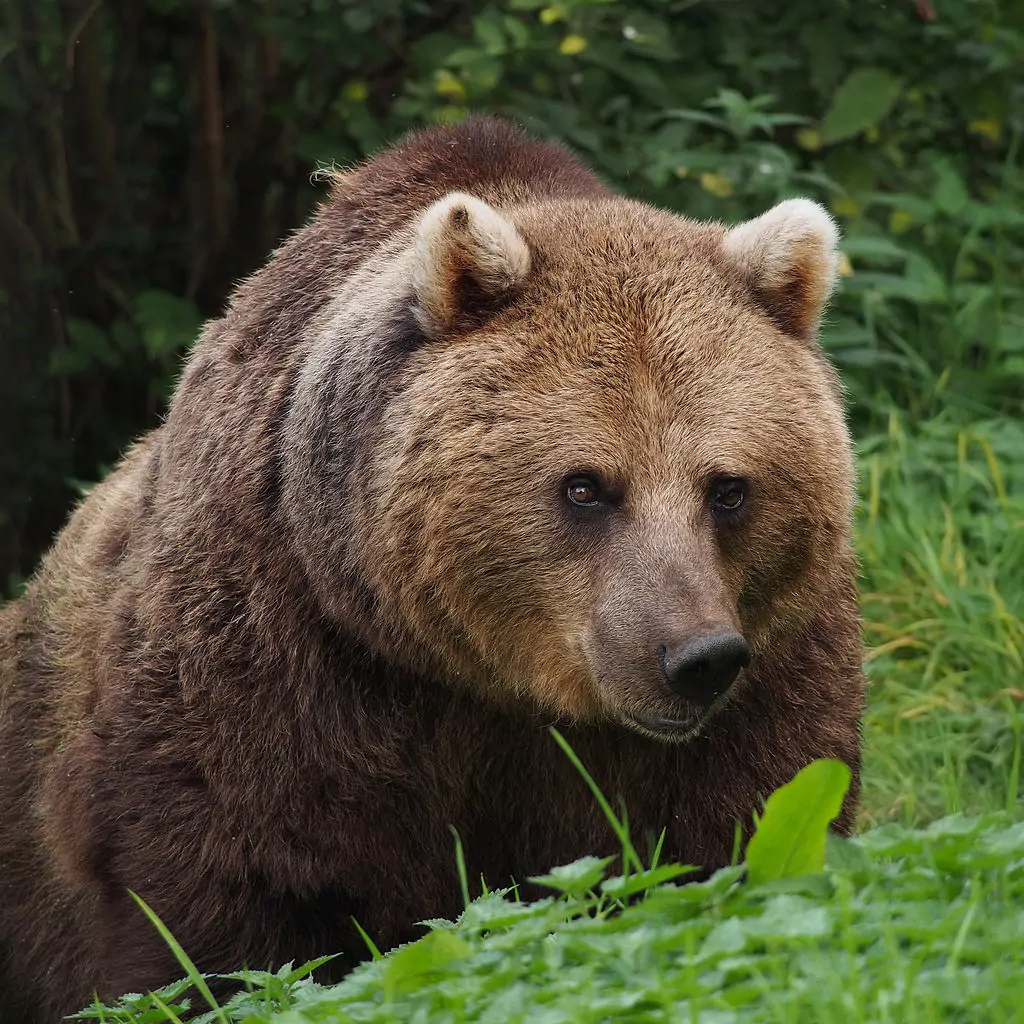
Eurasian brown bear at Whipsnade Zoo (Photo: Francis C. Franklin / Wikimedia Commons CC BY-SA 3.0).
Wild bears roamed Britain for thousands of years. The bones, the place names, and the historical chronicles all line up: the Eurasian brown bear was a permanent fixture across the British Isles until roughly the 10th century. Then it was gone, hunted out by people who valued bear fur, bear meat, and an absence of bears in their hunting grounds.
In the past decade, three things have changed the conversation. The Lynx UK Trust began campaigning seriously for lynx reintroduction. Beavers have been returned to Scotland, Devon, and Kent. And Knepp Castle Estate has demonstrated, in print and in the field, that rewilding works at scale. Against that backdrop, “should we bring back British bears?” is now a question with both supporters and serious opposition.
What Happened to the Original British Bears?
Eurasian brown bears (Ursus arctos arctos) lived across Britain from the end of the last ice age. Excavated remains have been dated across England, Wales, and Scotland. The species was important enough in Iron Age and Roman Britain that bear references appear in Pictish carvings and in Roman-era sources, and Roman writers refer to British bears being shipped to the arenas.
Three forces drove them to extinction:
- Hunting for fur and meat. Bear pelts were valuable trade goods and bear meat was a luxury food.
- Habitat loss. The conversion of forest to farmland and grazing land removed bear habitat steadily through the Iron Age, Roman, and Anglo-Saxon periods.
- Competition with livestock farming. Bears that took sheep or pigs were killed on sight. As farming intensified, the kill rate accelerated.
The last reliable record of a wild bear in Britain is from Scotland around the 10th century. After that, the only bears on British soil were imported animals for bear-baiting pits, captive collections, and later zoos.
The Modern Case for Bringing Back British Bears
Supporters fall into three loose camps.
Ecological Restoration
Bears are ecosystem engineers in temperate forests. They spread seeds across kilometres, modify the rotting wood profile that supports beetles and fungi, and create pulse-feeding events when they break open carcasses for scavengers. Bringing them back, the argument runs, would restore a missing function in British woodland that lynx and wolves do not replace.
Tourism and Rural Economy
European brown bear tourism in Romania and the Cantabrian mountains brings real money into rural economies. UK modelling on lynx reintroduction in Kielder Forest has projected meaningful annual tourist spend. Bear tourism would carry similar economic upside in remote upland areas.
Carbon and Forest Recovery
Bears modify grazing patterns in young woodland by displacing deer and predating wild boar. Lower deer browsing pressure means faster forest regeneration, which means more sequestered carbon over decades. Bears are not the most cost-effective carbon strategy, but they are part of a broader rewilding case.
The Case Against
Opponents have arguments that need taking seriously.
Livestock Conflict
In every European country with brown bears, livestock predation is a real and recurring problem. Italian Marsican bears raid beehives. The UK uplands are sheep-dominated, with thinner population densities and no living guard-dog tradition. The conflict potential is genuine.
Public Safety
While the actual risk per encounter is low (see our bear phobia article for the data), UK hill walking is mass participation. National parks see millions of visitors per year. Any bear-related serious injury would generate intense media response and political backlash. The risk is low; the perception cost is high.
Habitat Capacity
Britain is a small, densely populated island. Even the largest contiguous forest blocks (Caledonian pine, Galloway Forest Park, parts of Eryri) are below the minimum home range size for a self-sustaining bear population. Any reintroduction would likely need ongoing management, supplementation from European source populations, and acceptance of a long, slow ramp.
Bear-Naive Culture
The UK has no living memory of large predators. Public messaging, hiker education, and rural community engagement would all need to be built from scratch. Compare with Slovenia or Romania, where rural communities have managed bear neighbours for centuries.
Where the Debate Stands in 2026
No formal bear reintroduction trial has been approved in the UK, and no organisation is currently running one. Rewilding Britain, Trees for Life, and the John Muir Trust all reference bears as a long-horizon possibility, with lynx as the more realistic medium-term target.
In practice the only bears in Britain today are in captivity: Whipsnade Zoo, the Wildwood Trust sites in Kent and Devon (the Kent brothers Fluff and Scruff were rescued in 2014 from a disused bear hunting centre in Bulgaria), and the Bear Wood enclosure at Wild Place Project near Bristol. Those enclosures do useful public-familiarity work, but none of them is a reintroduction programme, and it would be wrong to describe them as a step towards one.
How Other Countries Have Done It
Three useful reference cases:
- The Pyrenees (France and Spain). Slovenian brown bears were translocated to the central Pyrenees starting in 1996. The population was estimated at about 130 bears in 2025, though most descend from just three animals. Livestock compensation schemes and guard dog programmes were essential.
- Italy’s Trentino. Reintroduced brown bears now number 100 plus in the Brenta range. Strong tourism economy, real conflict incidents, working compensation system.
- The Cantabrian Mountains, Spain. Native Cantabrian brown bears recovered from fewer than 100 animals in the 1990s to roughly 370 by 2020 to 2021, primarily through habitat protection and anti-poaching enforcement. No translocation needed.
Could British Bears Actually Return?
The most realistic path looks like this. First, lynx reintroduction proves out at landscape scale (likely Kielder Forest, possibly Scotland). Second, livestock compensation, guarding, and tourism economics are established as working models. Third, a small fenced trial population of brown bears is established on a privately owned estate, modelled on the Romanian and Slovenian experience. Fourth, after a decade of fenced experience, a free-roaming trial might be considered.
That puts a free-roaming British bear, optimistically, in the 2040s. Pessimistically, never. But the question is now seriously on the table, and that is more than could be said ten years ago.
FAQ
When did bears go extinct in Britain?
Wild Eurasian brown bears disappeared from Britain by around the 10th century, hunted out for fur and meat and pushed back by habitat conversion.
What kind of bears used to live in Britain?
The Eurasian brown bear, Ursus arctos arctos, the same subspecies still found in Romania, Slovenia, and the Cantabrian mountains.
Are there any plans to reintroduce bears to the UK?
No. No formal trial has been approved or proposed as of 2026. Rewilding organisations include bears in long-term scenarios, but lynx are the realistic medium-term predator reintroduction target.
Where can I see bears in the UK today?
Captive Eurasian brown bears live at Whipsnade Zoo, the Wildwood Trust sites in Kent and Devon, and the Bear Wood enclosure at Wild Place Project near Bristol. None are wild.
Would British bears be dangerous?
European brown bear attacks on humans are rare but not zero, at roughly one to two fatal incidents per year across the whole continent. Per-encounter risk is far lower than for grizzlies in North America, and any UK programme would mirror the trail education and spray protocols used in Italy and Romania. For more, see our guides to types of bears, bear conservation and bear safety.
This article is part of our bear conservation guide, which links all our conservation, rescue and wildlife crime reporting.
Updated 28 September 2026: corrected the Wildwood bear names and updated the Pyrenees population to about 130 in 2025.

Grew up near Kielder and I can’t picture the sheep farmers there going for this. Lynx was a hard enough sell. Would a fenced trial even get past local objections?
Took my nephew to see the bears at Wild Place near Bristol last year. He asked why they couldn’t just let them out into the woods next door, and I didn’t have a good answer.
I’d tell him it mostly comes down to space. Even the largest UK forest blocks are smaller than a breeding bear population needs, and that’s before anyone mentions the sheep.