

Using Dogs For Bear Management: Can It Work?
Last updated: November 5, 2026
3 min read
Non-lethal bear management is hard to get right. Can dogs actually do it? The evidence says yes, in specific circumstances, with a specific breed and a lot of training.
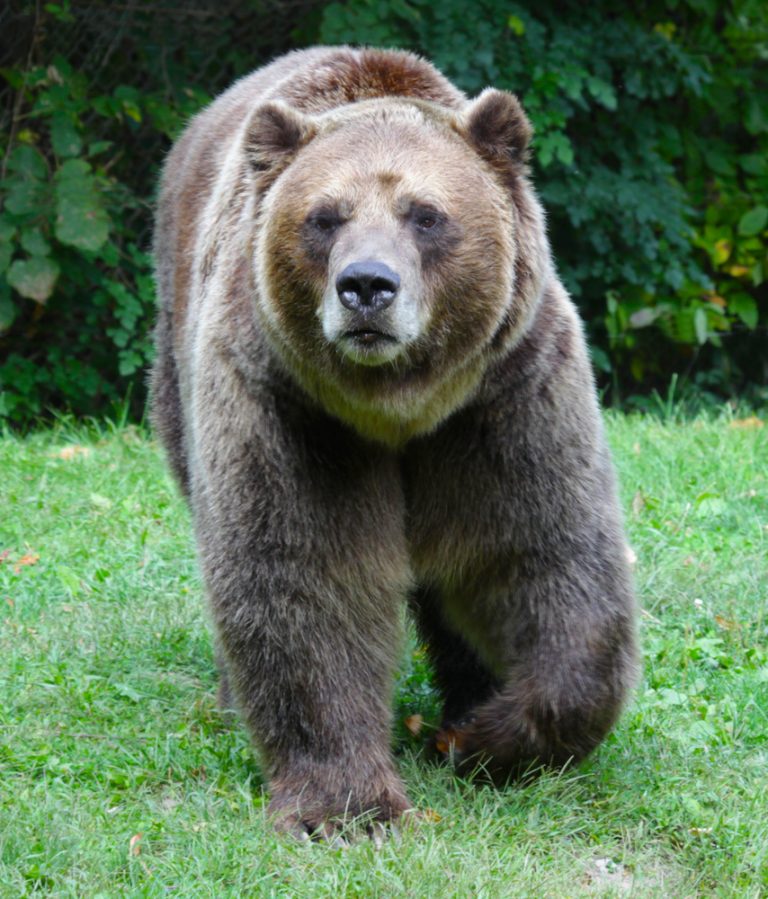
An adult Karelian Bear Dog trained for non-lethal bear management (Photo: Fraczek.marcin / WikiMedia Commons)
People keep pushing further into bear habitat, and the conflicts that follow have created a real need for something better than the two default responses: move the bear, or shoot it. One answer that has been tested for decades now is a dog.
The problem with the traditional options
Relocating a bear miles from human settlement sounds humane, and sometimes it is. Often it is not. A relocated bear has to work out an unfamiliar landscape from scratch:
- It has to find food sources it does not know.
- It has to find mates.
- It has to find and build den sites.
- It has to do all of that in territory that other bears already hold, which usually means conflict, and injury.
Many relocated bears simply walk back. Some are killed on the road doing it. Others are shot when they reappear where they started.
Killing so-called problem bears has its own failure mode. Removing a bear from good habitat next to a food source just opens a vacancy. Another bear moves in, finds the same unsecured rubbish, and becomes the next problem bear. The cycle repeats and nothing about the underlying situation has changed.
Where bear dogs come from
The Karelian Bear Dog is a Finnish breed, developed from Karelian and Komi stock. Formal breeding began in 1936, with the aim of producing a sturdy dog that would hold big game at bay by barking. It was used on smaller fur-bearing animals like squirrel and marten, but it earned its name on moose, lynx, wolf and the Eurasian brown bear.
They are medium-sized dogs, not giants. Males stand 54 to 60 cm at the withers and weigh 25 to 28 kg; females stand 49 to 55 cm and weigh 17 to 20 kg. The job was never to fight a bear. It was to stand its ground and make noise.
How they are used on bears today
The modern bear-management application of the breed was developed and introduced by the Wind River Bear Institute and its founder, Carrie L. Hunt. Programmes have run in coordination with Alberta Parks, Yosemite and Glacier national parks, Montana Fish, Wildlife and Parks, and the Washington State Department of Fish and Wildlife.
A working bear dog is trained to:
- be reliable around the public,
- hold its nerve in front of a bear,
- bark continuously and loudly until the bear leaves, and
- stay under the handler’s control throughout.
The mechanism is not force. It is teaching a bear, repeatedly and unpleasantly, that a particular place is not worth the hassle. Done consistently in the same area, the bears stop coming.
Does it work?
The clearest published result comes from Karuizawa, a resort town in Japan, where bear dogs were introduced in 2004. Black bear incidents fell from 255 in 2006 to four in 2017.
That is a dramatic number, and it is worth being clear about what produced it. Bear dogs are one part of a package. They work alongside rubbish management, food storage, noise, non-lethal projectiles and public education. The dogs shift a bear’s behaviour. Securing the food is what stops the bear coming back in the first place.
Bring bears home
Love what you read? Browse the We Love Bears store for gear and gifts inspired by these animals:
Every purchase supports more bear content on this site.
The thing that actually attracts bears
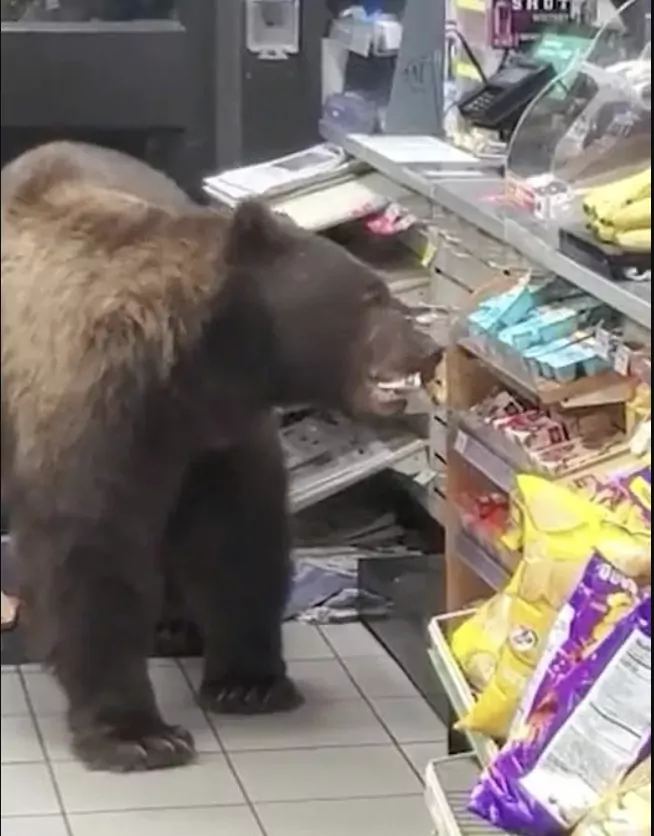
Almost every human-bear conflict starts the same way: poor management of rubbish and food. Once a bear has tasted human food it does not forget, and it will come back for more. From there the trajectory usually ends with the bear being killed.
That is why the dogs are worth taking seriously, and also why they are not a substitute for the boring work. People and bears can share ground. Careless food storage will lure bears into settlements every single time, and no dog can fix that on its own.
This article is part of our bear conservation guide, which links all our conservation, rescue and wildlife crime reporting.

Our husky barks at anything that moves. Would an untrained dog like that help keep bears off, or just make things worse?
My dad talked about bears constantly when I was a kid, and he always said the only real fix was locking up the bins. Funny to see the dog programme land in the same place.