Bear Cubs: Birth, First Year and When They Leave Mother
4 min read
A newborn brown bear weighs about as much as a pound of butter. An adult brown bear averages 203 to 787 pounds, depending on where it lives. Bear cubs arrive tiny, blind and almost hairless, in the middle of winter, in a winter den. How they get from that start to a bear that can survive on its own is one of the odder growth stories among large mammals.
This guide follows cubs of three species, the brown bear, the American black bear and the polar bear, from birth to the day they leave their mother. For how the mother survives the winter, see our guide to bear hibernation.
Born in the den, in midwinter
Brown bear cubs are born in the winter den and weigh only about 450 g (1 lb), according to the International Association for Bear Research and Management. The National Park Service says grizzly cubs usually arrive in late January or February, and that mother and cubs stay in the den for the rest of winter while she sleeps and the cubs nurse and grow.
American black bear cubs follow the same calendar. The National Park Service puts births in late January or early February, at 8 to 12 ounces (about 225 to 340 g). The IBAM species account describes them as helpless, almost hairless, and born with their eyes closed.
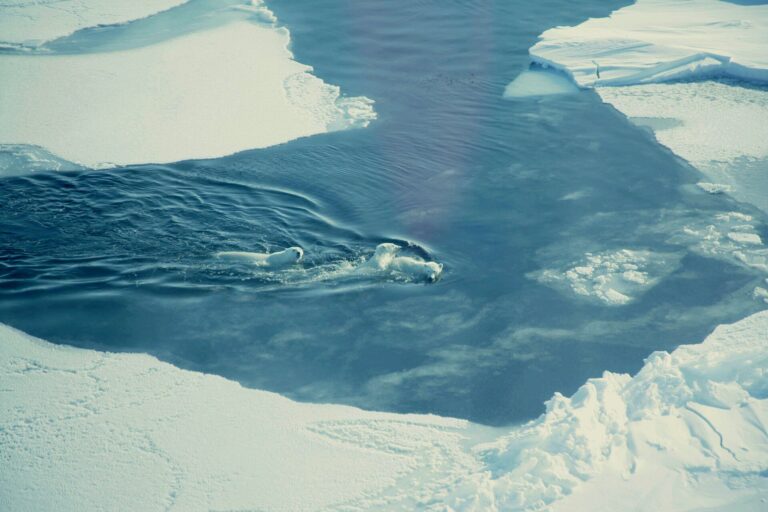
Polar bears give birth earlier. Cubs are born between late November and mid-January, weigh 600 to 700 g, lack fat under the skin, are only lightly furred and are born blind, per the IBAM polar bear account.
How many cubs, and how often
Litter size differs by species and by the mother’s condition.
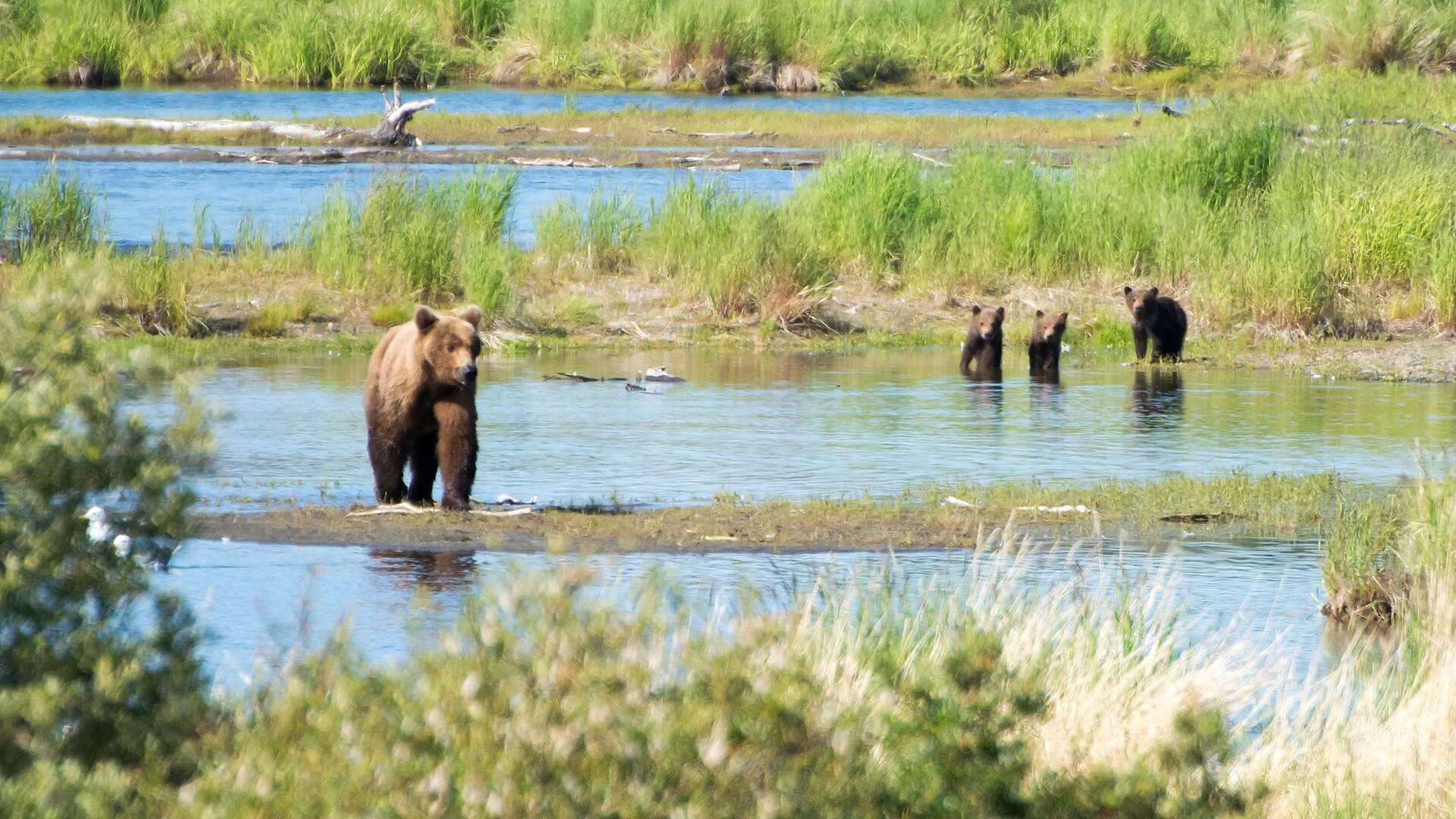
- Brown bears: 1 to 3 cubs, with 2 the most common in healthy populations. Females with 4 cubs have been seen (IBAM).
- American black bears: an average of 2, though litters of 3 or 4 are common, and larger or older mothers tend to have bigger litters (IBAM). The NPS lists a range of one to four.
- Polar bears: an average of about 1.5 cubs at den emergence, so roughly half of mothers come out with one cub and half with two. Litters of three are rare, and only a single litter of four has ever been seen (IBAM).
Mothers do not breed every year. Brown bears can breed annually, but the gap between litters is generally three years or more. Black bear mothers typically breed every other year, depending on cub survival and food. Polar bears normally breed every three years, though the gap can run from one to four.
Food decides whether a litter happens at all. The National Park Service notes that a female black bear who has not built up enough fat will not carry the embryo: it does not implant, and she has no cubs that year. Black bears can also produce litters with mixed fathers. The IBAM account says cubs in the same litter can have different fathers, because females may breed more than once in a season.
Growing up in the den, then coming out
The mother does not eat during this time. IBAM reports that lactating brown bear females can lose nearly twice as much weight as non-lactating females while denning. Her milk is what turns a pound of cub into a bear that can walk out into the snow.
By the time black bear cubs leave the den in late March or April, they have grown to about five pounds (roughly 2.3 kg), about half the weight of a house cat (NPS). Grizzly cubs weigh between four and eight pounds (about 1.8 to 3.6 kg) by spring, according to the NPS. Alaska brown bear cubs emerge later: the Alaska Department of Fish and Game says they come out in June and may weigh up to 15 lbs (7 kg).
Polar bear families do not rush. After leaving the den, mother and cubs usually linger around it for a week or two before heading for the sea ice (IBAM).
The dangerous first year
Cub survival is low. The Alaska Department of Fish and Game says mothers can be furiously protective but less than half of brown bear cubs survive. IBAM reports that almost half of polar bear cubs die in their first year, probably from starvation or hypothermia.
Predators play a part. Wolves and golden eagles have killed brown bear cubs, and wolves may eat polar bear cubs where their ranges overlap. Large male brown bears sometimes kill cubs too, which IBAM says is thought to let males mate with the mother sooner, because a female who loses her cubs can come into estrus earlier. Grizzly males take no part in raising cubs, as the National Park Service puts it. IBAM notes that females with cubs avoid sites occupied by large males, and the National Park Service says mother bears are very protective of their young. Our guide to what to do if you meet a bear while hiking covers what that means on a trail.
Learning, then leaving
For a year or more, cubs follow the mother and learn from her. The NPS says black bear cubs stay with their mother for about 18 months while she teaches them how to navigate their new environment. See what bears eat for how that varies by species and season.
Independence comes at different ages. IBAM lists independence at 16 months for American black bears. Brown bear families typically stay together for two or three years, says Alaska Fish and Game. After they split up, female cubs tend to stay near where they were raised, while males go farther afield.
That timing links back to the long gaps between litters. A mother who raises cubs for two or three years cannot breed again until they leave, which is part of why bear populations recover so slowly once they fall.
What we do not know
IBAM points out that polar bear cubs are only observed after den emergence, so litters of three or four that die in the den would go undetected. For brown bears, IBAM says the causes of cub deaths other than infanticide are largely unknown.
Sources
- International Association for Bear Research and Management: brown bear
- International Association for Bear Research and Management: polar bear
- International Association for Bear Research and Management: American black bear
- National Park Service: black bears, Great Smoky Mountains
- Alaska Department of Fish and Game: brown bear
- National Park Service: brown bears
Know something about cubs that we missed? Email us at hello@lovebears.org.
Photo: Christoph Strässler, CC BY-SA 2.0, via commons.wikimedia.org.