
Romanian Bears And The Deadly Battle For Survival
Last updated: September 28, 2026
3 min read
Romania banned trophy hunting of large carnivores in 2016. In July 2024 it passed a law allowing 481 bears to be culled over 2024 and 2025, and a 2025 genetic study put the population at 10,419 to 12,770. Attitudes in the countryside did not follow, and some villagers turned to poison instead.
Walking home one evening, Csaba Demeter, a forest guard in the Carpathians, was taken from behind by a brown bear. The animal pinned him and tore at his limbs and back. Demeter played dead. After about five minutes and a great deal of damage, the bear lost interest and left. He survived.
A few years earlier a story like his would barely have made the local paper. Today there is a large and growing appetite for bear attack stories in Romania, and that appetite is itself part of the problem.
Politics and shifting public sentiment
There has always been an uneasy coexistence between people and bears in Romania’s forested regions. For a long time most people treated bears as part of the landscape and left them alone.
Leave the fast-developing cities and go into rural Transylvania and you notice the difference. Politicians now campaign in the small communist-era towns below the Carpathian foothills on a promise to rid people of a menace, and the menace is bears.
Further into the villages, residents have taken matters into their own hands. Homemade recipes for bear poison circulate. The ideal formula, as it was described to Guardian reporters, smells appealing enough to draw a bear in from a distance, is potent enough to kill a 600 lb animal, and acts slowly enough that the bear wanders miles away before it drops.
The villagers the Guardian spoke to all framed killing bears as a necessity rather than a choice. The government, they say, has left them to fend for themselves.
Why people are poisoning bears
At the time of that reporting, the figure most often quoted was at least 6,000 brown bears across Romania’s mountain ranges. Since the collapse of communism in 1989, bear management has been haphazard and left largely to the hunting associations. Each year those groups submit bear counts for their own jurisdictions, identify the individuals they consider a danger to people, and auction a quota to the highest-bidding hunting company, which sells the slots to hunters from around the world.
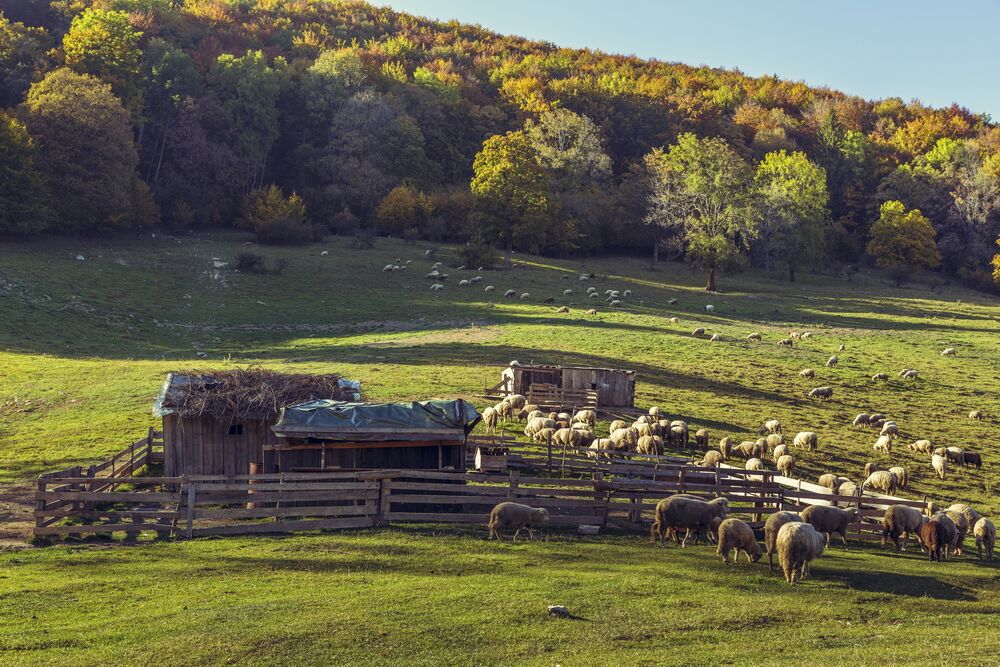
The effect on the ground is real. In the village of Atid there is hardly a household without a bear story, and children are kept in after dark. In Harghita county, in the Transylvanian foothills, hundreds of farmers routinely apply to the government for compensation for lost livestock and damaged crops.
Bring bears home
Love what you read? Browse the We Love Bears store for gear and gifts inspired by these incredible animals. Every purchase supports more bear content on this site.
The hunting ban
In October 2016 Romania’s environment minister, Cristiana Pasca Palmer, imposed a surprise ban on trophy hunting of large carnivores. The government’s position was that the quota system, presented as public safety work, functioned mainly as a money-making operation. Conservationists elsewhere welcomed it.
Opposition built quickly. Its most prominent figure is Csaba Borboly, president of Harghita county council, a predominantly ethnic Hungarian region of forest and farmland in the Transylvanian foothills. Borboly argues for widespread culling and claims bear attacks more than doubled after the ban, citing 263 attacks. His reasoning is that protection without consequence has changed how bears behave around people.
Scientists working in Harghita disputed both his numbers and his conclusions. They also concede that he has the room. As Csaba Domokos, a bear specialist with the Milvus Group, put it, you have to listen to what Borboly says regardless of how it sounds, because everyone else is listening.
Domokos is blunt about the consequences of vigilante killing. The full damage is hard to measure, but bears are easy to poison and easy to snare, and the number of dead bears turning up in the area has been mounting.
Any hope for Romania’s bears?
Less than 50 miles east of Harghita, villages with the same problems have taken a different route. There, hunting is not treated as the answer.
The researcher Silviu Chiriac and a group of biologists found that where hunting is heaviest, bear conflict tends to rise rather than fall, and more bears end up in human settlements. Hunting is not the only driver, Chiriac says, but it is a significant one.
The mechanism is simple enough. Hunters do not shoot near the camp where the troublesome bear actually lives. They go deep into the forest and take the biggest bear they can find. The problem animal stays alive and gets bolder, while a bear that was no threat to anyone is removed from the population.
For more, see our guides to bear safety and bear conservation.
Updated 28 September 2026: added Romania’s 2024 cull law and the 2025 population study.



My aunt grew up in a village in the Carpathians and said bears in the orchard were just part of autumn. She never mentioned anyone poisoning them, but that was a long time ago.
That older tolerance comes up a lot, and it makes the poisoning harder to read about. Did she ever say what changed in the village?
Hard to read the poison part. I understand farmers losing livestock are angry, but wouldn’t a slow poison also kill whatever else feeds on the carcass?