
How Long Do Bears Live? Lifespan in Wild and Captivity
Last updated: November 5, 2026
6 min read
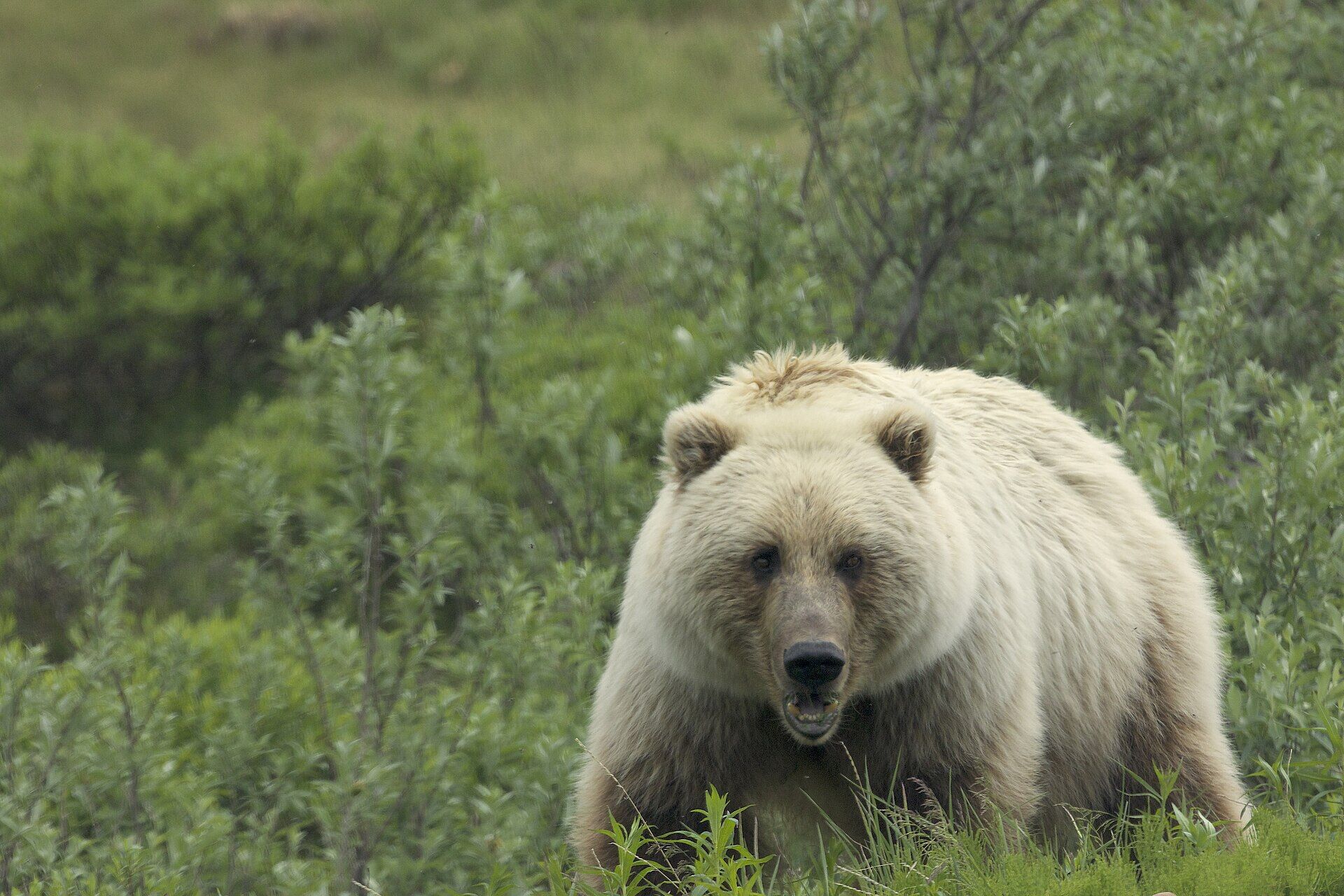
Bears, given the chance, are long-lived animals. A wild grizzly that survives the dangerous first 18 months of life and finds her own territory can live into her late 20s and go on producing cubs well into her 20s. A captive bear with veterinary care, no predators and unlimited food can pass 40. But “given the chance” is doing a great deal of work in that sentence. Most wild bears die young, usually violently.
The reasons matter. Understanding how bears die, and at what age, is the foundation of every modern bear conservation strategy.
Wild lifespan: the numbers, with caveats
The National Park Service puts the average life span of a wild brown bear at about 20 years, while noting that many bears live longer than that. That is a useful anchor for the genus as a whole: a bear that clears the cub years typically has a decade and a half or two ahead of it, and females often outlive males.
The average is dragged down by cub mortality. In most populations, a large share of cubs do not survive their first 18 months. Once a bear clears that gauntlet the survival curve flattens sharply.
We have deliberately not published a species-by-species table of maximum ages here. The numbers that circulate online for wild and captive maxima are mostly single unverified records passed between websites, and wild maxima are underestimates by definition: a bear that dies in a remote valley never enters anyone’s dataset. Where we can name a documented individual, we do so below.
Documented long-lived individuals
Grizzly 399 (Grand Teton)
Born in 1996 at Pilgrim Creek, Wyoming, and the most famous wild grizzly in the world. She produced at least 22 cubs, favouring triplets over the usual twins, and in 2023, at 27, she became the oldest female bear known to have reproduced in the Greater Yellowstone Ecosystem. She was killed on 22 October 2024, aged 28, struck by a vehicle on Highway 26/89 in Snake River Canyon.
Her life is the clearest illustration of the point this article is making. About 85 percent of documented grizzly deaths in the ecosystem are caused by people, and few bears there reach old age. She reached it by using roadside habitat where adult males were reluctant to follow, trading the risk of infanticide for the risk of traffic. In the end the traffic got her.
Bear 480 Otis (Brooks Falls)
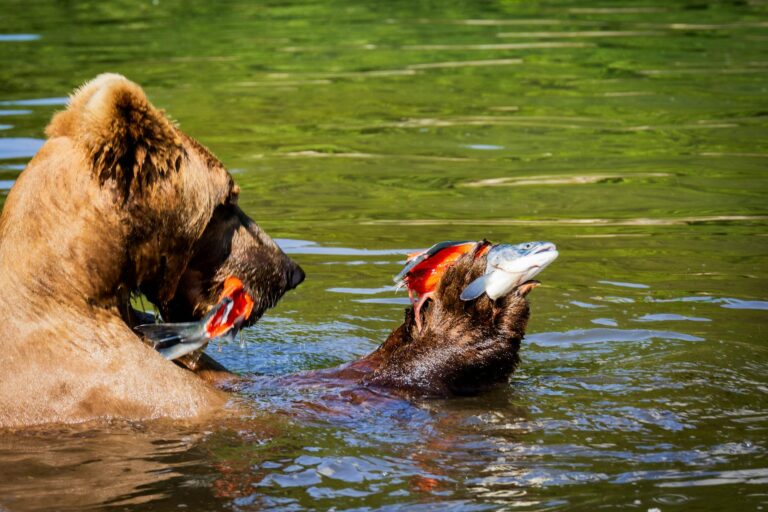
First identified at Brooks Falls in 2001, when rangers estimated him at four to six years old, putting his birth around 1996. He appeared every summer from 2001 through 2023, won Fat Bear Week four times, and was measured by lidar at over 900 pounds heading into hibernation in 2019. He has not been seen at Brooks River since 2023.
Otis was a regular star of Fat Bear Week, the annual contest to crown Katmai’s fattest bear.
Debby (Assiniboine Park Zoo, Winnipeg)
A polar bear who lived to 42, the oldest documented polar bear in captivity, and recognised as such by Guinness World Records.
These individuals are extreme outliers, but they are informative. They show that a bear’s intrinsic biological lifespan is long. The typical wild figures are not biological ceilings. They are mortality ceilings.
What kills wild bears?
Cub mortality dominates the curve. Beyond that, in roughly descending order:
Human-caused mortality. This is the largest single category for almost every wild bear population on Earth. It includes legal hunting, poaching (significant for Asiatic black bears in the bile trade, sloth bears in the dancing-bear trade, and sun bears for bile and cubs), vehicle strikes, and management killings of food-conditioned bears.
Infanticide. Adult male brown bears kill cubs sired by other males, which can bring females back into oestrus. In many populations this is one of the two largest sources of cub death.
Starvation. Cubs whose mothers died, yearlings turned out into a bad berry year, old bears whose tooth wear makes feeding inefficient, and bears that entered the den in poor condition. In bad mast or berry years, bears can den lighter than they need to be and not emerge.
Predation. Cubs are killed by wolves, mountain lions and other bears. Adult bears are very rarely killed by anything other than other bears.
Disease. Less common, but mange has hit American black bear populations in Pennsylvania and trichinosis circulates in some polar bear populations.
Cub mortality: the bottleneck
Across nearly all bear species, a large fraction of cubs die before their second autumn, and the two biggest drivers are infanticide and starvation. A first-time mother is more likely to lose her litter than an experienced one. A female with enough fat at the time of delayed implantation is more likely to carry to term than a thin one. A litter of four is less likely to come through intact than a litter of two, because the milk and the attention are spread thinner.
For polar bears, cub mortality has risen because a shorter sea-ice hunting season leaves females in poorer condition. They either fail to implant, or implant and cannot produce enough milk.
For Marsican brown bears in the central Apennines, the small population makes every death consequential. A genetic survey carried out in summer 2025 and published in July 2026 under the Italian DigitAP project put the population at 81 individuals, 43 females and 38 males, with an uncertainty range of 73 to 88, spread across more than 6,000 square kilometres. The core-area population is stable or slightly up on the roughly 50 estimated there in 2014, but the core is close to saturation and the expansion into peripheral areas is slow.
Wild versus captivity: why the gap
The gap between wild and captive lifespans reflects the absence in captivity of the four dominant wild mortality drivers: predation, starvation, infanticide and human conflict. Captive bears also get routine veterinary care, dental work in old age, and managed diets. They are far less likely to die of an injury. A broken jaw in the wild is often fatal, because feeding becomes impossible.
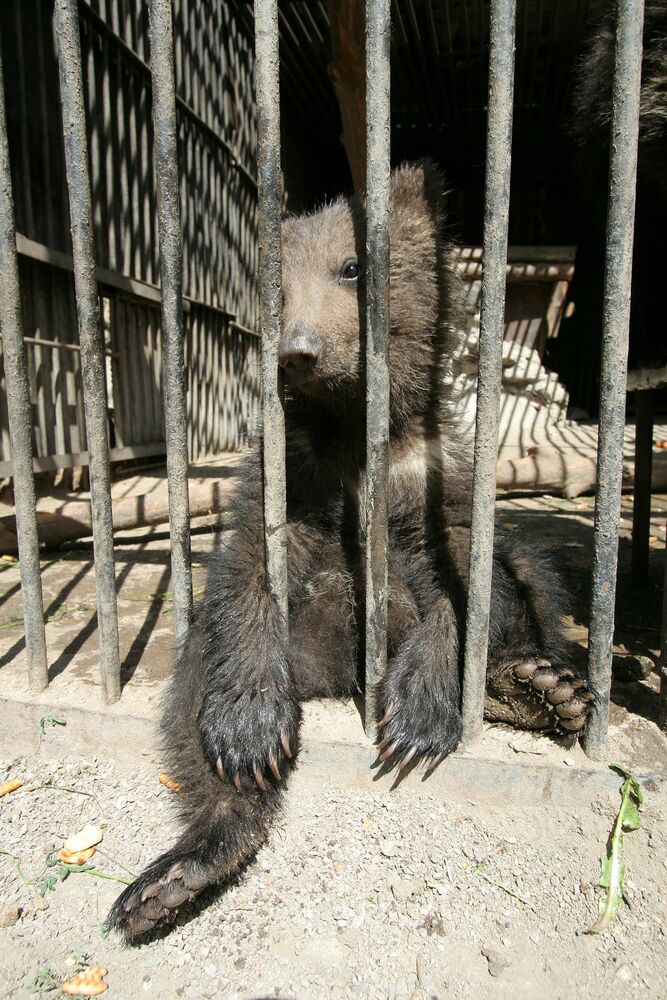
Captive longevity is not unambiguous good news, though. Captive bears frequently suffer obesity, joint disease, stereotyped behaviour from environmental impoverishment, and cardiovascular disease. The oldest captive bears are almost always in well-resourced zoos with active enrichment programmes. Bears in roadside attractions and substandard facilities rarely come close.
A bear that lives to 42 in a good zoo has not had a bear’s life. The biology is the same. The experience is not. That tension sits at the heart of bear conservation: captive populations as insurance, sanctuaries for rescued animals, and wild populations as the actual goal.
Sex differences
Female bears tend to outlive males, often by several years. Lower exposure to fight injuries during the breeding season, less territorial roaming, and lower risk of vehicle strikes and human conflict all contribute, since males travel more. The largest and oldest individuals in many populations are old females. Grizzly 399 fitted the pattern exactly.
FAQ
What is the oldest bear ever recorded?
In captivity, Guinness World Records lists Andreas, a European brown bear who died in Greece in 2013 aged 50. Debby the polar bear at Assiniboine Park Zoo in Winnipeg lived to 42, the oldest polar bear on record. Wild records are much harder to pin down, because a wild bear’s age is usually only established after death.
How can you tell the age of a bear?
By counting cementum annuli in a cross-section of a premolar tooth. Each year the tooth lays down a new growth ring, much like a tree. The technique needs a tooth, so it is done at necropsy, on captured bears under sedation, or on hunted bears. Tooth wear, body size and coat condition give rough field estimates but are much less reliable.
Do bears die of old age?
Rarely in the wild. A wild bear almost always dies from a specific cause: hunting, a vehicle, infanticide, starvation, conflict or another bear. In captivity, old bears do die of age-related causes, most often kidney failure, cancer, cardiovascular disease and joint failure.
Why do female bears live longer than males?
Several factors compound. Females are less likely to die in fights, less likely to range into vehicle-strike or conflict-prone areas, and less exposed to hunting in regions where males are preferentially targeted. The pattern holds across nearly every bear species and most large mammals.
For more on how cub survival depends on what a mother teaches her cubs about food, see what do bears eat. For denning and cub-birth biology, see bear hibernation. For the wider picture, see our bear behavior pillar and our overview of the eight bear species.
This article is part of our bear facts guide, which links every article on bear behaviour, safety and culture.
Updated 28 September 2026: added Andreas, the oldest brown bear on record, corrected the grizzly mortality figure and updated the Otis and Marsican bear details.

Otis not turning up after 2023 still bothers me. Is there any way to know whether he died or just moved somewhere else in the park?
The roadside years with 399 are what I remember most. She kept her cubs near the traffic to avoid the big males, and then a car is what got her in the end.