Can Bears Swim? Polar, Black, Brown and More
4 min read
Bears can get into water, and most do it without fuss. A black bear crosses a river to reach a berry patch. A brown bear wades into a stream after fish. A polar bear slides off an ice floe and paddles for hours. The skill is the same, but the reasons and the stakes differ a lot from one species to the next.
This post looks at what is documented about bears in the water: how they move, how far the best-studied swimmers have gone, and what the longest swims cost them. Where nobody has measured something, I say so.
How a bear swims
The most detailed description is for the polar bear. According to the Wikipedia article on the species, the broad front paws do the paddling, while the hind legs help with steering and diving. The International Association for Bear Research and Management notes that a polar bear’s large paws act as paddles in the water and spread its weight when it walks on ice.
Two other details from the same Wikipedia article are worth knowing. A polar bear can swim at up to about 6 km/h (3.7 mph), and it can dive for as long as three minutes. Its eyes sit close to the top of the head, which may let the animal keep them out of the water while it swims at the surface. That last point is a suggestion from the article, not a measured result.
Bears also use water to cool down. The same article describes bears entering the water to shed heat, which fits a heavy animal wearing a thick coat.
Swimming across the species
Detailed swimming data exist mainly for polar bears. For the other species the record is thinner, and mostly comes from general species accounts. Here is what those accounts say.
- American black bear. The IBA species page says black bears can readily climb trees, swim long distances and sprint up to 55 km/h (35 mph). The Wikipedia article calls them excellent, strong swimmers that swim for pleasure and to feed, largely on fish. The same article repeats a Native American legend behind Sleeping Bear Dunes in Michigan, in which a mother bear and her two cubs swam across Lake Michigan. It is a legend, not a record.
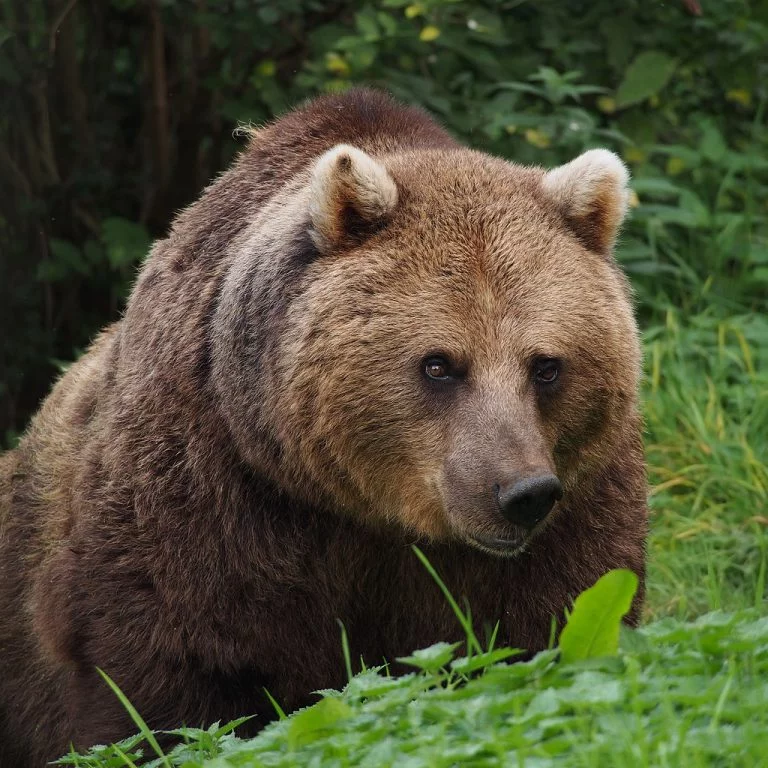
- Brown bear. The Alaska Department of Fish and Game describes brown bears as excellent swimmers that can also run in short bursts of up to 40 mph (64 km/h).
- Sloth bear. According to Wikipedia, sloth bears are good swimmers and mainly enter water to play.
- Sun bear. The sun bear article calls the species an efficient swimmer, and gives little more than that.
That covers five of the eight species, and it shows a gap. Nobody has published the equivalent of a GPS swim log for a sun bear or a sloth bear, at least in the sources I could check. If you know of a study, email us at hello@lovebears.org.
The longest swims on record
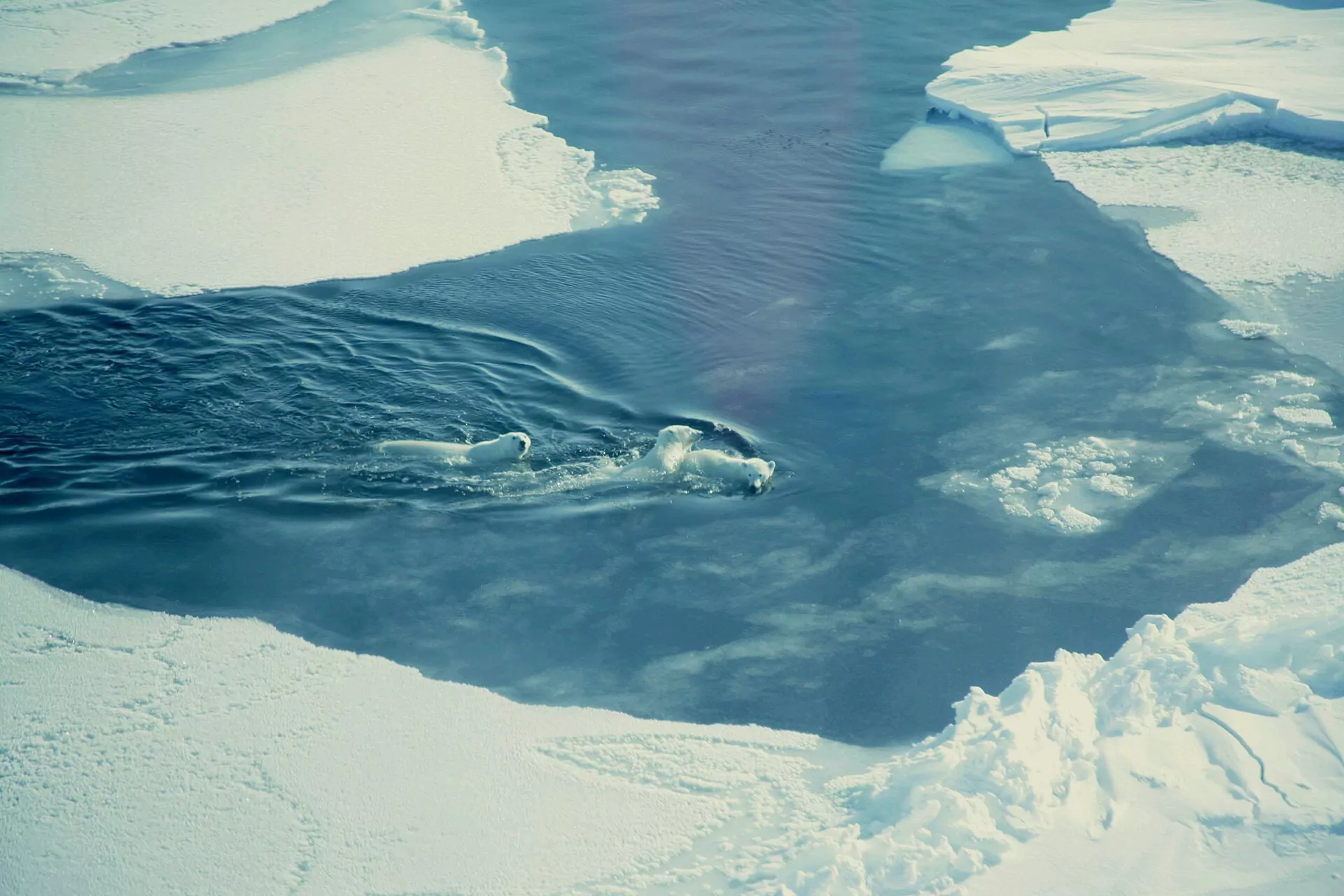
The best figures come from a study of polar bears in the southern Beaufort and Chukchi seas, published in the Canadian Journal of Zoology by Pagano and colleagues (Pagano et al., 2012). The team tracked 52 adult female polar bears wearing GPS collars, some of them with dependent young, and counted any swim longer than 50 km.
Across six years, 2004 to 2009, they identified 50 long-distance swims by 20 bears. The swims lasted from 0.7 to 9.7 days, with a mean of 3.4 days. They covered between 53.7 and 687.1 km, with a mean of 154.2 km. The authors write that adult females and their cubs can swim long distances when large areas of open water are present.
Swimming and walking on ice are not equal. The authors report that long-distance swimming appears to have higher energetic demands than moving over sea ice. They also saw swimming become more frequent over the course of the study, and they describe it as a behavioural response to declining summer sea ice.
Why swimming matters more as sea ice shrinks
For a polar bear, ice is a hunting platform. The IBA page states that lower ice cover makes seals’ surfacing locations unpredictable and increases the time and energy polar bears spend travelling and swimming. For a deeper look at the species, see our polar bear profile.
A black bear has a different reason to swim. The sources above say it swims for pleasure and to feed, largely on fish. The polar bear data show another end of the range: swims that last days and cost more energy than moving over sea ice.
Swimming, climbing and the rest of the bear toolkit
Swimming sits beside other skills that bears are known for. Climbing is one of them, and we cover which species do it and how well in Can Bears Climb Trees? Smell is another, and it helps a bear find food before it ever gets wet: see How Good Is a Bear’s Sense of Smell?
If you meet a bear near water, do not assume the water protects you. Brown and black bears are both described as strong swimmers, and a bear that can sprint at 35 to 40 mph on land has no trouble covering ground around a lake shore.
What is still not known
- How fast and how far sloth bears and sun bears swim. The accounts I found say they swim, but give no distances or speeds.
- Whether black and brown bears make swims anywhere near the length of the polar bear swims. The sources above do not give a distance for them.
- How many of the long polar bear swims end badly. The study documents the swims and their energetic cost, and I do not rely on any figure for losses that it does not give in the passages I read.
That is where the evidence stops.
Sources
- Pagano et al. (2012), Long-distance swimming by polar bears, Canadian Journal of Zoology
- International Association for Bear Research and Management: polar bear
- International Association for Bear Research and Management: American black bear
- Alaska Department of Fish and Game: brown bear
- Wikipedia: Polar bear
- Wikipedia: American black bear
- Wikipedia: Sloth bear
- Wikipedia: Sun bear
Have you seen a bear swim, or do you know of a study on a species I missed? Email us at hello@lovebears.org.
Photo: NOAA Photo Library, Public domain, via commons.wikimedia.org.