

21 Surprising Facts About Bears You Probably Didn’t Know
Last updated: November 18, 2026
4 min read
Twenty-one facts spanning all eight living bear species, from the polar bear’s absurd nose to the sloth bear’s vacuum-cleaner lips. For a species by species tour, see our types of bears guide. For a classroom handout, print our one-page chart of the eight bear species.
21 facts about bears
1. A group of bears is a sloth or a sleuth
Bears are solitary outside the mother and cubs unit, so groups are unusual enough that the collective noun rarely gets used. It is “sloth” or “sleuth”, both out of medieval English hunting vocabulary.
2. The polar bear is the largest bear species
Adult males reach around 3 metres (10 ft) and up to about 800 kg (1,760 lb). Females are roughly half that. The Kodiak, the largest brown bear subspecies, matches polar bears for body mass.
3. Their sense of smell beats a bloodhound’s
A polar bear can detect a seal under about a metre of compacted snow. A bear’s nose is commonly put at around seven times better than a bloodhound’s. It is the single most important adaptation in the family.
4. Adult bears have almost no natural predators
The main exception is the tiger, which kills sloth bears in India and Asian black bears and smaller brown bears in the Russian Far East. Otherwise humans are far and away the largest cause of adult bear mortality.
5. Polar bear fur is not white
The guard hairs are hollow and translucent. They scatter light, which reads as white. The skin underneath is black.
6. Most bears are omnivores, two are not
Six species eat flexibly. Polar bears are carnivores dependent on seal blubber. Giant pandas eat almost nothing but bamboo, while still carrying the short digestive tract of a carnivore, which is why they have to eat so much of it.
7. Bears can run at 35 mph
A startled grizzly or black bear hits about 56 km/h (35 mph) over short distances, faster than any human sprinter. Climbing a tree is not an escape from a black bear, which is an expert climber. Our bear safety guide covers what does work.
8. Hibernating bears are not really hibernating
Torpor is the better word. Bears can wake, defend cubs and shift dens through winter, and body temperature drops only a few degrees, nothing like the deep cold of a ground squirrel.
9. A denning bear can lose a third of its body weight
Which is why autumn matters so much. Every autumn, voters pick the chunkiest Katmai brown bear in Fat Bear Week.
10. Cubs are born tiny
A polar bear cub weighs around 600 g at birth, about the size of a guinea pig, and ends up over a thousand times heavier as an adult.
11. Sloth bears feed like a vacuum cleaner
A hollow palate and missing upper incisors let a sloth bear suck termites and ants straight out of a broken mound. The noise carries around 180 metres in still forest.
12. Sun bears have the longest tongue of any bear
Up to 25 cm, for reaching honey and grubs inside hollow trees.
13. The spectacled bear is South America’s only bear
It runs the Andes from Venezuela to Bolivia. The face markings vary between individuals, so bears can be told apart from photographs.
14. The spirit bear is a white black bear
On some islands of British Columbia’s Great Bear Rainforest roughly one black bear in ten is creamy white, from a recessive gene. They are not albinos.
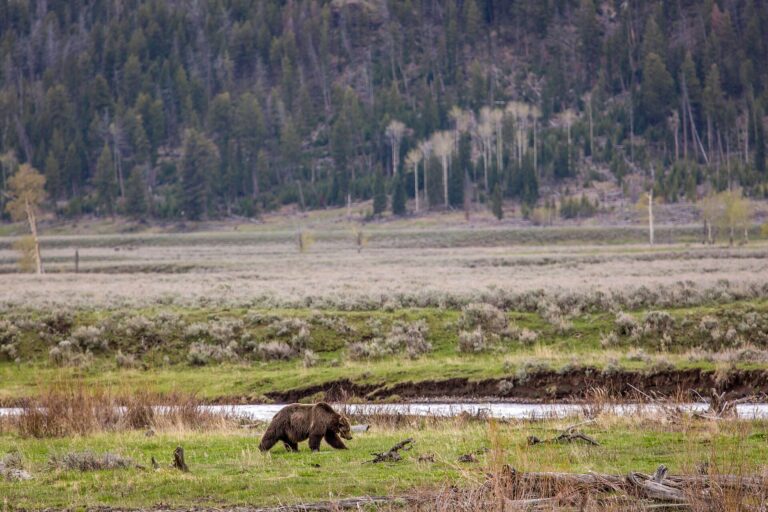
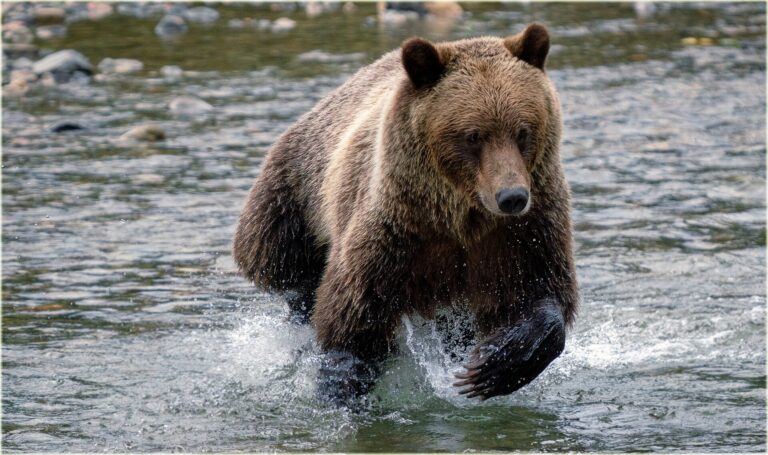
15. Grizzlies are brown bears
Ursus arctos horribilis in North America and Ursus arctos arctos in Europe are regional forms of one species.
16. Bears are quick learners
Captive work has recorded black bears counting and sorting images on touchscreens, and in the field bears repeatedly defeat food storage designs that were meant to beat them. The Adirondack black bear Yellow-Yellow opened several models of hard sided canister and forced manufacturers to redesign their lids.
17. Pandas have a thumb
An enlarged wrist bone, the radial sesamoid, works as a sixth digit for gripping bamboo stems.
18. Fishing bears form hierarchies
At Brooks Falls the dominant males hold the best perches, females with cubs take second choice, and sub-adults work the margins. It is mostly settled by posture and bluff rather than fighting.
19. Black skin and hollow hair are a heating system
Black skin absorbs what sunlight there is. The hollow guard hairs trap air, which is what actually does the insulating against Arctic wind.
20. The status picture is mixed, not uniformly grim
Brown bears and American black bears are both listed by the IUCN as Least Concern, with several major populations stable or growing. Asiatic black bears, sun bears and sloth bears are all Vulnerable with declining populations. The polar bear is Vulnerable because of projected sea ice loss. Grouping all eight together tells you nothing useful.
21. The sun bear is the smallest
Adults weigh 25 to 65 kg, less than a labrador. They are also the most arboreal bear, spending much of their lives in the canopy. See our sun bear profile.
FAQ
How many species of bear are there?
Eight: polar bear, brown bear, American black bear, Asiatic black bear, sun bear, sloth bear, spectacled bear and giant panda.
What is the fastest bear?
Brown bears, including grizzlies, can reach 35 to 40 mph (56 to 64 km/h) in short bursts. Polar bears reach about 25 mph (40 km/h).
Do all bears hibernate?
No. Polar bears do not, although pregnant females den to give birth. Sun bears, sloth bears and spectacled bears live where winter dormancy is not needed.
What is the rarest bear?
The Gobi bear of Mongolia, a desert brown bear. Estimates run from under 40 to just over 50 animals (2022).
This article is part of our bear facts guide, which links every article on bear behaviour, safety and culture.
Updated 28 September 2026: corrected bear running speeds, the polar bear’s status and sense of smell, the Gobi bear estimate and the Fat Bear Week timing.


Saw a sign about spirit bears on a ferry up the BC coast and assumed they were albinos. Had no idea it was just a recessive gene in ordinary black bears.
A lot of people assume that, and I did too at first. The eyes and nose give it away, because spirit bears keep normal dark pigment there. Did you see any bears on that trip?
Read the sloth bear one out loud to my niece and she has been doing vacuum noises at the dog ever since.