Yellowstone Bear Watching: When, Where, and How
Last updated: November 16, 2026
7 min read
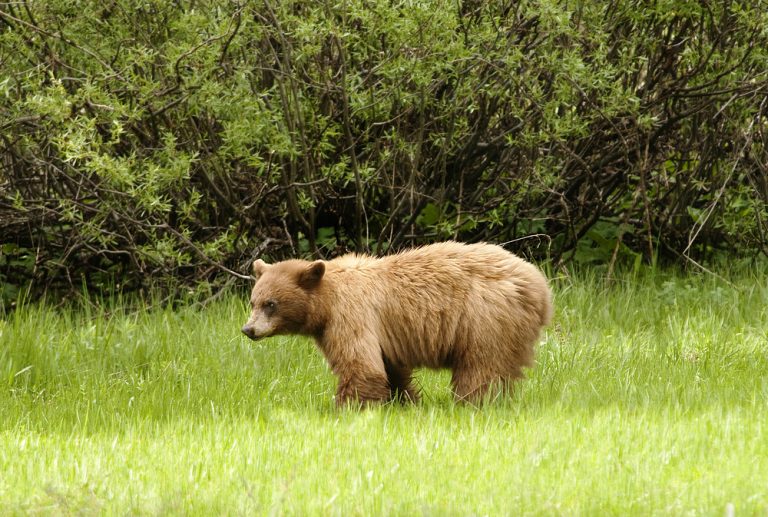
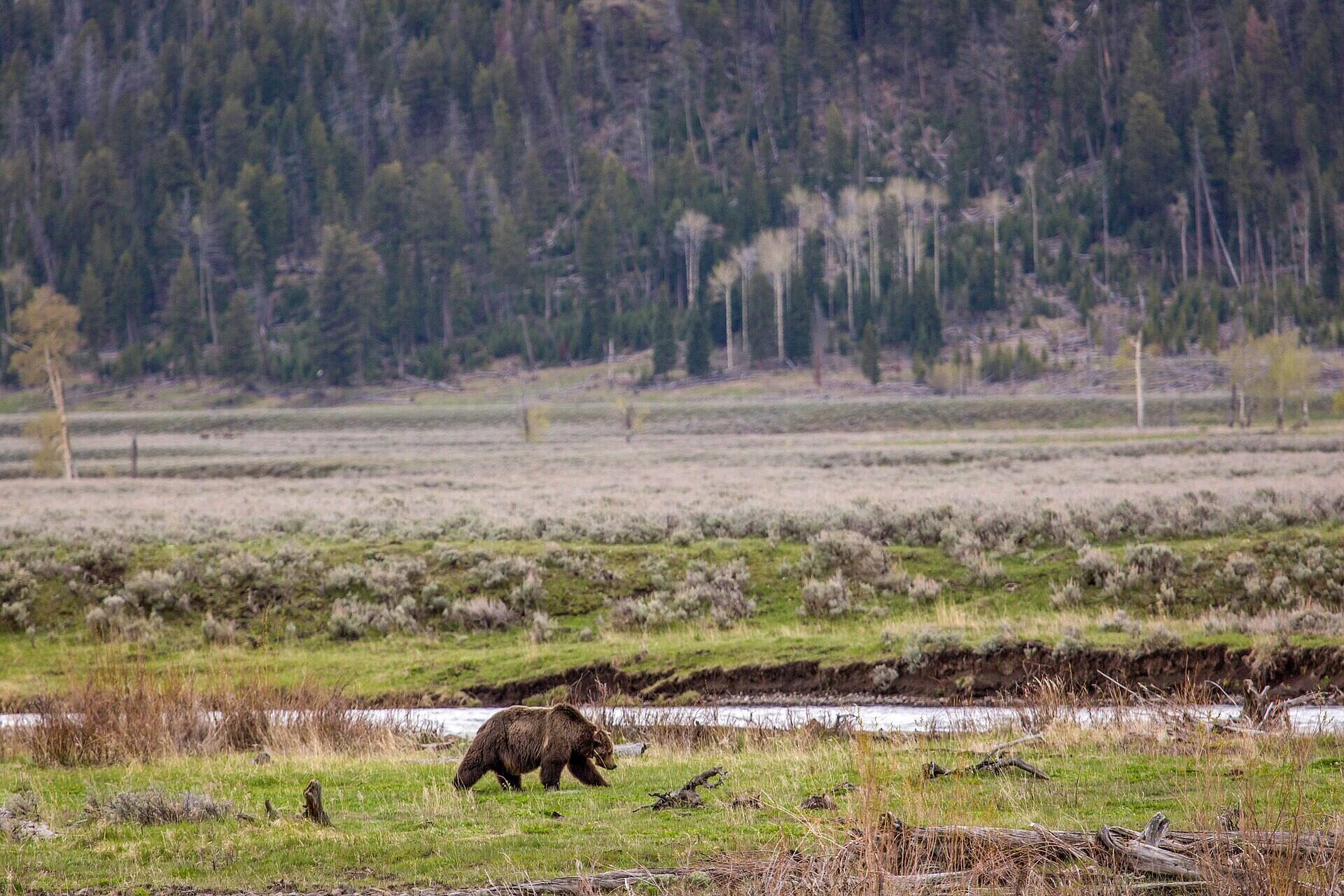
Yellowstone is one of the few places in the lower 48 where you can reasonably expect to see both grizzlies and black bears on the same trip, from a public road, in a single morning. The window when that is true is narrow, the geography is specific, and the etiquette is unforgiving.
The park’s 2.2 million acres hold an estimated 150 to 200 grizzlies with home ranges in the park (NPS figure), and an unknown but larger number of black bears. The wider Greater Yellowstone Ecosystem held an estimated 1,050 grizzlies in 2024 (USFWS). They do not spread evenly. Two valleys do almost all of the work for spring and autumn bear viewing: Lamar in the northeast and Hayden in the centre. Get the season and the time of day right and you will see bears. Get them wrong and you will see bison.
Quick comparison: Yellowstone’s bear viewing seasons
| Season | When | What you see | Conditions | Difficulty |
|---|---|---|---|---|
| Spring emergence | mid April to early June | Grizzlies on winter-kill carcasses, mothers with cubs of the year, mating pairs | Snow lingers above 8,000 ft; valleys melt out first | Easy: roadside viewing, ranger-supported |
| Early summer | mid June to mid July | Grizzlies on high meadows, black bears in roadside aspens | Long days, wildflowers, mosquitos | Easy to moderate |
| Mid summer | late July to August | Bears scarce: dispersed and high | Hot, dry, crowded | Hard |
| Autumn hyperphagia | mid September to mid October | Grizzlies and blacks foraging berries and whitebark pine; rut bugles overlap | Cool mornings, frost, snow late October | Easy: arguably the best window |
| Late autumn and denning | late October to mid November | Last grizzly sightings before dens | Roads close in sections; snow | Moderate |
Where to see bears in Yellowstone
Most of the park’s bear traffic happens on the Grand Loop and its two great wildlife valleys.
Lamar Valley (northeast)
The Lamar is the most reliable grizzly viewing in the lower 48, and the reasons are geographic. The valley is wide, treeless and watered by the Lamar River. Bison and elk congregate here year-round, and their winter-kill carcasses pull grizzlies out of the surrounding mountains in April and May. Park at the pull-outs between Slough Creek and Soda Butte, set up a spotting scope, and scan the slopes from dawn for an hour. Local wildlife biologists and Yellowstone Forever instructors often have scopes out and will share what they are watching. Look for them.
Best pull-outs: Slough Creek, Lamar River Bridge, Hitching Post, Soda Butte, Pebble Creek. The Soda Butte to Pebble Creek stretch is the strongest single run of road in the park in May, though nobody can promise you a bear on any given morning.
Hayden Valley (central)
Hayden runs north to south along the Yellowstone River between Canyon Village and Fishing Bridge. The bears here trend grizzly, with the same valley-and-carcass dynamic as the Lamar but with more visitor traffic. Spring carcasses, early-summer cutthroat trout runs in the tributary creeks (much reduced now), and seasonal grasses all draw bears down. The Grizzly Overlook pull-out and the Trout Creek pull-out are the two anchors. Hayden also has wolves, though the Lamar is more reliable for them, and wolf watchers here are often in place at 5am and will tell you which pull-out to be at.
Mount Washburn, Dunraven Pass, and Pelican Valley
The road over Dunraven Pass (8,859 ft) skirts the south slopes of Mount Washburn, whose whitebark pine zone draws grizzlies to cone caches in late summer and autumn, sometimes within a couple of hundred metres of the road. Stop at the Dunraven Pass trailhead and the Mae West pull-out, late August through mid October. For deeper backcountry, Pelican Valley holds the densest grizzly habitat in the park: closed from 1 April to 3 July, then day use only from 9am to 7pm, with parties of four or more recommended. Not casual viewing terrain.
Roadside black bears
Black bears favour the forested north and west: Tower-Roosevelt, Mammoth to Norris, and the Madison River corridor. Tower Junction and the Calcite Springs overlook are the standard quick wins, especially in June when cubs are climbing aspens.
When to go: time of day and time of year
Bears in Yellowstone are crepuscular: most active from first light to about 90 minutes after sunrise, and from 90 minutes before sunset until dark. In May that means roughly 5am to 8am and 7:30pm to dusk. In October the morning window slides to about 7am to 9:30am.
Midday viewing happens but is the exception. If you have one day, spend dawn in Lamar and sunset at Dunraven or Hayden.
The autumn whitebark pine and rut overlap, mid-September to mid-October, is the connoisseurs’ window. The crowds drop after Labor Day, hotels are easier, and bears in hyperphagia stay in view longer because they will not abandon a calorie-rich patch over a minor disturbance.
How to do it: practical logistics
Where to stay
- Mammoth Hot Springs for Lamar Valley access, about 45 minutes to Slough Creek.
- Cooke City or Silver Gate, Montana, just outside the Northeast Entrance, for the fastest Lamar mornings.
- Canyon Village for Hayden Valley, 15 minutes south.
- Lake Yellowstone Hotel for southern Hayden and Pelican access.
Book lodging around 12 months out for May and September. Same-day in-park lodging effectively does not exist in those months.
Guided options
Yellowstone Forever, the park’s official non-profit education partner, runs multi-day wolf and bear trips in the Lamar with biologist instructors and scopes already on the bears. Day-trip operators in Gardiner and Cooke City also offer half-day and full-day wildlife driving tours with spotting scopes. Booking a guide for day one of a longer trip is the fastest way to learn the high-probability pull-outs and the rhythm of the day.
Gear
- 10×42 binoculars are the single highest-return investment. Bears are typically 200 to 800 m off the road.
- A spotting scope changes the experience entirely. Borrow a look through one from the wolf-watching crowd if you do not own one.
- Bear spray on a chest harness on every walk, even short ones. The park sells it. The airlines will not let you fly with it.
- Layers. Morning lows in May and October regularly hit minus 5 C (23 F), and afternoon highs can reach 20 C (68 F).
- Camera kit: 400 to 600 mm of full-frame focal length for portraits. See our bear photography pillar for the full gear ladder.
Etiquette and rules
The hard rules:
- 100 yards (91 m) minimum from any bear at all times. The park will cite and fine for violations.
- Stay with your vehicle on the road shoulder where pull-outs are full. Do not block traffic.
- Never approach a bear for a photograph. Use your lens.
- If a bear approaches the road or your pull-out, retreat to your vehicle.
- Report any food-conditioned behaviour to a ranger.
- Carry and know how to use bear spray. See our standalone guide on how to use bear spray.
The unofficial code: the wolf-watcher and bear-watcher community in Lamar is generous with information if you arrive quietly, do not block scopes, and do not shout when a bear appears.
Ranger talks
Park rangers run free evening wildlife talks at most campground amphitheatres in summer, and at Mammoth and Old Faithful in shoulder season. They are an underrated way to learn what has been seen recently and where to be at dawn.
What you will not see
Yellowstone has no salmon, no polar bears, and no panhandler bears. That last era ended in the early 1970s with the closure of the open dumps. For salmon-fishing bears see our Alaska bear viewing guide; for polar bears see our Churchill polar bear tour guide. For the deeper biology see our grizzly bear profile, brown bear profile, types of bears pillar, and bear behaviour pillar.
FAQ
When is the best time of year to see bears in Yellowstone?
Where in Yellowstone is the best place to see grizzly bears?
Do I need a guide to see bears in Yellowstone?
What time of day are bears most active in Yellowstone?
How close can you get to a bear in Yellowstone?
This article is part of our guide to the eight bear species, which links every species profile and viewing guide on the site.
Updated 28 September 2026: corrected the trout run season, the Pelican Valley closure dates, the wolf-watching note and the bear population figures.
Read next
- Bear Facts: 50+ Things to Know About the World's Bears
- Hokkaido Bear Watching: Brown Bears and Wildlife
- Bear Watching in Romania's Carpathians
Updated 16 November 2026: updated the Greater Yellowstone grizzly estimate to the 2024 figure.