
Free The Bears: Asia’s Rescue and Sanctuary Network
Last updated: September 28, 2026
5 min read
Free the Bears is one of the most operationally focused conservation charities in Southeast Asia. It was founded in 1995 by Mary Hutton, a grandmother from Perth who saw a television report in 1993 showing moon bears having their bile extracted in coffin sized cages, and decided to do something about it. Three decades later the organisation runs five sanctuaries across Cambodia, Laos and Vietnam and has supported the rescue of more than 1,000 bears.
This guide covers the founding story, the sanctuaries, the species involved, how a rescue actually happens, and how supporters can take part. For background on the bears themselves, see our sun bear species profile and Asian black bear (moon bear) profile.
Founding story
Hutton had no background in wildlife conservation. She started collecting signatures on a petition at her local shopping centre in Perth, and the petition grew into a supporter network and then into a registered charity by 1995. The first sanctuary followed two years later in Cambodia, and in 2002 a phone call from India pulled the organisation into the dancing bear trade as well.
It is still a relatively small organisation by international NGO standards, with around 120 staff, more than 90 percent of them nationals of the countries it works in. That size is part of why the per dollar rescue impact is unusually high.
Cambodia: Phnom Tamao
The Cambodia Bear Sanctuary sits inside the Phnom Tamao Wildlife Rescue Centre, south of Phnom Penh, and was established in 1997 in partnership with the Cambodian government. It is now the largest sanctuary for rescued sun bears in the world, with more than 100 bears living in forested habitats built to encourage climbing, foraging, swimming and nesting.
The site has grown by increments over nearly three decades: a cub playpen in 1999, a wildlife hospital in 2006, a visitor centre in 2008 that coincided with the hundredth Cambodian rescue, an education centre in 2012, and a cub nursery and quarantine block in 2013 built with solar power, water treatment and composting. Bear Care Tours, booked through freethebears.org, are a key fundraising and education channel.
Laos: two sanctuaries
Free the Bears runs two sites in Laos, and between them they care for more than 150 rescued bears.
The Tat Kuang Si Bear Rescue Centre opened in 2003 next to the Kuang Si waterfalls near Luang Prabang, in collaboration with the Laos Department of Forestry. It was built with capacity for around 25 bears, and its position inside one of the country’s busiest tourist sites means most visitors to the falls walk past rescued bears whether they meant to or not. In 2013 the clinic there hosted the first neurosurgery ever performed on a bear, relieving a moon bear called ChamPa of the pain of hydrocephalus.
The Luang Prabang Wildlife Sanctuary opened in late 2017, eight kilometres away, because rescues had outgrown the original centre. It is now a multi species rescue hub with a wildlife hospital, cub nursery, quarantine house and pangolin facility. 2024 was the largest rescue year in Laos to date with 30 bears, including 16 cubs taken in at once, the biggest rescue of threatened bear cubs on record.
Vietnam: Cat Tien
The Cat Tien Bear Rescue Centre opened in 2008 inside Cat Tien National Park, north of Ho Chi Minh City, in collaboration with Vietnam’s Forest Protection Department. The first nine rescued bears went into what was then the largest semi natural habitat for rescued wildlife in the country. Pressure on the facilities led to a larger Cat Tien Bear Sanctuary in 2017, with a second bear house for sun bears in 2018 and a third plus a wildlife hospital in 2019.
The setting is unusual because the surrounding national park still holds wild sun bears and Asian black bears. Sanctuary residents cannot join them, but the field team contributes to surveys of the wild population next door.
The bears: sun bears and moon bears
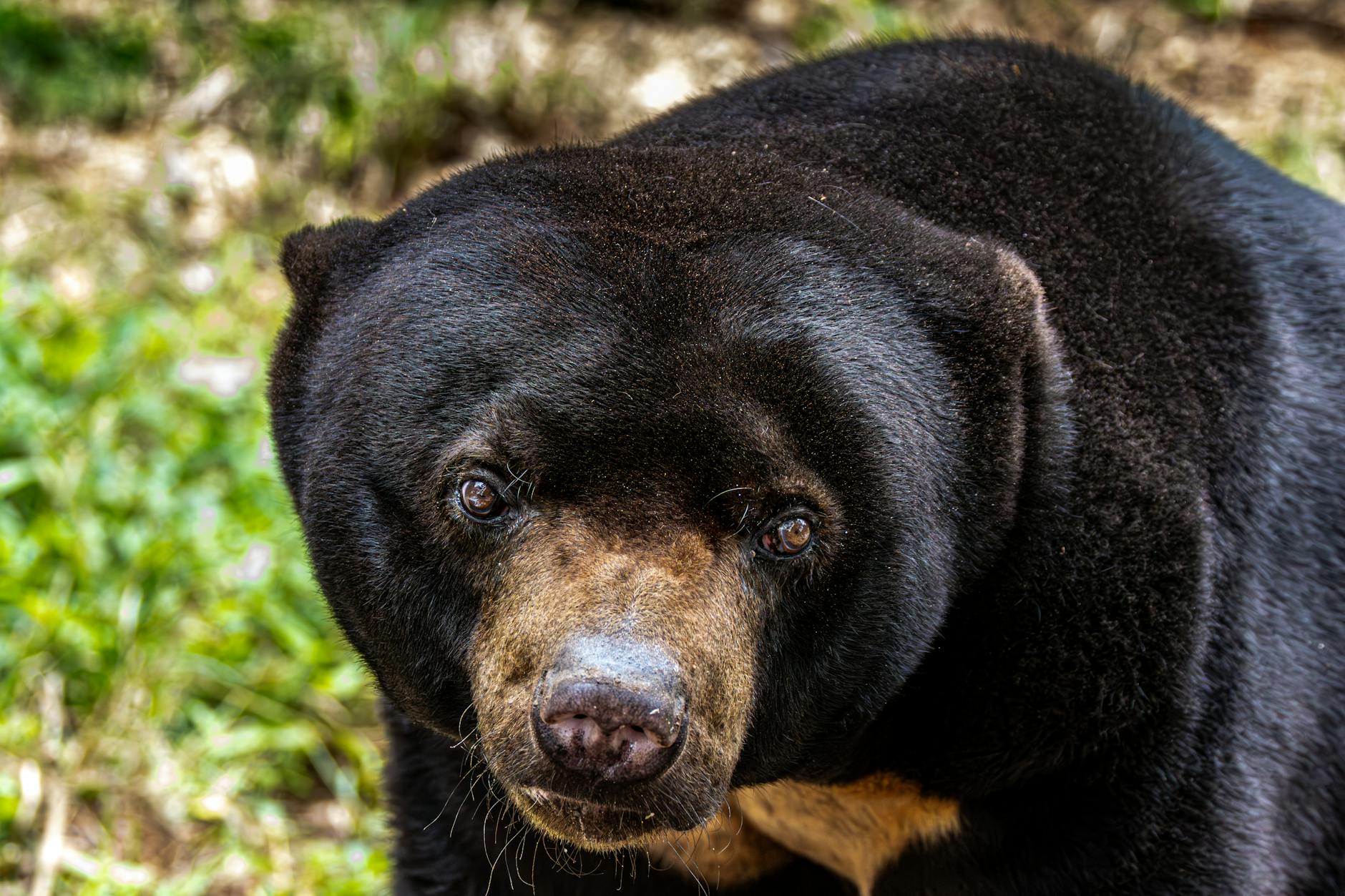
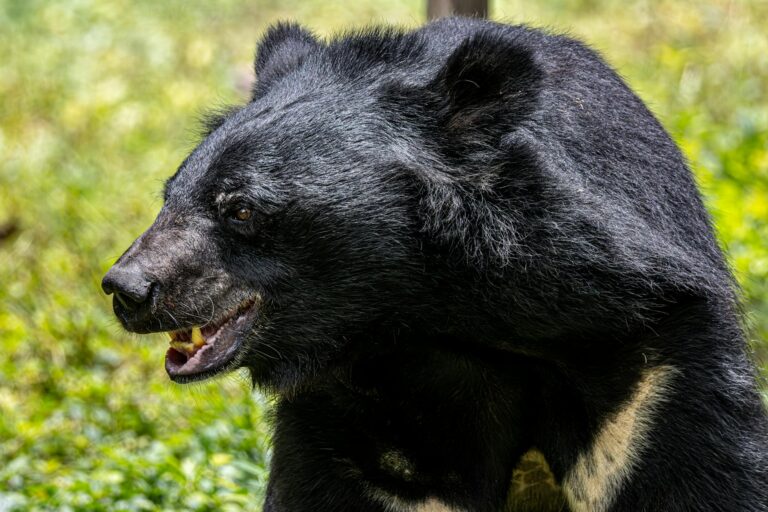
Free the Bears works with two species. Sun bears, the smallest of the eight bear species, and Asian black bears, called moon bears for the crescent of pale fur on the chest. Both are listed as Vulnerable on the IUCN Red List and both are heavily trafficked: sun bears mostly for the pet and traditional medicine trades, moon bears mostly for bile. Our guide to the different types of bears introduces the rest of the family.
Most rescued bears will not go back to the forest. They are too imprinted on people, too physically damaged, or there is no safe habitat left to take them. The sanctuaries are lifetime care facilities and bears live 25 to 30 years in captivity. That said, Free the Bears now runs a rewilding programme and has built facilities to raise and study possible release candidates, so releases are a stated goal rather than a closed door. Suitable forest still has to be identified, surveyed and protected first.
How a rescue actually happens
It usually starts with a tip off: a cub for sale at a market, a sun bear in a restaurant cage, a moon bear whose owner can no longer feed it. Free the Bears works alongside wildlife authorities in each country on the seizure itself, then moves the bear to quarantine for veterinary assessment. New arrivals are screened for tuberculosis, parasites and dental disease and reintroduced slowly to a normal diet before joining a long term enclosure with compatible bears. Cubs take longer, because they need a hand rearing phase, ideally alongside another rescued cub.
Visitor programmes
Visits are a deliberate part of the funding model rather than a side effect:
- Bear Care Tours run at the Cambodia, Laos and Vietnam sanctuaries. They are behind the scenes days with the keepers, and the fees go to the sanctuary.
- Tat Kuang Si sits inside the Kuang Si waterfall park, so anyone visiting the falls can walk the bear enclosures. Donation boxes fund the work.
- Volunteering at the sanctuaries is limited to skilled roles such as vets and vet nurses. Most supporters volunteer in Australia instead.
How to support Free the Bears
Free the Bears is registered as a charity in Australia with the ACNC and in England and Wales with the Charity Commission, so donations are tax effective in both. The main routes are a direct donation, sponsoring a named rescued bear, becoming a Bear Carer on a regular gift, or visiting a sanctuary if you are travelling in the region.
Frequently asked questions
Who founded Free the Bears?
Mary Hutton, a Perth grandmother, in 1995, after seeing a 1993 television report on bear bile farming. She remains the organisation’s founding figure.
Where are the sanctuaries?
Five across three countries: the Cambodia Bear Sanctuary at Phnom Tamao, the Tat Kuang Si Bear Rescue Centre and Luang Prabang Wildlife Sanctuary in Laos, and the Cat Tien bear facilities in Vietnam.
How many bears has Free the Bears rescued?
More than 1,000 since 1995, with over 300 currently in care.



Can the Bear Care Tours at Phnom Tamao be booked on the day, or do they fill up weeks ahead? We’ll be in Phnom Penh this winter.