
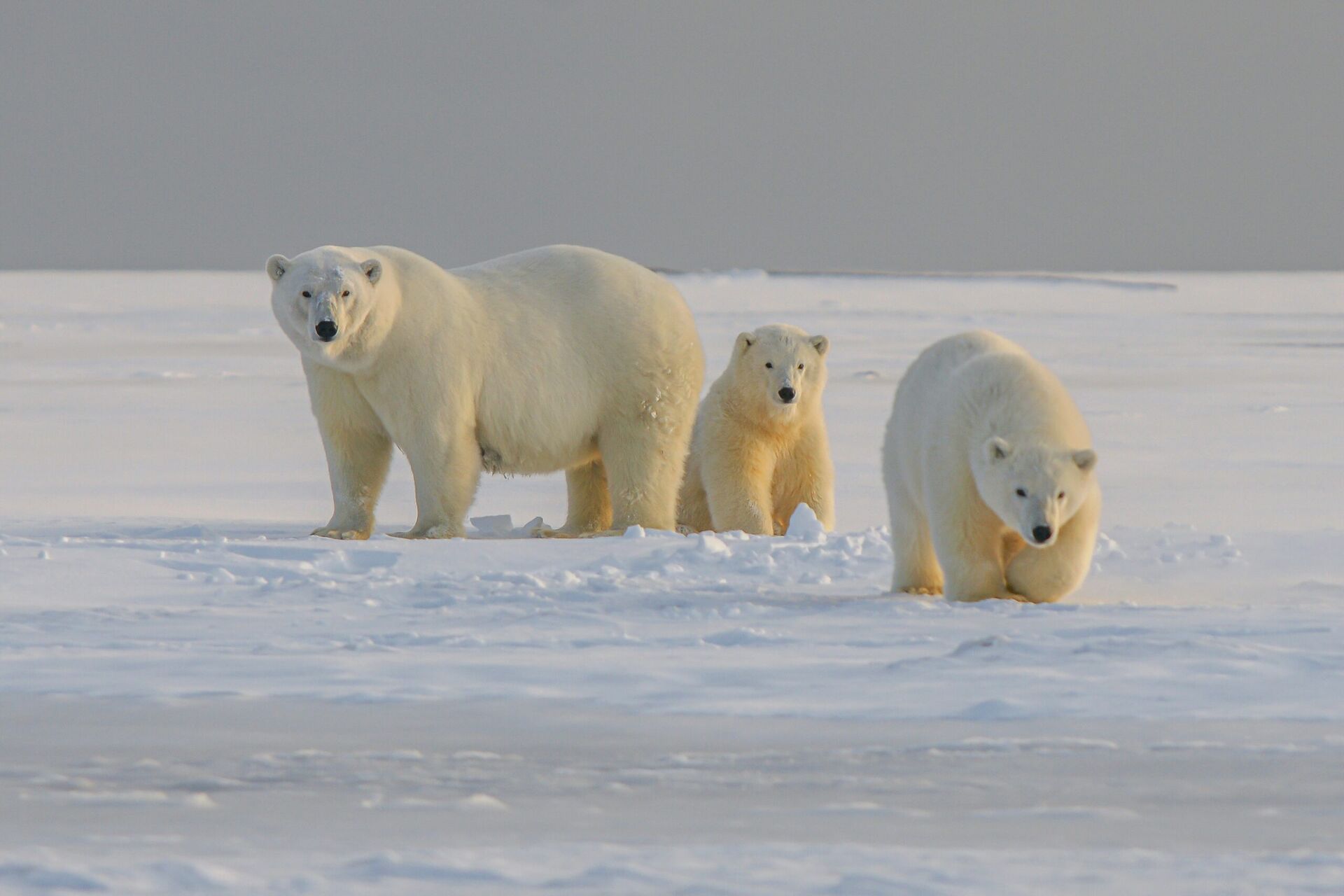
Polar Bears International: The Polar Bear Watchdog
Last updated: September 28, 2026
5 min read
Polar Bears International is the only conservation organisation in the world dedicated exclusively to polar bears. It is small by NGO standards, with a staff of around 29, but its scientific output and public reach are out of proportion to its size. If you care specifically about polar bears, PBI is the most direct place to put time or money.
This guide covers when PBI was founded, what it actually does, the programmes worth knowing about, and how supporters can take part. For the wider context of why polar bears need this work, see our bear conservation pillar and our polar bear species profile.
Origins in Churchill, Manitoba
Polar Bears International was founded in 1992 by a group of wildlife enthusiasts who travelled to Churchill, Manitoba every year to watch and photograph polar bears. It has been led by Krista Wright since 2013. Headquarters are in Bozeman, Montana, with a permanent hub in Churchill.
Churchill matters because it sits on the migration path of the Western Hudson Bay polar bear population. Each autumn, hundreds of bears gather on the coast waiting for the sea ice to reform on Hudson Bay. PBI runs an interpretive centre in the town, Polar Bears International House, and works alongside Manitoba’s separate Polar Bear Alert programme, Parks Canada at Wapusk National Park, and the operators who run the tundra buggy fleet. See our guide to Churchill for the wider picture.
The science: collars, dens, and migration tracking
PBI’s flagship science programme is satellite telemetry of female polar bears. Each year a small number of females are fitted with satellite collars. Males cannot wear them, because their necks are wider than their heads and the collars slip off, so males are tracked with ear tags or temporary glue-on transmitters instead. The data feeds into peer-reviewed work on home range, ice dependency, denning, and reproductive success.
A second strand is denning research, using forward-looking infrared surveys to locate maternity dens on the tundra and on Arctic islands. This helps industry avoid disturbing dens, and it builds the dataset on where polar bears can still successfully reproduce as the ice thins.
PBI staff scientists are active members of the IUCN Polar Bear Specialist Group, the international body that produces the official population assessments. PBI is not the assessor, but it is one of the main field-data contributors.
The cams: how the public watches
The live cameras are PBI’s most public programme. Polar Bear, Beluga Whale, and Northern Lights cams stream from Churchill in partnership with explore.org and reach millions of people a year. They are free to watch. In February 2014, working with Google, polar bear habitat around Churchill was added to Google Maps.
Behind the entertainment value the cameras have a practical use: they capture body condition, sparring behaviour, and unusual ice timing that researchers can timestamp and reference later.
Tundra Connections: education from the bears
Tundra Connections is a programme of free live webcasts broadcast from the tundra near Churchill during polar bear season, linking scientists and educators with classrooms, students, and lifelong learners worldwide. The webcasts go out from Tundra Buggy One, a roving electric media buggy that has also hosted visiting media including Good Morning America, the BBC, and NBC Nightly News.
The educational reach matters because the climate half of polar bear conservation depends on a generation that grew up understanding why sea ice matters. In 2023, PBI staff scientist Alysa McCall gave a TED Talk on the organisation’s polar bear and human coexistence work.
Climate advocacy
PBI is unusually direct for a wildlife NGO about saying the obvious: polar bears cannot be saved without action on greenhouse gas emissions. Its policy work focuses on North American climate legislation, the IUCN process, and corporate climate commitments through the Arctic Ambassador Centers programme, a network of around 50 zoos and aquariums across the US, Canada and Europe that take part in awareness events and climate education.
The advocacy is not partisan, but it is not neutral on the science either.
Community work in Churchill
Conservation organisations sometimes parachute in. PBI does not. Its field team is in Churchill year-round and works with the town’s small permanent population on the practical realities of living alongside bears. The work overlaps with the provincial Polar Bear Alert programme but stays separate from enforcement: PBI focuses on education, deterrent kits, and the bear-proof storage that keeps food rewards out of reach.
A separate strand supports Inuit-led monitoring. PBI does not lead research in Indigenous territories, that is the role of communities themselves and of national wildlife agencies, but it contributes funding and data analysis when invited.
Why polar bears specifically and not all Arctic species
The narrow focus is deliberate. Many Arctic species are in trouble: walruses, ringed seals, the polar cod the whole system depends on. The argument for a dedicated polar bear organisation is that the species is charismatic enough to attract climate funding the smaller species cannot, and the habitat it needs, sea ice and denning areas, is the habitat everything else needs too.
The argument is not perfect. A flagship species can crowd out less photogenic ones. But in practice PBI’s funding has gone toward whole-system Arctic science.
How to support Polar Bears International
- Monthly or one-off donation through polarbearsinternational.org. Donations are tax-deductible in the US and Canada.
- Symbolic adoption. The Adopt a Polar Bear programme funds general operations.
- Travel. PBI runs a leadership camp in Churchill for educators, and donor experiences on the tundra buggies. These directly fund field operations.
- Climate Alliance. Sign up and act on the policy asks. Small, repeatable, useful.
- Arctic Ambassador Centers. If you work at a zoo or aquarium, this is the structured route in.
Frequently Asked Questions
When was Polar Bears International founded?
What is the Polar Bear Cam?
How many polar bears are left?
Does PBI rescue polar bears?
Related reading
- Bear conservation pillar
- Polar bear species profile
- Churchill: the polar bear capital of the world
- WWF and bear conservation
Updated 28 September 2026: updated the polar bear population to around 26,000 (2024) and corrected the Svalbard agency.



Didn’t know males can’t wear collars because their necks are wider than their heads. How long do the glue-on transmitters usually stay on?