

Three Orphaned Cubs Found in Virginia
Last updated: November 5, 2026
4 min read
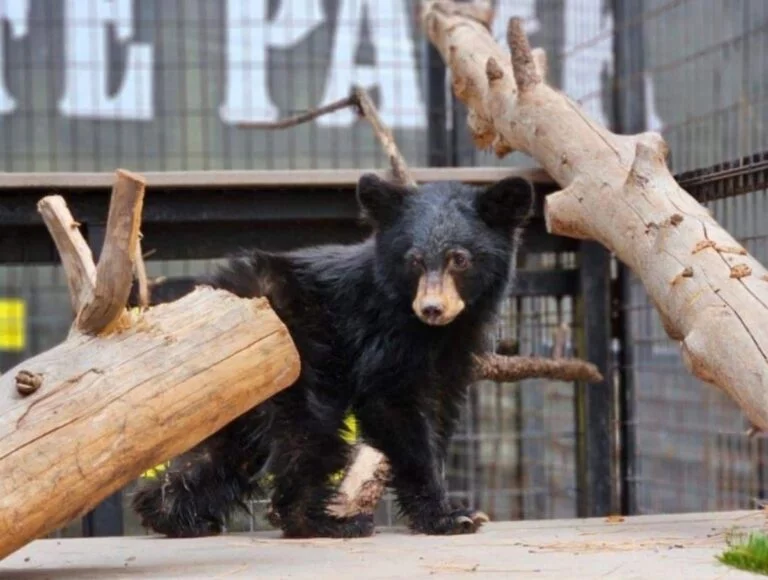
On Valentine’s Day 2024, three orphaned black bear cubs were found in Orange County, Virginia. A construction crew clearing brush disturbed a den and the mother bolted. When the crew realised she had left three cubs behind, they called the Virginia Department of Wildlife Resources, and the cubs were taken to the Wildlife Center of Virginia.
It is a clean example of how wildlife professionals handle orphaned cubs, and of why midwinter makes the situation so delicate.
What happened
Two of the cubs were reported in reasonable condition. The third, a male, had a badly injured hind leg. The two healthy cubs, a female and a male, had mild skin lesions that might be ringworm.
The crew were willing to leave the den undisturbed and let the mother come back, which is normally the right answer. Two things ruled it out here: one cub was injured, and construction was still going on nearby. So the centre took all three rather than gamble on the sow returning to a site that was still being worked.
The injured male’s leg was bandaged and he was put on pain relief. At that age the bones are not fully ossified, which makes the extent of damage hard to read from imaging, and the initial prognosis was reported as poor. All three went onto round-the-clock bottle feeding.
Why February is the riskiest month for cubs
The timing was not a coincidence. Female American black bears give birth inside the winter den, usually between mid January and early February. Newborn cubs weigh about half a pound, are blind, nearly hairless, and completely dependent on their mother for warmth and milk. The sow herself is in winter dormancy, running on stored fat rather than feeding.
Any disturbance in late winter can therefore be catastrophic. A startled mother may bolt, and cubs that small cannot regulate their own temperature or feed themselves. This is exactly why land clearing, logging and construction in bear habitat carry real risk in January and February, and why the Virginia crew calling it in immediately was the right move.
The surrogate mother option
Virginia’s wildlife agency did not simply accept that the cubs would be raised by people. They went looking for a surrogate, and there is good practice behind that. Wildlife agencies in several US states, with Pennsylvania’s programme among the best known, have refined a technique of fostering orphaned cubs into the den of a wild female that already has cubs of her own. Sows will generally accept and nurse an extra cub. The orphan then grows up wild, taught by a real bear.
The hard part is finding a match. You need a female with cubs of a similar age in an accessible den. In this case biologists found a match. On 29 February 2024 they placed the two healthy cubs with a wild mother that had two cubs of almost exactly the same size.
When fostering fails, the fallback is a wildlife centre raising the cubs in isolation until they are old enough to release the following spring.
How centres raise orphans without taming them
Hand-rearing a wild cub properly is harder than it sounds, because the goal is a bear that is wary of humans and can survive alone. Accredited centres follow strict rules:
- Minimal human contact, with keepers quiet and out of sight wherever possible.
- Raising cubs together, so they bond with other bears rather than with people.
- A diet that shifts from milk to the foods a wild bear would actually forage.
- Large, enriched enclosures that encourage climbing, digging and natural behaviour.
- Release timed for the following spring, when the young bears can fend for themselves.
What happened next
The Wildlife Center of Virginia published the outcome. New X-rays showed a second fracture, to a growth plate in the injured cub’s other hind leg, and on 21 February 2024 the vets euthanised him. On 29 February biologists placed the other two cubs with a wild foster mother.
What to do if you find a cub
Most of what helps is preventive. If you live or work near black bear country, never disturb a den. Cub mortality in the first year is high even without human interference, so a disturbed den at the wrong time of year tips the odds badly.
If you find what looks like an orphaned or injured cub, do not touch it and do not take it home. A cub on its own usually is not. Contact your state wildlife agency or a licensed rehabilitator, give them the exact location, and let them decide. That phone call is the whole intervention.
The Wildlife Center of Virginia is a non-profit and depends on public support to fund this kind of care. Donations go through their website.
Bring bears home
Browse the We Love Bears store for gear and gifts inspired by these animals:
- Shop bear books
- Shop bear plush toys
This article is part of our bear conservation guide, which links all our conservation, rescue and wildlife crime reporting.
Updated 28 September 2026: corrected the cubs’ sexes and added the outcome: the injured cub was euthanised and the other two were fostered by a wild mother.



The surrogate mother part is the bit I would never have guessed. Does a sow really not notice an extra cub in the den, or does she notice and just not mind?