
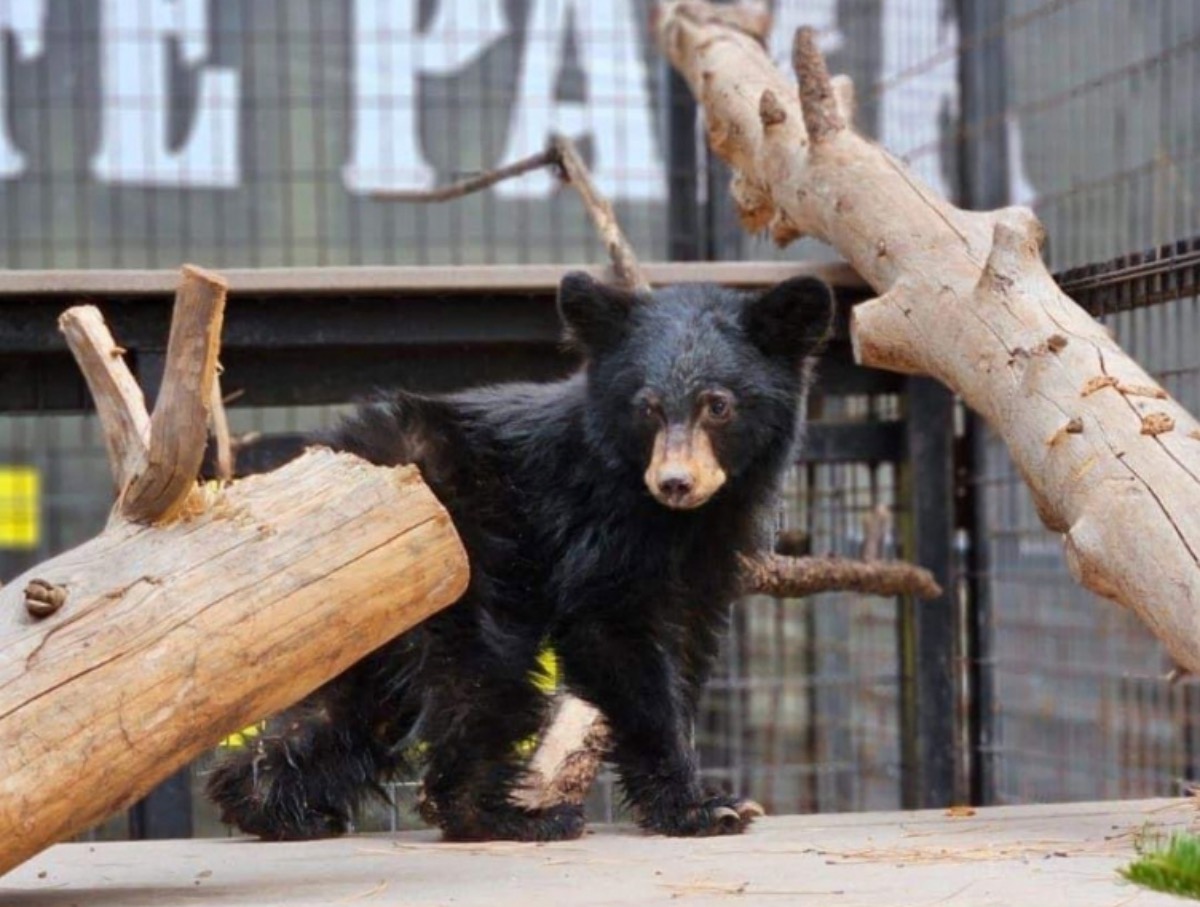
Meet Buddy the Black Bear at Bearizona
Last updated: November 5, 2026
4 min read
In December 2023, an orphaned black bear cub so small that experts could not explain how he was still alive was rescued in Oro Valley, Arizona, and given a new home at Bearizona Wildlife Park. The staff named him Buddy, after the character from the Christmas film Elf, and his story quickly became a seasonal favourite. The Arizona Game and Fish Department recovered the bear, and at just 15 pounds in December he was, in the department’s own words, almost unheard of.
On Sunday 10 December, an Arizona Game and Fish field supervisor helped bring the friendly cub down from a tree near the intersection of North Oracle Road and East Catalina Shadows Boulevard. There was no mother bear anywhere nearby, which left everyone with the same set of questions. What happened to the sow? How did such a tiny cub survive without her? Had she been killed by a predator or another bear, or had a person taken the cub from the wild? None of it could be answered. What was clear was that this orphan had beaten long odds simply to still be alive.
Why a 15 pound bear shocked the experts
The cub’s weight is the heart of the story. Dave O’Connell of Bearizona explained that black bears are typically born in January or February. By that timeline, a cub found in December should be close to a year old, and a healthy yearling at that point should weigh in the region of 70 pounds. Buddy weighed 15.
That gap is enormous. A cub roughly a fifth of its expected weight has been severely undernourished for months, almost certainly because it lost its mother far too early. Black bear cubs normally stay with the sow into their second year, nursing through their first months and then learning every survival skill from her: what to eat, where to find it, how to climb to safety, and how to den for winter. An orphaned cub has to improvise all of that alone. Hart was also baffled at how such a small animal had made its way down out of the Catalina Mountains by itself. Buddy’s survival was, by any measure, remarkable.
A new home at Bearizona
Because Buddy could not be returned to the wild, he was placed at Bearizona Wildlife Park near Williams, Arizona. Bearizona is a drive-through and walk-through wildlife park where visitors can see North American species including American bison, brown bears, reindeer, and black bears. From 22 December, visitors could come and meet Buddy in person.
The name was a natural fit for a tiny bear who turned up at Christmas. Despite his size, the cub was given a clean bill of health and was expected to grow into a normal adult with proper care.
The warning hidden in a happy story
One detail of Buddy’s rescue is easy to skip past but matters a great deal. He was unusually friendly and comfortable around people, which led staff to suspect that someone had been feeding him. That is the warning, not the heart-warming part.
Bearizona’s chief operating officer, Dave O’Connell, put it plainly: once a bear associates humans with food, it remembers that connection for the rest of its life. A food-conditioned bear loses its natural wariness, approaches people and homes, and very often ends up being relocated or killed once it becomes a safety problem. Feeding a wild bear, however kind it feels in the moment, can be a death sentence for that animal later. It is one reason a cub like Buddy, already fed and habituated, could never simply be released back into the wild.
Bears do live in Arizona
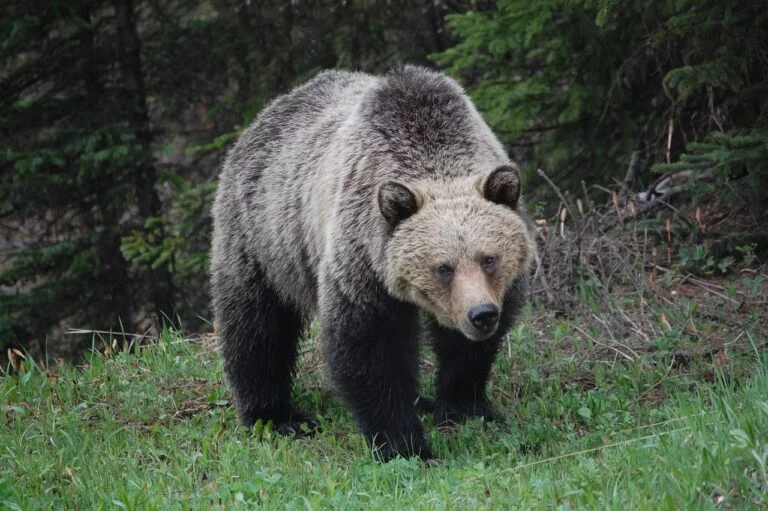
Buddy’s rescue surprises people for another reason: many do not realise Arizona has bears at all. The state is firmly black bear country, with the species found in the forested mountain sky islands and higher elevations across much of Arizona, including the Santa Catalina Mountains that loom over Tucson and Oro Valley. Arizona has no wild grizzlies today, the last having been killed in the state decades ago, so a bear seen in the wild there is an American black bear. These bears move down from the mountains in search of food, and in dry years that can bring them close to towns on the desert edge, which is part of how a lone cub ended up in a suburban tree near Oro Valley in the first place.
What to do if you find an orphaned cub
Buddy’s story has a happy ending only because trained professionals stepped in. If you ever come across a cub that appears sick, injured, or genuinely alone, the right steps are simple:
- Do not approach, touch, feed, or attempt to move the cub.
- Keep well back and watch from a distance, since the mother may still be nearby.
- Contact your local wildlife authority, such as the Arizona Game and Fish Department, and report the exact location.
- Let the experts decide whether the cub is truly orphaned and what happens next.
Buddy is a survivor with a second chance. To learn more about the species he belongs to, see our American black bear species profile. His tale is a feel-good Christmas rescue, but it carries a year-round lesson: the kindest thing you can do for a wild bear is to keep your food, and your hands, to yourself.
Bring bears home
Love what you read? Browse the We Love Bears store for gear and gifts inspired by these incredible animals. Every purchase supports more bear content on this site.
This article is part of our bear facts guide, which links every article on bear behaviour, safety and culture.
Updated 28 September 2026: corrected who explained the cub’s expected age and weight.




we were at bearizona in april and asked a keeper which one was buddy. already way bigger than 15 pounds, hard to picture him that tiny up a tree