Alaska Bear Viewing: The Ultimate Trip Planner
Last updated: November 27, 2026
7 min read
Alaska is the one place where a competent traveller with a normal budget and two weeks of time can stand a short distance from a wild brown bear catching a salmon mid-air, and walk away unharmed with a folder of magazine-grade photographs. That access is real, but it is not casual. The trip needs planning 6 to 12 months ahead, the locations choose themselves by month, and getting there almost always involves a float plane.
This guide breaks Alaska bear viewing into the five locations that actually matter, when each one is in season, roughly what it costs, and how to choose between them. Prices move every year, so treat the figures below as ballparks and confirm with the operator.
Quick comparison: the five sites that matter
| Site | Best season | What you see | Cost tier | Difficulty |
|---|---|---|---|---|
| Brooks Falls, Katmai NP | Early to mid July; late August to mid September | Brown bears catching sockeye salmon mid-air | $$$ | Easy: viewing platform |
| Lake Clark NP (Silver Salmon Creek, Chinitna Bay) | June to mid September | Brown bears clamming on tide flats, sedge-grazing, cubs | $$$$ | Easy to moderate: guided day trips |
| Kodiak Island (Frazer Lake, O’Malley River) | July to September | The world’s largest brown bears, salmon-feeding | $$$$$ | Hard: remote lodge access |
| Anan Wildlife Observatory (Tongass NF) | Mid July to late August | Black bears mostly, plus brown bears, at a pink salmon run | $$ | Moderate: permit plus boat or floatplane |
| Hyder and Salmon Glacier (BC border) | Late July to early September | Brown and black bears at Fish Creek, roadside | $ | Easy: drive-in from BC |
Cost tiers: $ under $200 a day all-in, $$ $200 to 500, $$$ $500 to 1,500, $$$$ $1,500 to 3,000, $$$$$ $3,000 plus.
Brooks Falls, Katmai National Park
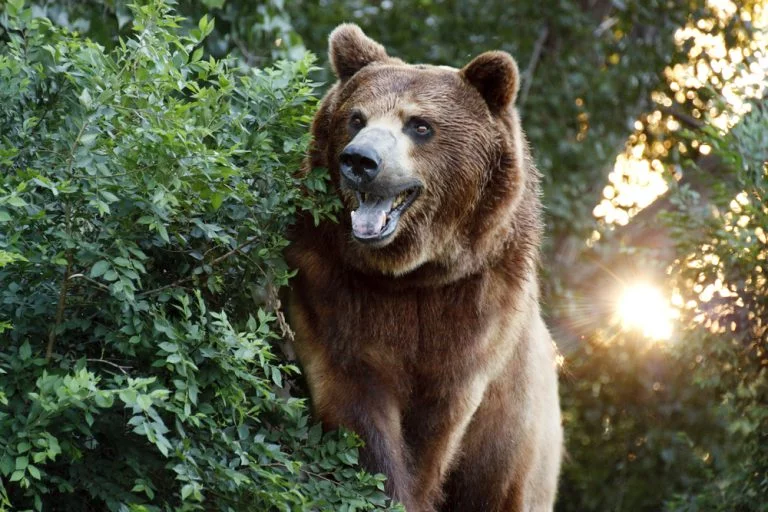
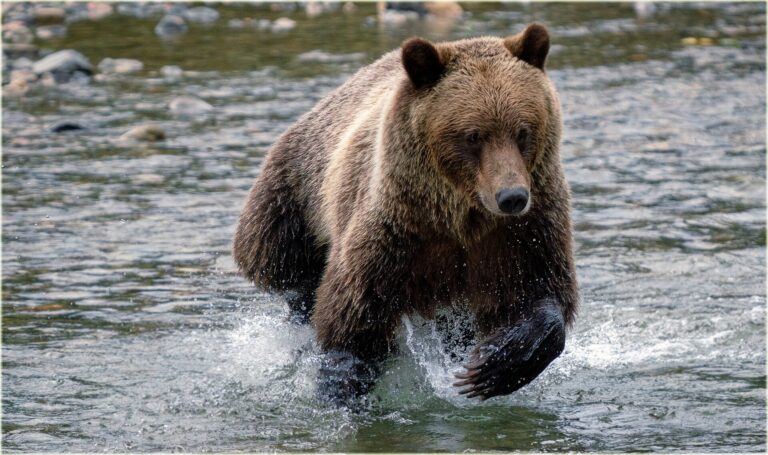
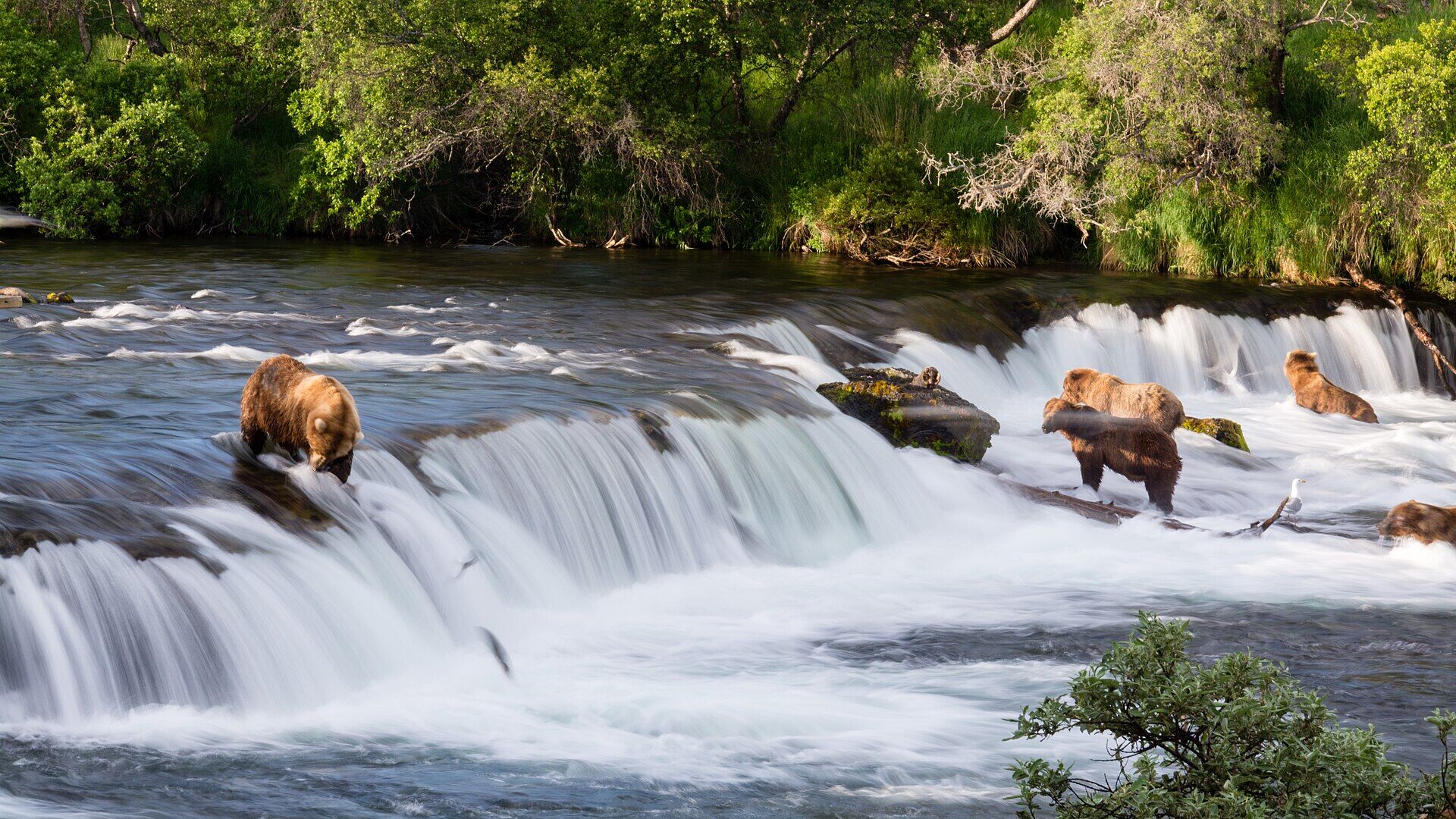
The most famous bear-viewing site in the world. Brooks Falls is a 1.8 m vertical drop on the Brooks River that sockeye salmon must jump to reach their spawning grounds. Brown bears wait at the lip of the falls, in the pool below, and at the river mouth, fishing in three different styles depending on age and rank. From the elevated wooden viewing platform you watch the whole scene from June through October.
When to go
- 1 to 20 July is the peak salmon run. The biggest bears are at the falls and a dozen or more bears in view at once is normal. This is the iconic leaping-for-salmon window.
- Late August to mid September is the secondary peak: bears return to feed on spawned-out salmon in the river below. The light is softer, the crowds thinner, and the bears are visibly fatter as hyperphagia builds. This is Fat Bear Week season. See our Fat Bear Week pillar for the tournament.
How to get there and where to stay
Brooks Camp sits on Naknek Lake and there are no roads. Take a scheduled jet from Anchorage to King Salmon, then a 30-minute floatplane to Brooks Camp with Katmai Air or a similar operator. Brooks Lodge inside the park is allocated by lottery: applications open on 1 December and close on 30 December for the summer after next, with results going out between early January and mid February. September has more last-minute openings than July. The park-run campground is booked through Recreation.gov and costs a fraction of the lodge. Day trips from King Salmon are the alternative for a half-day on the platform.
Permits and rules
Park entry is free, but you must complete the in-person bear-safety orientation, universally known as Bear School, at the visitor centre before walking the trails. The Brooks Falls platform has a waiting list and a time limit when it is full, which is common in July; the riffles and lower river platforms have no time limit. Keep the required minimum distance from bears, with platform exceptions. Fishing in the river is permitted with restrictions, and you cease fishing if a bear approaches.
Lake Clark National Park
About an hour to an hour and a quarter by floatplane south-west of Anchorage. Where Brooks is a salmon falls, Lake Clark is a sweep of tidal flats with mothers and cubs grazing sedge grass and digging clams. The bears are used to floatplanes and guides and generally ignore people.
Silver Salmon Creek Lodge is the flagship, with multi-day all-in stays including charter flights from Anchorage, guided viewing and meals. Redoubt Bay Lodge and other small operators work the same corridor. Day trips from Anchorage via Rust’s Flying Service, Regal Air or Lake Clark Air run a six-hour day at Chinitna Bay or Silver Salmon Creek. Mid June for clamming and sedge meadows, July to early August for salmon and cubs, late August to mid September for hyperphagia portraits.
Kodiak Island
Kodiak brown bears (Ursus arctos middendorffi) are the largest bears in the world, with the biggest males reaching 540 to 680 kg (1,200 to 1,500 lb) on autumn salmon. Viewing them is the apex experience and the apex cost. There is no road access; everything is by floatplane and lodge.
Top sites
- Frazer Lake weir, run by the Kodiak National Wildlife Refuge. Permit-controlled, modest viewing infrastructure and a low day-use ceiling, with permits allocated through Recreation.gov.
- O’Malley River in the Karluk Lake system, known for double-digit bear counts at a small falls.
- Hallo Bay, Geographic Harbor and Swikshak. These are coastal Katmai sites rather than Kodiak, but lodge brochures group them together because the bear quality is comparable.
Operators
- Kodiak Brown Bear Center, Koniag-owned, on Karluk Lake: multi-day all-inclusive packages at the top of the price range.
- Munsey’s Bear Camp and Afognak Wilderness Lodge: other multi-day options.
- Day trips from Kodiak town via local floatplane operators.
For the species background see our Kodiak bear profile.
Anan Wildlife Observatory
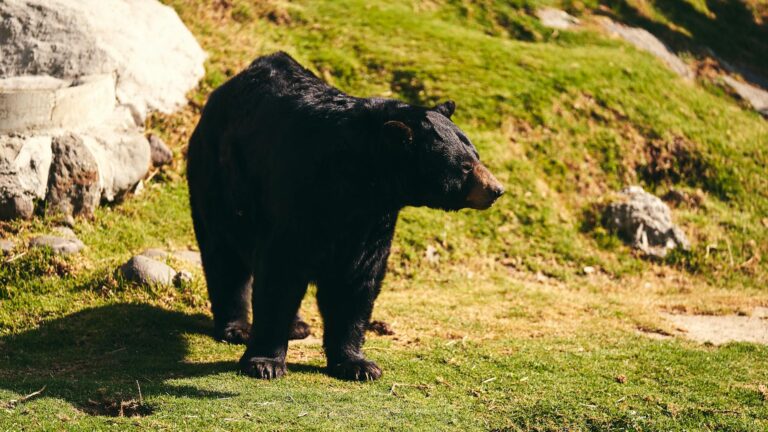
In the Tongass National Forest near Wrangell, Anan is one of the few places in Alaska where black and brown bears use the same salmon stream in numbers. A short boardwalk leads to an elevated platform over Anan Creek, where pink salmon spawn from mid-July through August. Day trips run from Wrangell by jet boat or floatplane. A US Forest Service permit is required for the peak season from 5 July to 25 August, the daily visitor cap is 60, and permits are allocated through Recreation.gov well in advance. A guide is required on the trail unless you hold prior permitting.
Hyder, Alaska and Salmon Glacier
The cheapest Alaska bear viewing of the lot, and the only one you can drive to. Hyder sits at the head of the Portland Canal, reached by road from Stewart, British Columbia. The US Forest Service Fish Creek Wildlife Observation Site has an elevated boardwalk over a chum salmon run, open late July through early September. Brown bears feed mornings and evenings and black bears use the site at midday. Salmon Glacier, 20 miles up an unpaved road, is the bonus side trip. There is a modest day-use fee, and lodging is on the BC side in Stewart.
When to plan, and in what order
Book the flights first.
- 12 months out or more: enter the Brooks Lodge lottery in December. Book Anchorage to King Salmon flights as soon as the lottery clears.
- 9 to 12 months out: book Kodiak Brown Bear Center or Lake Clark lodges for the dates you want.
- 6 months out: apply for Anan permits and book Wrangell flights and lodging.
- 3 to 6 months out: book floatplane day trips from Anchorage or Kodiak. These sell out for July but rarely for September.
- Under 3 months: Hyder is the realistic option. Drive to Stewart, book a B&B on the BC side, and walk the Fish Creek boardwalk.
If your trip covers more than one stop, the free Ever North Travel Planner from Bell’s Travel Guides maps routes, stays and activities across Alaska, the Yukon and northern BC.
Packing list
Waterproof outer shell, because Katmai gets rain most days in July. Knee-high rubber boots. Layered fleece and a warm hat: mornings sit near 4 C even in July. Bug head net for late June and early July. Bear spray on a chest harness, bought in King Salmon, Anchorage or Kodiak, since standard canisters are too big to fly with, and donated before you leave. A long telephoto plus a mid-range zoom; see our bear photography pillar for the full kit. Tripod or monopod for long platform waits. A power bank, because charging at Brooks Lodge is shared and limited.
For the broader behavioural context see our bear behaviour pillar, for the relevant safety rules see our bear safety pillar, and for the wider list of global locations, our 10 best places to see bears in the wild pillar.
FAQ
What is the best time of year to see bears in Alaska?
How much does an Alaska bear viewing trip cost?
Do I need a guide to see bears at Brooks Falls?
How do I get to Brooks Falls?
Is Alaska bear viewing safe?
This article is part of our guide to the eight bear species, which links every species profile and viewing guide on the site.
Updated 2 November 2026: corrected the air travel rule for bear spray. Updated 28 September 2026: corrected the Lake Clark flight time, the Brooks Camp platform rules and the Kodiak lodge list.